Washington and Moscow Both Challenge CBAM: The USTR Comment Call, the WTO Panel and the Default-Value Markup
Washington and Moscow Both Challenge CBAM
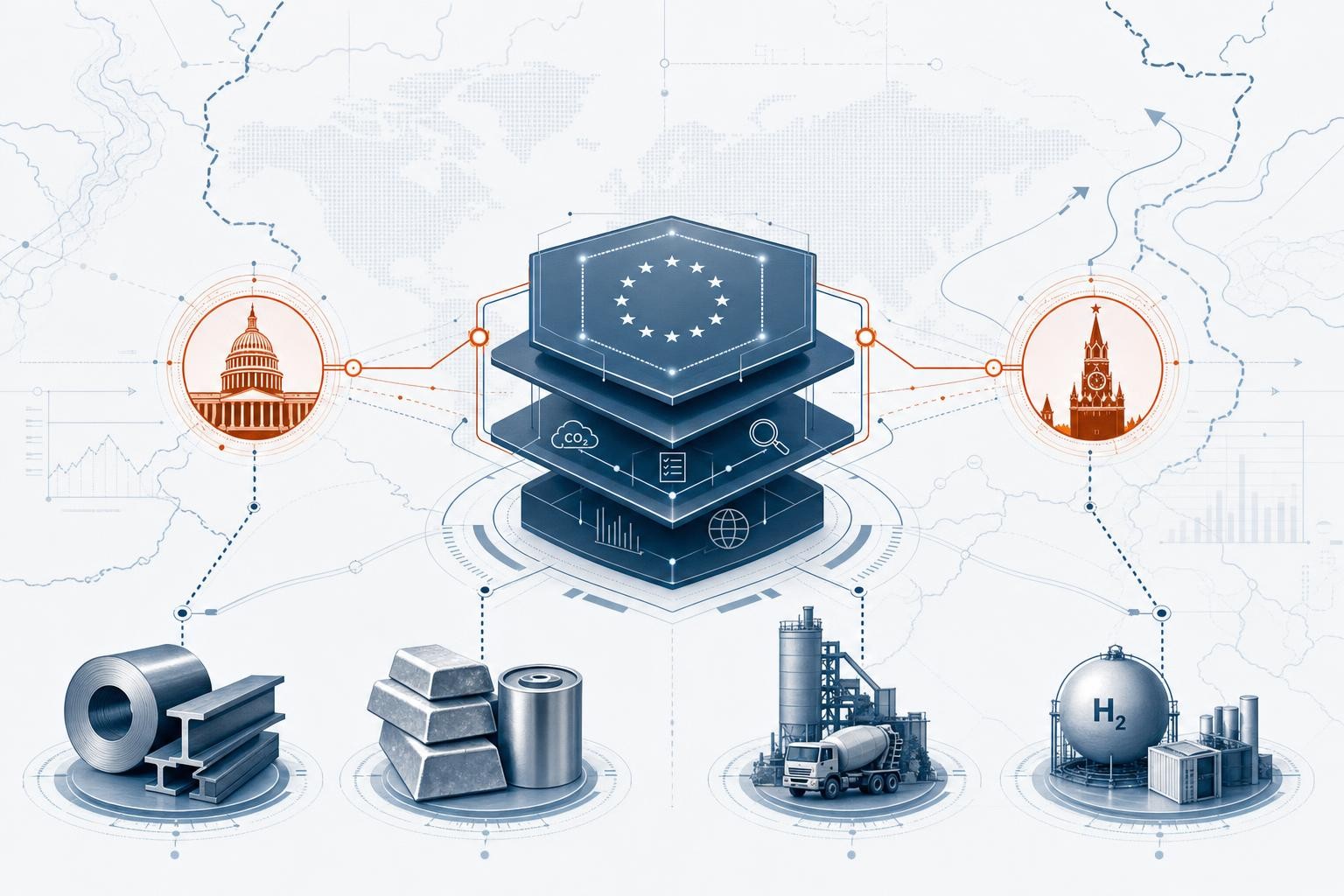
Two external challenges to CBAM moved this month. Neither changes your obligations today, but both target features that drive importer cost, above all the markup on default emissions values.
The USTR comment call
The Office of the US Trade Representative published a request for comments on 8 October 2026. It asks for input on the current and potential effects of CBAM on US producers, workers, direct and indirect exports and overall US-EU trade, including the proposed expansion to downstream goods. It also asks whether enforcement action may be appropriate. The comment deadline is 9 November 2026, and USTR says the input will inform continued engagement with the EU.
Euronews reports that Washington argues the "EU adds a punitive markup" to default emissions values, penalising firms that do not supply their own emissions data. The Commission had not commented at the time of publication.
The WTO panel
According to the same Euronews report, the WTO agreed to set up a panel, at Russia's request, to examine CBAM's legality. Moscow says CBAM creates significant trade barriers and calls free ETS allowances for some heavy industries an export subsidy.
Why the default-value markup matters to you
The US complaint lines up with what importers already feel. Carbon Pulse notes companies are investing in accurate emissions data to avoid punitive default values. Our earlier posts on the retroactive default-value correction and on supplier-data mistakes show the same pattern: the cheapest CBAM tonne is a measured one.
Treat actual supplier data as a cost-reduction project, not a compliance chore. Default values are designed to be worse than a verified actual.
The trilogue link
Euronews reports that MEPs want stricter automatic default values for high-risk goods and origins, while the Council would let companies use actual emissions data if they provide sufficient evidence. Ireland, holding the Council presidency, wants a deal at the 20 October meeting. External pressure from the US and WTO could shape how far the EU goes.
What to do
Neither the USTR call nor the WTO panel changes current obligations. The definitive phase started on 1 January 2026.
Ask US and other third-country suppliers for installation-level emissions data and monitoring plans.
Default-value rules for high-risk origins are on the table.
US-based exporters and importers can submit evidence to docket USTR-2026-0661 by 9 November.
Does the USTR call suspend CBAM?
No. It is a request for public comments to inform engagement with the EU.
What is the WTO panel examining?
CBAM's legality, at Russia's request, including its objection to free ETS allowances.
Who can submit comments to USTR?
The notice invites public comments, preferably via Regulations.gov, in English, by 9 November 2026.
Related reading
The EU-Canada Montreal Summit and CBAM: What Changed, What Didn't, and What You Need to Do Now
The October 2026 EU-Canada summit produced warm words on CBAM but no written commitments. Here's what the Montreal outcome actually means for EU importers of Canadian aluminium, iron ore, and steel.
CBAM for Aluminium Importers: PFCs, the Direct-Only Rule and Three Mistakes in Supplier Data
Aluminium is priced on direct emissions only, but PFCs must be counted and scrap is zero-rated. Here are the three supplier-data mistakes that most often distort an aluminium CBAM declaration.
Can You Deduct the Carbon Price Paid Abroad? What the Commission's Draft CBAM Deduction Rules Actually Allow
The Commission's draft rules on deducting carbon prices paid outside the EU are close to adoption. Here is what qualifies, what the 10% credit cap does, and what evidence importers will need.