Canada Put CBAM on the Table in Montreal: What an Article 9 Recognition Could (and Could Not) Change for Your Aluminium and Iron Ore Imports
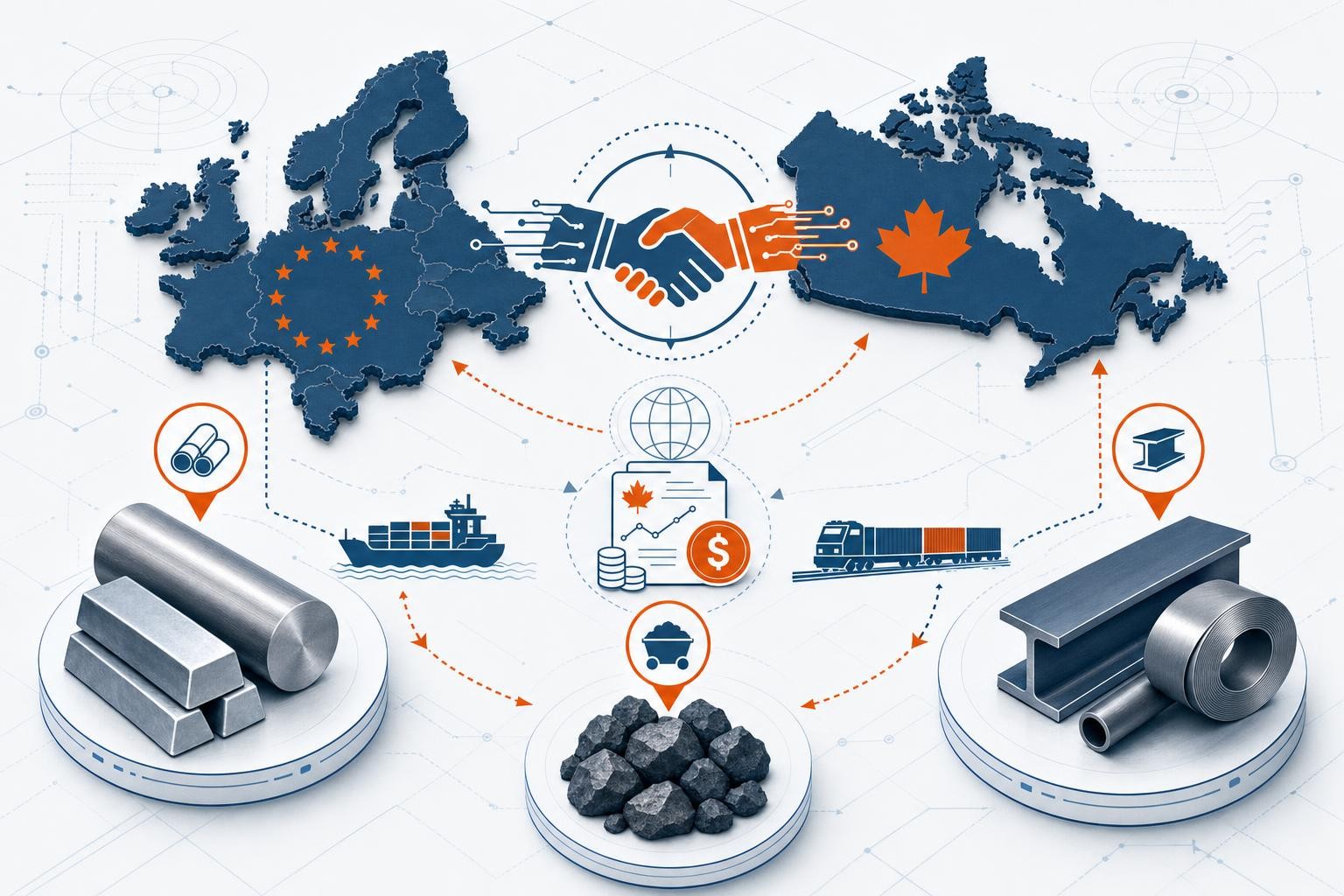
Canada used the 21st EU-Canada summit in Montreal on 29-30 October 2026 to put the Carbon Border Adjustment Mechanism on the agenda. If you import Canadian aluminium, iron ore pellets or steel, the headline sounds like relief is coming. It is not, at least not yet, and nothing in your 2026 declaration changes.
What was actually said in Montreal
Canada named CBAM as one of three priority trade issues, alongside the EU Deforestation Regulation and proposed EU pesticide measures, according to the Prime Minister's Office backgrounder of 30 October as summarised by CBAM Guide.
The joint statement signed by Mark Carney, Ursula von der Leyen and Antonio Costa does not mention CBAM. The comments that did mention it were oral. Carney reportedly spoke of "common solutions", von der Leyen of "trade irritants", and Canada's ambassador-designate Jonathan Wilkinson told CBC that the EU "will recognize our carbon price". None of that is a written EU commitment, and the Commission's position that CBAM applies equally to all third countries has not changed.
No Commission or Council text from the summit mentions CBAM. Treat the recognition talk as a negotiating signal, not a rule change.
Why Canada is not exempt today
A Global Affairs Canada memo dated 10 December 2025, reported by CBC on 28 October 2026, says Canadian iron, steel and aluminium are not exempt from CBAM despite Canada's carbon pricing and the CETA trade agreement. The memo puts the exposed trade at roughly CAD 2.8 billion a year, mostly metals. Regulation (EU) 2023/956 exempts only the countries listed in its Annex III, and CETA has no CBAM carve-out.
The exposure is concentrated. Based on 2025 Eurostat data compiled by CBAM Guide, CBAM-covered EU imports from Canada were about EUR 2.60 billion. Unwrought aluminium accounted for EUR 1.41 billion, making Canada the fourth-largest non-EU source, and iron ore sinter and pellets for EUR 1.00 billion, the largest single origin for that heading. Steel in Chapters 72 and 73 added about EUR 157 million.
What Article 9 recognition would do
Article 9 lets an authorised declarant reduce the number of certificates it surrenders to reflect a carbon price effectively paid in the country of origin, net of any rebate or compensation. The price paid must be documented and certified by an independent person.
The implementing act that sets the detailed deduction rules is still a draft, and no country's carbon price has been recognised. Our earlier post on the Commission's draft deduction rules covers the mechanics. What matters here is the Canada-specific question.
Canada prices industrial emissions through the federal Output-Based Pricing System and provincial systems such as Alberta's TIER and Québec's cap-and-trade. The federal consumer fuel charge was set to zero in April 2025, which does not affect the industrial systems. Whether an output-based system with free allocation counts as a price "effectively paid" is the open question the final act and certification rules must settle.
Actual values versus default values
The benefit would not reach everyone equally. If you declare on actual supplier data, a recognised and certified Canadian price would reduce your certificates from the year the act takes effect. If you use default values, you could claim a reduction only once the Commission publishes a yearly default carbon price for Canada in the CBAM Registry, which it may do from 2027.
What to do now
- Ask your Canadian aluminium, pellet and steel suppliers for installation-level emissions data now, rather than relying on defaults that carry a mark-up.
- Ask whether the supplier pays an industrial carbon price and whether it can obtain independent certification of it. Keep the paperwork.
- Budget 2026 as if the carbon price term is zero. It is until an Article 9 act applies.
- Watch for the adoption of the implementing act, and for any Commission statement on Canada specifically.
Did the summit exempt Canadian goods from CBAM?
No. The joint statement does not mention CBAM and the Commission has not changed its position that the mechanism applies equally to all third countries.
Will my 2026 declaration change?
No. You declare on actual or default values, and the carbon price deduction is zero until an Article 9 implementing act applies.
Is Canada's carbon price already recognised?
No. The Article 9 implementing act is still a draft and no country's carbon price has been recognised.
Do I need to do anything if I use default values?
You can only claim a carbon price reduction if the Commission publishes a default carbon price for the origin country. That is possible from 2027, not guaranteed.
This is general information, not legal advice. Confirm details against Regulation (EU) 2023/956 and the Commission's CBAM pages.
Related reading
CBAM for Aluminium Importers: PFCs, the Direct-Only Rule and Three Mistakes in Supplier Data
Aluminium is priced on direct emissions only, but PFCs must be counted and scrap is zero-rated. Here are the three supplier-data mistakes that most often distort an aluminium CBAM declaration.
Can You Deduct the Carbon Price Paid Abroad? What the Commission's Draft CBAM Deduction Rules Actually Allow
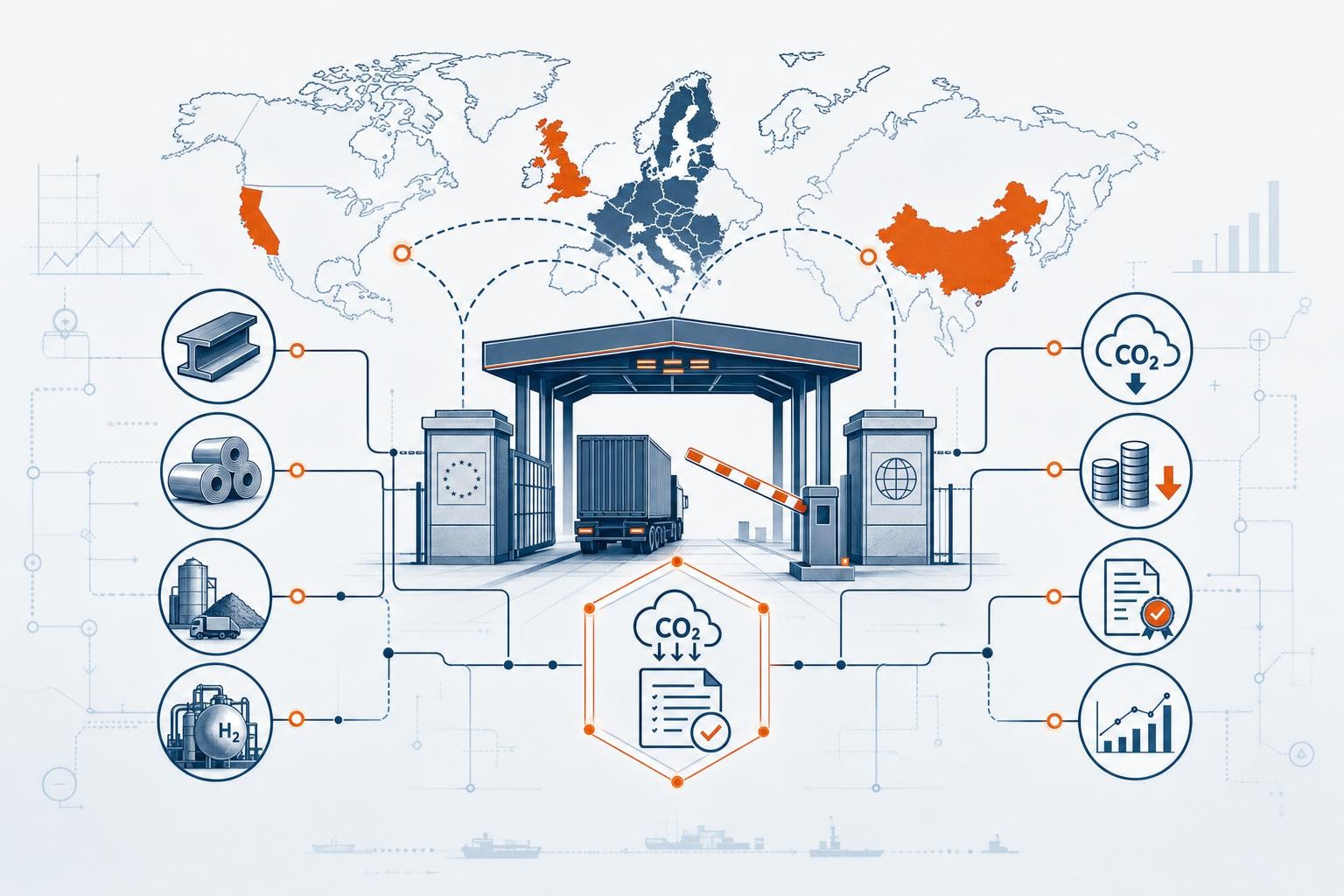
The Commission's draft rules on deducting carbon prices paid outside the EU are close to adoption. Here is what qualifies, what the 10% credit cap does, and what evidence importers will need.
The 50-Tonne CBAM Threshold: Who Is Really Exempt, and Why Parliament Wants Aluminium Cut to 5 Tonnes
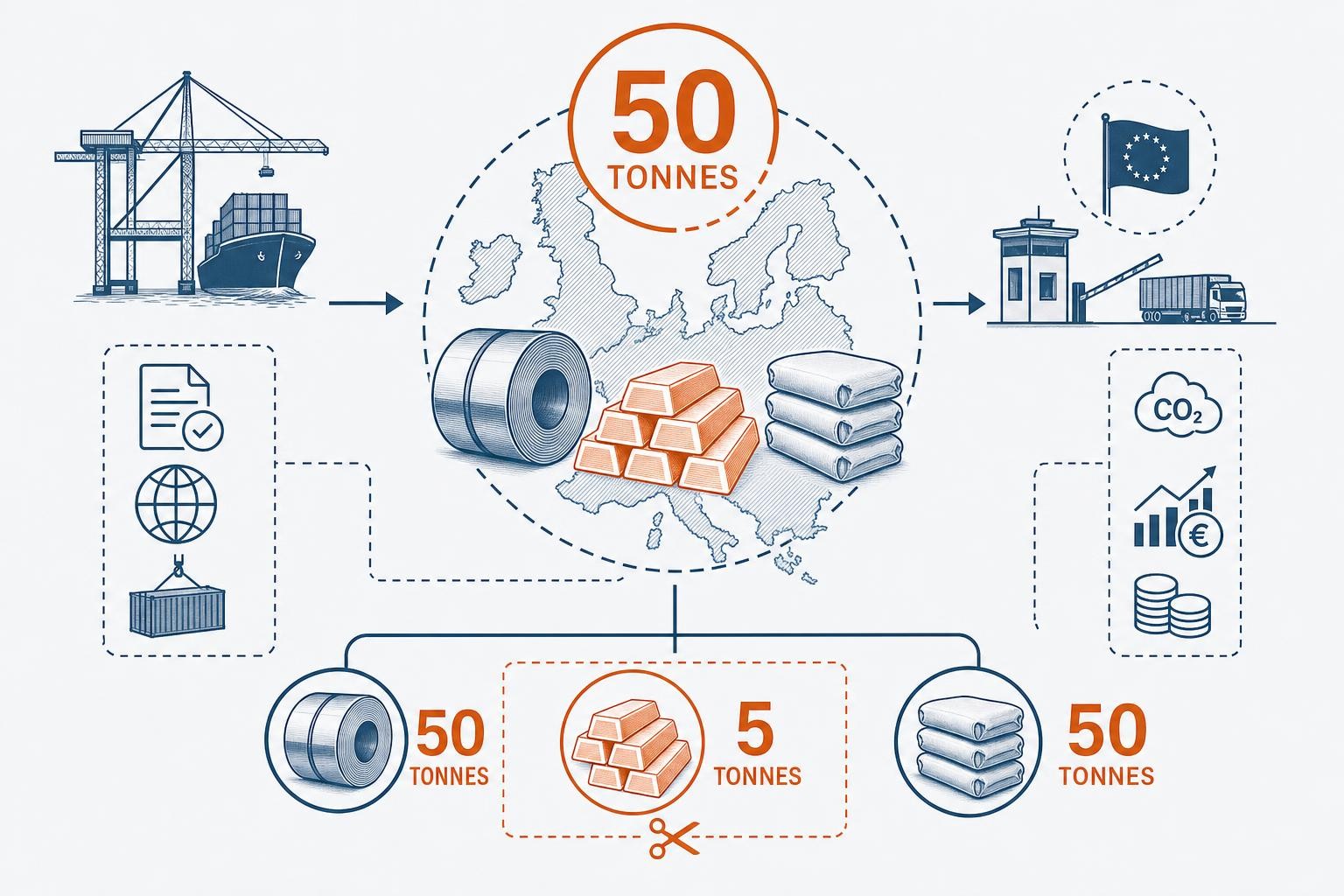
The omnibus replaced the per-shipment value test with an annual 50-tonne threshold. Who is exempt, how the cumulative rule bites, and why Parliament wants a 5-tonne limit for aluminium as trilogue opens on 20 October.