Norway and Iceland Are Joining CBAM: What the EEA Joint Committee Decisions Change for Importers
Norway and Iceland Are Joining CBAM
On 25 September 2026 the EEA Joint Committee adopted two decisions that extend the EU Carbon Border Adjustment Mechanism to the EEA EFTA states. The step matters, but the Commission itself cautions that "adoption is not entry into force."
What was adopted
According to the CBAM Pulse regulatory tracker, the Joint Committee adopted:
- Decision 283/2026, which incorporates Regulation (EU) 2023/956 and its amending Regulation (EU) 2025/2083 into the EEA Agreement. It explicitly excludes Liechtenstein. Entry into force depends on constitutional notifications under Article 103(1) of the EEA Agreement, which EFTA lists as pending. See the EFTA decision text.
- Decision 287/2026, which covers Iceland and Norway's access to the CBAM Registry, the common central platform and customs systems. It enters into force the day after the final notification. See the EFTA decision text.
Not a mere technical adaptation
The Commission's July 2026 proposal to the Council (COM(2026) 335 final) said EEA EFTA participation involves "adaptations which go beyond what can be considered mere technical adaptations," and that these states would contribute financially to the systems supporting CBAM across the EEA.
What this means in practice
Be careful here: the decisions do not take effect until the notification steps are complete. Until then, do not assume any change in how goods from, or into, Norway and Iceland are treated. Two things to plan for once they do apply:
- Supply chains that touch Norway or Iceland. If you source CBAM-covered goods such as aluminium or fertilisers from EEA EFTA producers, check how their status would be treated after entry into force. Confirm against the official EFTA status page rather than secondary summaries.
- Importers established in Norway or Iceland. Decision 287/2026 points to their access to the same Registry and central platform that EU declarants use, which signals the same authorised-declarant and certificate obligations.
What to monitor
- The EFTA EEA-Lex status page for the entry-into-force date.
- Any national implementing measures in Norway and Iceland.
- Whether Liechtenstein's exclusion is revisited.
Bottom line
This is a real step toward a wider CBAM area, but the legal effect is still pending. Track the notification status, and update supplier and customer contracts only when the entry-into-force date is confirmed.
Related reading
Who Can Actually Accredit Your Supplier's Verifier? Reading the Commission's CBAM Accreditation State-of-Play
The Commission's 25 September accreditation update shows 24 national bodies on board, 15 ready and only 5 taking third-country applications. What that means for suppliers outside the EU and the importers who depend on them.
The EU-India Trade Deal Didn't Buy India a CBAM Exemption: What Steel and Aluminium Importers Should Plan For
The EU-India trade agreement cuts tariffs on most goods, but it leaves CBAM untouched. Here is what that means for importers of Indian steel and aluminium, and what to do before the 2026 declaration.
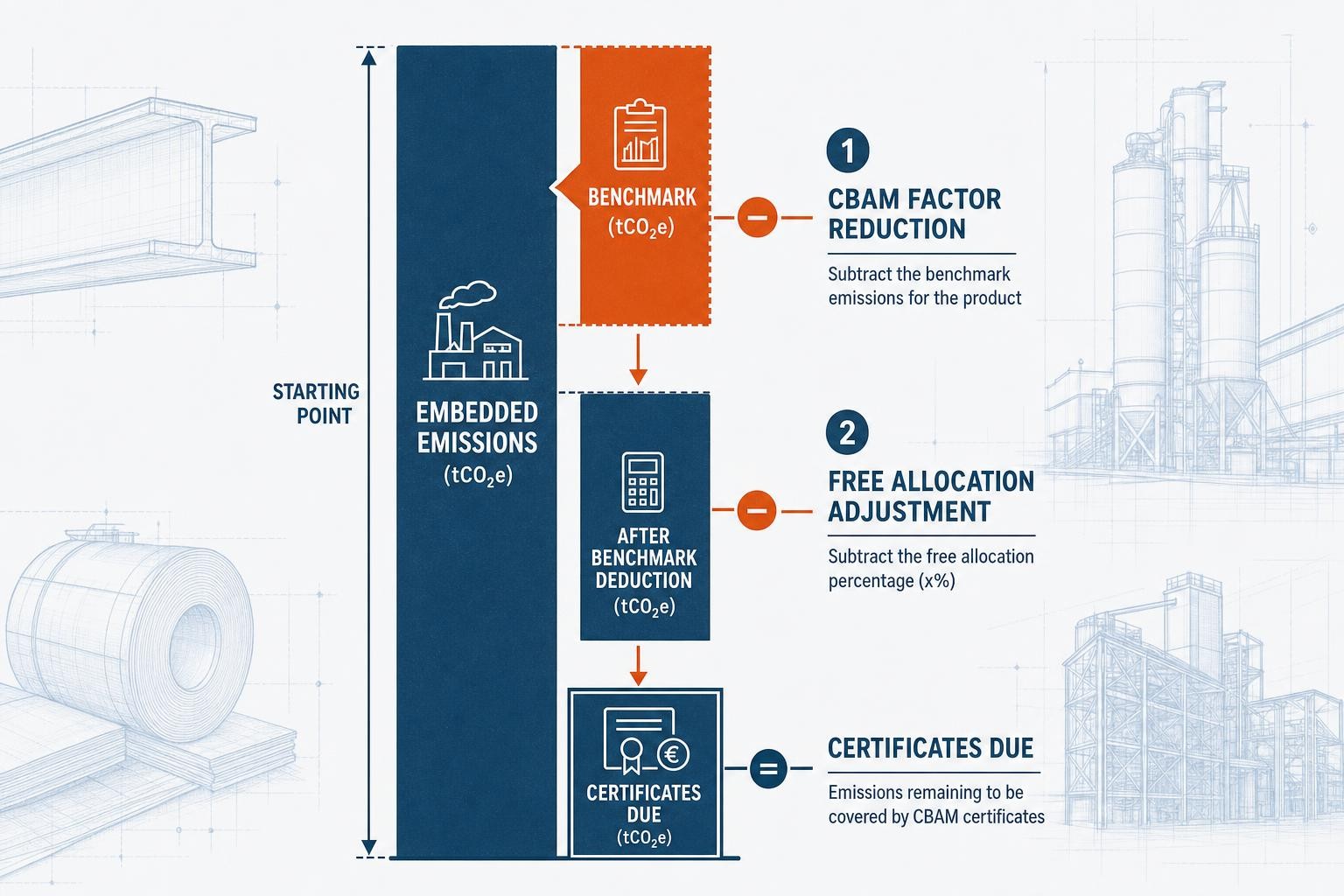
The Two Reductions Nobody Tells You About: CBAM Certificates, the CBAM Factor, and the Free Allocation Adjustment
Your CBAM certificate bill is not simply 2.5% of embedded emissions. There are two distinct reductions - the CBAM factor and the SEFA free allocation adjustment - and conflating them changes the cash number.