CBAM and Steel: Why Your Supplier's Production Route Is Now a Procurement Decision
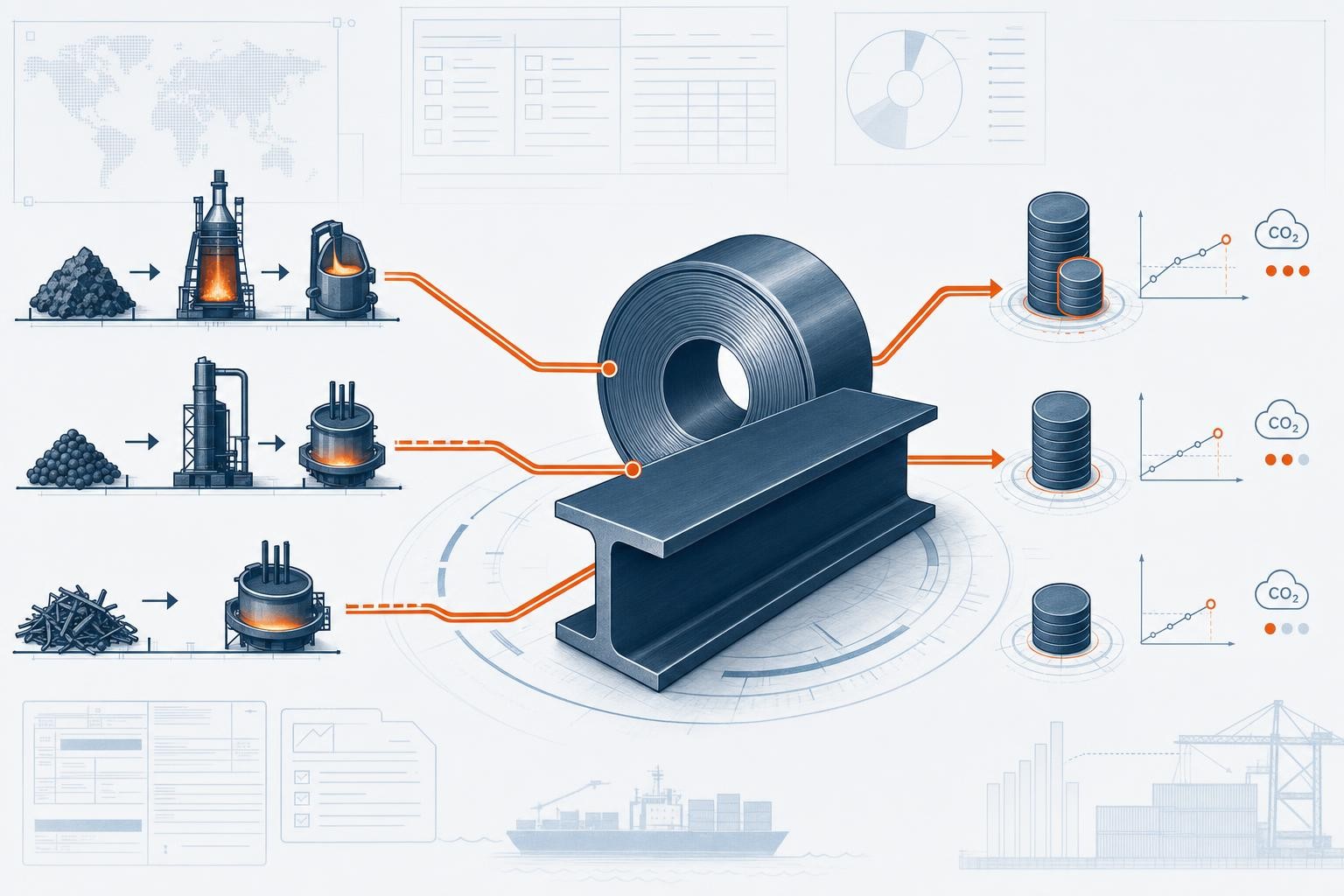
Most CBAM guides for steel importers stop at compliance: get your CN codes right, apply for authorised-declarant status, file by 30 September 2027. All of that matters. But there's a more consequential question sitting underneath it: does your supplier's production route determine how much you pay - and can you change it?
The answer to both is yes. The three official benchmark values for steel span a 19-fold range. That spread isn't a rounding error; it's a sourcing lever that will grow in financial significance every year through 2034.
What's in scope: Chapters 72 and 73
Steel's CBAM footprint is large. The regulation draws from two Combined Nomenclature chapters: Chapter 72, covering iron and steel in primary and semi-finished form, and Chapter 73, covering articles of iron or steel. Iron and steel imports to the EU exceed €15 billion annually across more than 50 CN code positions.
The most common in-scope categories include pig iron, semi-finished products (billets, blooms, slabs), flat-rolled products (hot-rolled and cold-rolled coil, plate), long products (bars, rods, sections), tubes and pipes, and a range of steel articles including fasteners and fittings. Ferrous waste and scrap (CN 7204) is explicitly excluded, because secondary scrap input is zero-rated for embedded emissions purposes under Regulation (EU) 2023/956.
CN codes matter at the 8-digit level, not the chapter level. Two products that look similar in plain English can sit in very different positions — one in scope, one not. Cross-check every code against Annex I of Regulation (EU) 2023/956 before assuming coverage.
The de minimis threshold, following the Omnibus simplification, is 50 tonnes per year of CBAM goods. Below that, no obligations apply. Above it, every tonne counts.
The direct-emissions-only rule: steel's key distinction
Steel is listed in Annex II of Regulation (EU) 2023/956. That classification has a specific consequence: only direct CO₂ emissions are priced. Indirect emissions from electricity consumed during steelmaking are excluded from the CBAM steel calculation.
This matters because it makes steel different from cement and fertilisers, where both direct and indirect emissions (including electricity) are counted. For an electric arc furnace running on a high-carbon grid, the electricity emissions are real - but they don't enter the CBAM calculation for steel. This is consistent with the treatment of EU steel producers, who receive state aid compensation for indirect carbon costs under the ETS Directive rather than a direct charge.
The practical upshot: for steel, the CBAM calculation is anchored to what happens in the furnace, not what comes off the grid.
The three benchmarks - and why the spread is the story
Three official production-route benchmarks apply under Implementing Regulation (EU) 2025/2621: BF-BOF at 1.370 tCO₂e per tonne of crude steel, DRI-EAF at 0.481 tCO₂e/t, and Scrap-EAF at 0.072 tCO₂e/t. These are set by Implementing Regulation (EU) 2025/2621.
Route classification follows a majority rule: when more than 50% of crude steel mass originates from scrap, the product is classified as Scrap-EAF; when more than 50% originates from DRI, it is classified as DRI-EAF; otherwise it is classified as BF-BOF.
The cost spread across these routes is not marginal. At a certificate price of approximately €75/tCO₂e, the gross CBAM cost per tonne of crude steel is roughly:
In 2026, the CBAM factor is 2.5% - so net costs are 2.5% of those gross figures. In 2026, the CBAM factor is 2.5%, so net certificate costs in 2026 are 2.5% of the gross figure. A BF-BOF net cost at €75 ETS price is approximately €2.57 per tonne in 2026. That sounds modest. But the factor rises steeply: the CBAM factor schedule runs 2.5% in 2026, 5% in 2027, 10% in 2028, 22.5% in 2029, 48.5% in 2030, and reaches 100% by 2034.
The net certificate cost at full phase-out is 40 times larger than in the first year. A sourcing decision made today on the basis of 2026 costs alone is a decision made on 2.5% of the eventual exposure.
Why production route is a genuine sourcing lever
The iron and steel sector faces the most significant carbon border exposure, accounting for roughly 75% of potential CBAM liabilities. Within that sector, the route spread creates a structural cost advantage for importers who can source from scrap-based or DRI-based mills.
Consider a buyer importing 10,000 tonnes of steel slab per year. At the BF-BOF benchmark, gross embedded emissions are 13,700 tCO₂e. At the Scrap-EAF benchmark, they are 720 tCO₂e. By 2030, when the CBAM factor reaches 48.5%, that difference translates to a net cost gap of roughly €600,000 per year at today's ETS price - before any ETS price appreciation.
The metals industry is expected to be the largest purchaser of CBAM certificates, totalling 88% of liabilities between 2026 and 2035, with 81% of total CBAM costs contributed by the iron and steel sector. The implication is that steel importers have more to gain from route-aware sourcing than any other CBAM sector.
Use this calculator to compare your exposure by route
Default values vs verified actual data: the mark-up you want to avoid
When a supplier can't provide verified emissions data, the importer falls back on Commission default values - country-specific and product-specific figures published in Implementing Regulation (EU) 2025/2621. Default values are emission intensity figures published by the European Commission for each product-country combination, used when an importer cannot obtain specific embedded emissions data from the production installation, with a punitive mark-up applied to incentivise measurement and verification.
The mark-up structure is: 10% above the calculated default in 2026, rising to 20% in 2027 and 30% from 2028.
Country-specific defaults can be substantially higher than the route benchmark. The default embedded emissions value for Chinese steel slab is 3.167 tCO₂e per tonne, established under Implementing Regulation (EU) 2025/2621 - more than double the BF-BOF benchmark of 1.370 tCO₂e/t. An importer sourcing Chinese slab without verified data pays on that higher figure, plus the mark-up.
What verification actually requires
To use actual (supplier-specific) emissions data instead of defaults, the data must be independently verified. Under CBAM, only verifiers accredited by EU National Accreditation Bodies (NABs) can verify the total embedded emissions declared in an importer's CBAM declaration. All embedded emissions data submitted in a CBAM declaration must be verified by an accredited third-party verifier. Self-reported figures that have not been independently verified are not accepted.
The first CBAM verifiers are expected to receive CBAM accreditation around September 2026. Verifier registration in the CBAM Registry opens September 1, 2026, which gives accredited firms just 13 months to conduct site visits across thousands of non-EU facilities in China, India, Turkey, the UAE, and Egypt. EU importers who wait until late 2026 to identify a verifier face genuine availability risk.
One more point worth flagging: verification is required only when an EU importer uses actual values rather than default values for embedded emissions. Importers who rely entirely on the Commission's default values published in Implementing Regulation (EU) 2025/2621 do not need a verifier at all. The trade-off is cost: defaults carry the mark-up and, for high-carbon origins, the higher country-specific baseline.
The 2026 timeline
CBAM entered its definitive period on 1 January 2026. The first annual declaration and certificate surrender deadline is 30 September 2027, covering all imports made during 2026.
Key dates for steel importers:
- 1 January 2026 - Definitive phase live; certificate obligations accrue on every qualifying import
- September 2026 - CBAM verifier registry opens; first accredited verifiers expected
- 30 September 2027 - First annual CBAM declaration due, covering all 2026 imports; certificates must be surrendered
Combined CBAM costs across iron/steel, aluminium, fertiliser, and cement could exceed €12 billion in 2026, roughly 15% of the value of these imports. Across iron and steel, aluminium, fertiliser, and cement, total CBAM costs could exceed €12 billion in 2026 alone, roughly 15% of the value of these imports. Steel is the dominant contributor.
Four first steps for a steel importer
Pull your import data at the 8-digit CN code level and check each code against Annex I of Regulation (EU) 2023/956. Confirm whether you're above the 50-tonne de minimis threshold. Pay particular attention to fasteners (CN 7318) and tube/pipe fittings — these are frequently missed in initial scope reviews.
Ask every supplier whether their crude steel is BF-BOF, DRI-EAF, or Scrap-EAF — and what their scrap or DRI input share is. The majority-rule classification (>50% scrap = Scrap-EAF; >50% DRI = DRI-EAF) means a supplier near the threshold could shift classification with a modest change in feedstock mix. This is the single highest-value data point you can collect.
For each supplier, weigh the cost of obtaining verified actual emissions data against the cost of the default mark-up. For low-carbon routes (Scrap-EAF) from countries with modest country-specific defaults, defaults may be acceptable. For BF-BOF suppliers from high-default countries like China, the gap between actual and default can be substantial — and widens with the mark-up schedule through 2028.
Verifier capacity is limited: registration opens September 2026 and the declaration deadline is September 2027. If you plan to use verified actual data for any supplier, identify and engage an accredited verifier now — before the market tightens. The verification must cover the full 2026 import year, so the clock is already running.
The bottom line
Steel's CBAM cost is not a fixed line item - it's a function of production route, origin country, and whether your supplier's data can be verified. The 19-fold spread between BF-BOF and Scrap-EAF benchmarks means that route-aware sourcing is now a legitimate cost-reduction strategy, not just a compliance consideration. And with the CBAM factor rising from 2.5% today to 48.5% by 2030 and 100% by 2034, the financial stakes of that decision compound every year.
Get your CN codes mapped, understand your suppliers' routes, and start the verification conversation now. The data you need for the September 2027 declaration is being generated in your suppliers' mills today.
This article is general information, not legal or tax advice. CBAM rules, default values, and CN-code coverage are detailed and subject to change; confirm specifics against the official CBAM legal texts - in particular Regulation (EU) 2023/956 as amended by Regulation (EU) 2025/2083, and Implementing Regulation (EU) 2025/2621 - before acting.
Related reading
CBAM Monitoring Plans: What Installation-Level Data Quality Actually Requires
The monitoring plan - not just the final emissions number - is now the primary object of CBAM scrutiny. Here's what IR 2025/2547 requires at the installation level, and why traceability is the recurring failure point.
Becoming an Authorised CBAM Declarant: A Practical Guide for EU Importers
The 31 March 2026 deadline has passed. Here's what Authorised CBAM Declarant status means, what the transitional easement covers, how financial guarantees work, and what every importer must do before September 2027.
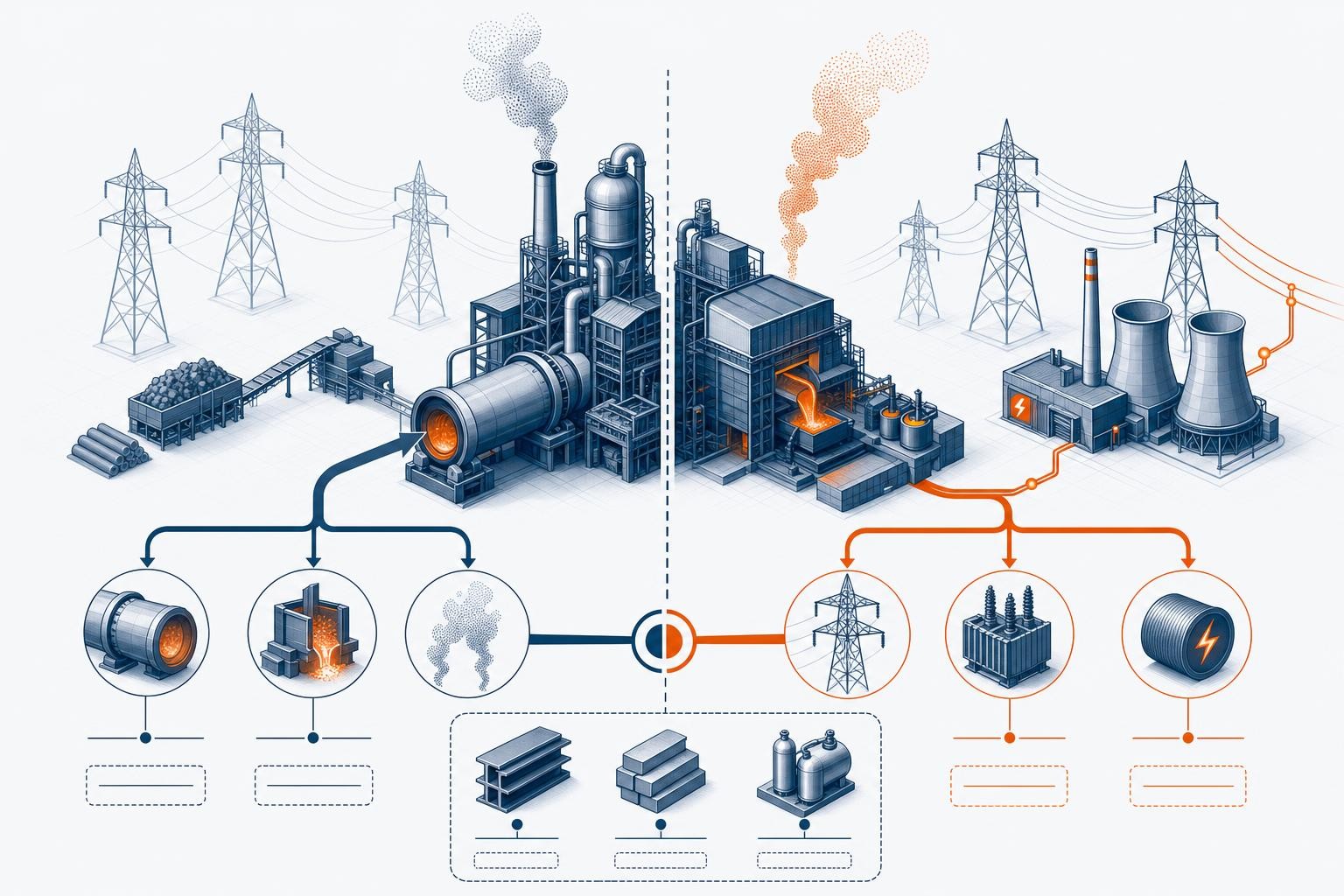
CBAM and Indirect Emissions: Why the Annex II Split Matters for Steel, Aluminium, and Hydrogen Importers
CBAM prices indirect emissions for cement and fertilisers but not for steel, aluminium, or hydrogen - and the reason why matters for your compliance strategy. Here's the full mechanics.