CBAM Monitoring Plans: What Installation-Level Data Quality Actually Requires

Most CBAM conversations focus on the final number: tonnes of CO₂e per tonne of goods. But verifiers don't start with the number. They start with the monitoring plan - the document that explains how the number was produced. If the plan doesn't hold up, neither does the data.
This post covers what a compliant monitoring plan actually requires under Implementing Regulation (EU) 2025/2547, why installation-level specificity is non-negotiable, and what verifiers are looking for when they arrive on site.
Why the Monitoring Plan Is Now the Object of Scrutiny
During the transitional period, the EU's focus was on getting data flowing. The definitive period, which began on 1 January 2026, is different in kind. From 2026 onward, only verified emissions data is accepted for actual-value reporting. That means a verifier must sign off on your data before an EU importer can use it in their annual CBAM declaration.
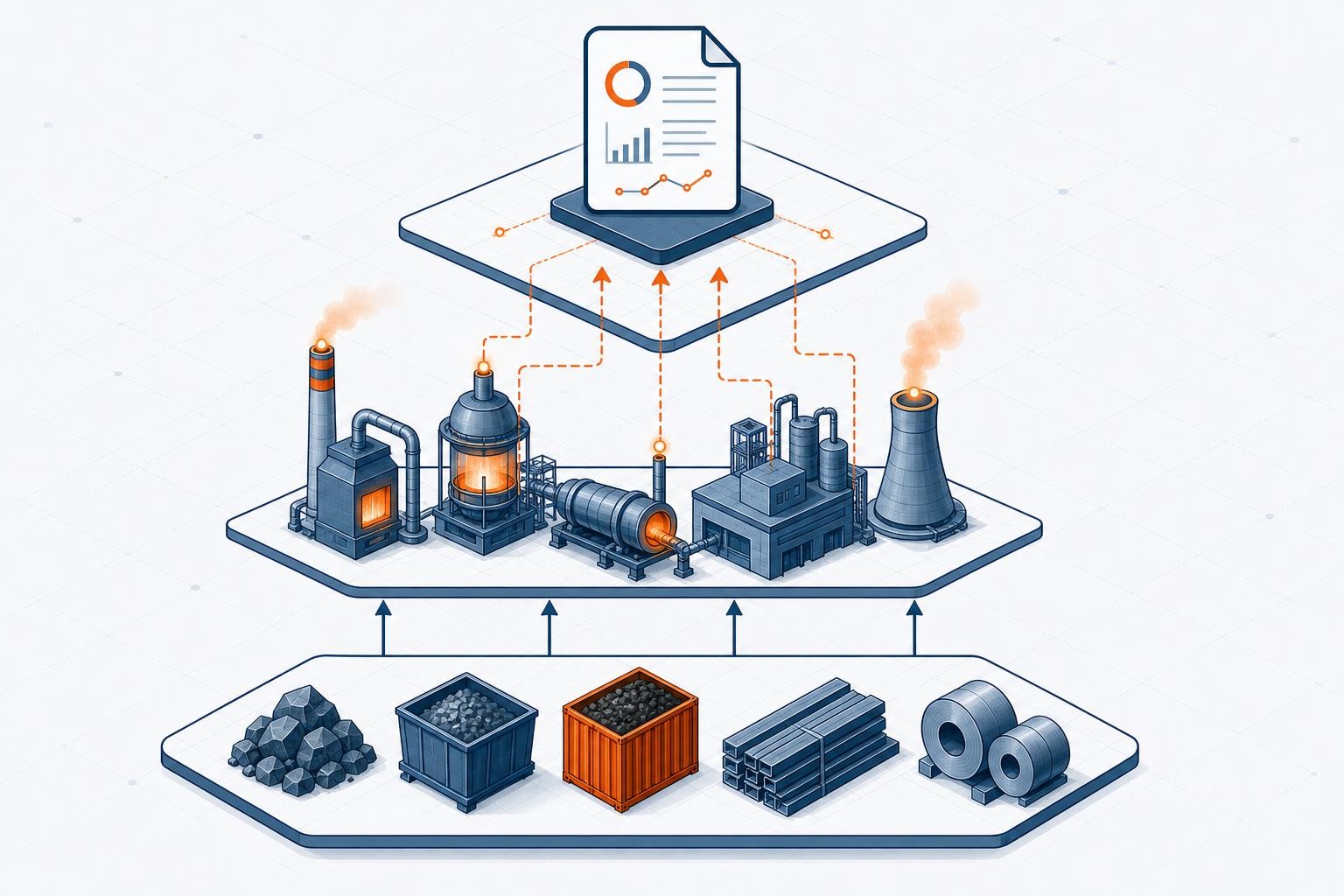
Verification is not a final audit of a spreadsheet. It is a structured review of the entire data production process - from how emissions sources were identified, to how activity data was collected, to how calculation factors were applied, to how the final specific embedded emissions figure was derived.
As one analysis of the verification framework puts it, verification "does not only assess the final numbers - it evaluates how data is collected, governed, stored, and integrated into calculations across the entire workflow." The monitoring plan is the document that makes that evaluation possible. Without it, a verifier has no baseline against which to assess whether the reported data is complete, consistent, and correctly calculated.
Under IR 2025/2547, operators are required to set out the main methodological criteria underpinning data collection at the installation throughout the year and the calculation of emissions in a monitoring plan. A template with minimum requirements is prescribed. The monitoring plan is not optional documentation - it is the legal foundation for the actual-value pathway.
What "Installation-Level" Really Means - and Why Averages Don't Qualify
"Installation-level" is a precise regulatory concept, not a general aspiration toward specificity.
CBAM requires emissions to be calculated at the level of the individual production installation - company-wide averages or regional emission factors are generally not sufficient. This matters because CBAM's financial obligation is tied to the specific embedded emissions of the goods produced at a specific facility. A national average for steel or cement may be higher or lower than what a given plant actually emits. Using it in either direction creates a mismatch between the regulatory obligation and the real carbon cost.
The calculation unit is the specific embedded emission (SEE): direct (and, for some sectors, indirect) emissions divided by net production in tonnes. The core formula established in IR 2025/2547 is: SEE = (Direct Embedded Emissions + Indirect Embedded Emissions) / Net Production (tonnes), with indirect emissions set to zero for sectors where they are not priced - steel, aluminium, and hydrogen.
The calculation follows a top-down approach: emissions are monitored at installation level, then attributed to production processes, and then converted to specific embedded emissions for the goods produced. Each step in that chain must be documented and traceable. A company-wide average collapses the first two steps entirely - there is no installation, no process attribution, and therefore nothing for a verifier to check.
Generic GHG figures, life-cycle assessments, and product carbon footprints built on industry averages are not substitutes. They are built on different methodological foundations and cannot be verified against the EU's monitoring and reporting standards.
Core Components of a Compliant Monitoring Plan Under IR 2025/2547
IR 2025/2547 defines monitoring plan requirements, system boundaries for each production process, and the calculation equations specific to each of the six covered CBAM sectors: cement, iron and steel, aluminium, fertilisers, hydrogen, and electricity. A compliant monitoring plan must address all three layers.
1. System Boundaries
System boundaries define which emission sources and production processes are in scope for a given installation. The system boundaries under IR 2025/2547 are aligned with those covered under the EU ETS. This alignment is deliberate - it ensures that CBAM does not create a parallel monitoring universe that diverges from the framework non-EU producers may already be familiar with.
In practice, system boundaries must specify:
- Which production processes at the installation are covered (e.g., the specific kiln type for cement, the production route for steel - basic oxygen furnace vs. electric arc furnace)
- Which emission sources fall within those processes (combustion, process emissions, flaring)
- Whether indirect emissions from electricity are in scope (they are for cement and fertilisers; not for steel, aluminium, or hydrogen)
- How precursor emissions are handled for complex goods
2. Data Sources and Monitoring Methodology
For each emission source within the system boundary, the monitoring plan must specify how activity data is collected and what calculation factors apply. Two methodologies are available:
- Calculation-based: monitors source streams (fuels, input materials) using activity data and calculation factors, including the standard method or mass balance approach
- Measurement-based: monitors emission sources using a Continuous Emission Measurement System (CEMS), where applicable
The plan must identify the tier level used for each data element - a concept borrowed from the EU ETS's Monitoring and Reporting Regulation (MRR) framework, where higher tiers represent greater measurement precision. Suppliers must document whether approved default or fallback values were used for any data element, and to what extent.
3. Calculation Methods and Control Measures
The monitoring plan must document the specific calculation equations applied for each production process and explain how data flows from primary measurement to the final SEE figure. Critically, it must also contain control measures covering that entire data flow.
EU Commission guidance specifies that the monitoring plan "needs to contain control measures in the data flow from primary data to final specific embedded emissions," and that these measures "should include frequent checking by an independent person, and comparing data from different sources, consistency checking of time series."
This is not administrative box-ticking. Control measures are what allow a verifier to assess whether the data production process is reliable - and whether any errors in the final number are likely to be material.
What Verifiers Are Actually Checking - and Why Traceability Is the Recurring Failure Point
For the first verification period covering calendar year 2026 imports, a physical on-site visit to each installation producing CBAM goods is mandatory under IR 2025/2546. From 2027 onward, virtual visits or waivers are possible under defined low-risk conditions, but a physical site visit must still take place at least once every two years.
The verification scope under IR 2025/2546 is structured around several areas:
- Activity data accuracy: production volumes, fuel consumption, input material weights, and process-specific data used in the embedded emissions calculation
- Monitoring plan conformity: whether the installation is actually monitoring what the plan says it is monitoring, using the methods the plan specifies
- Calculation correctness: whether the equations applied match those required by IR 2025/2547 for the relevant sector and production route
- Materiality assessment: verifiers apply a 5% materiality threshold - misstatements or non-conformities above that level result in a qualified or adverse verification conclusion
The recurring failure point across all of these is traceability. Verifiers need to follow a data point from its primary source - a meter reading, a fuel delivery record, a lab analysis - through every transformation step to the final SEE figure. If any link in that chain is missing, undocumented, or inconsistent with the monitoring plan, the data cannot be verified as satisfactory.
Data that cannot be traced back to its source or explained is likely to be rejected by verifiers. This is not a theoretical risk. Installations that have operated under national GHG reporting frameworks often have data that is aggregated at a level that makes CBAM-specific tracing impossible - the original meter readings may not have been retained, or the allocation methodology between products may not have been documented at the time of collection.
The practical implication: traceability is a data governance problem, not just a calculation problem. It requires decisions about what data to retain, at what granularity, for how long, and in what format - decisions that need to be made before the monitoring period begins, not when the verifier arrives.
What Happens If the Monitoring Plan Doesn't Pass
If actual data is not available or cannot be verified, default values apply. Default values represent the goods-specific average emissions intensity in the country of origin with a mark-up, set by the EU Commission in IR 2025/2621. The mark-up is the penalty for not having auditable actual data.
For installations that operate more efficiently than the country average, the financial cost of falling back to defaults can be significant. For those that operate less efficiently, defaults may appear attractive - but regulators are alert to this, and the verification framework is designed to prevent selective use of defaults to avoid higher actual-value obligations.
Monitoring Plan Audit-Readiness Checklist
Use this before your verifier engagement begins - not after.
System boundaries
- All production processes at the installation are identified and mapped to the relevant CBAM sector annex in IR 2025/2547
- Emission sources within each process are listed (combustion, process emissions, flaring)
- Scope of indirect emissions is confirmed (in-scope for cement and fertilisers; out-of-scope for steel, aluminium, hydrogen)
- Precursor emissions are identified for any complex goods produced
Data sources and monitoring methodology
- Monitoring methodology (calculation-based or measurement-based) is specified for each emission source
- Tier levels are documented for each activity data element and emission factor
- Any use of approved default or fallback values is identified, quantified, and justified
- Measurement equipment is calibrated and calibration records are retained
Calculation methods
- Calculation equations match those specified in IR 2025/2547 for the relevant sector and production route
- Allocation methodology between products is documented (for multi-product installations)
- The data flow from primary data to final SEE is documented step by step
Control measures and traceability
- Primary data records (meter readings, delivery notes, lab analyses) are retained at source granularity
- Data flow from primary source to final calculation is documented and auditable
- Independent internal checking of data is in place and evidenced
- Consistency checks across time series are performed and documented
- The monitoring plan is written in a language suitable for verification (commonly used and understood for monitoring, calculating, and verifying emissions)
Verification readiness
- The monitoring plan has been reviewed against IR 2025/2547's minimum template requirements
- An accredited CBAM verifier has been engaged ahead of the monitoring period end
- Site visit logistics are confirmed (mandatory physical visit for 2026 data)
The monitoring plan must be in place before the monitoring period it covers. A plan written retrospectively to explain data already collected is not compliant — and verifiers are trained to identify post-hoc documentation. If your supplier's 2026 monitoring plan is not yet finalised, that is an urgent gap.
The Bottom Line
The shift from the transitional period to the definitive period is a shift in what CBAM actually tests. The transitional period tested whether data could be collected. The definitive period tests whether data can be trusted - and the monitoring plan is the document that determines the answer.
Getting the final emissions number right matters. But the number is only as good as the plan behind it. Verifiers know this, and they will check accordingly.
This article is general information, not legal or regulatory advice. CBAM rules are subject to change; confirm specifics against the official legal texts - in particular Implementing Regulation (EU) 2025/2547 and Implementing Regulation (EU) 2025/2546 - and the Commission's CBAM hub at taxation-customs.ec.europa.eu.
Related reading
CBAM and Steel: Why Your Supplier's Production Route Is Now a Procurement Decision
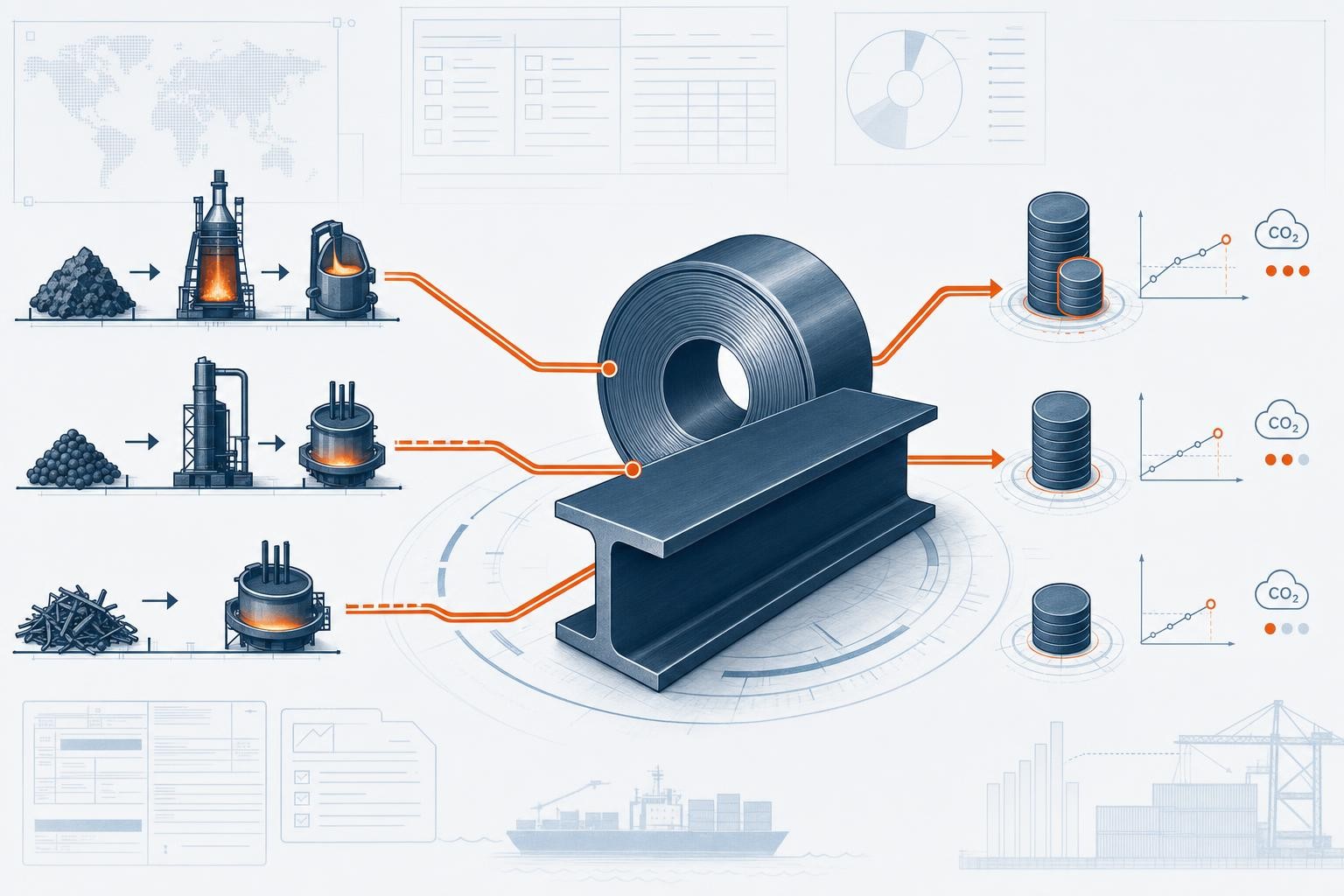
Steel's CBAM cost isn't fixed - it swings by up to 19x depending on how your supplier makes steel. Here's how the BF-BOF, DRI-EAF, and Scrap-EAF benchmarks translate into real sourcing decisions.

Becoming an Authorised CBAM Declarant: A Practical Guide for EU Importers
The 31 March 2026 deadline has passed. Here's what Authorised CBAM Declarant status means, what the transitional easement covers, how financial guarantees work, and what every importer must do before September 2027.
CBAM and Indirect Emissions: Why the Annex II Split Matters for Steel, Aluminium, and Hydrogen Importers
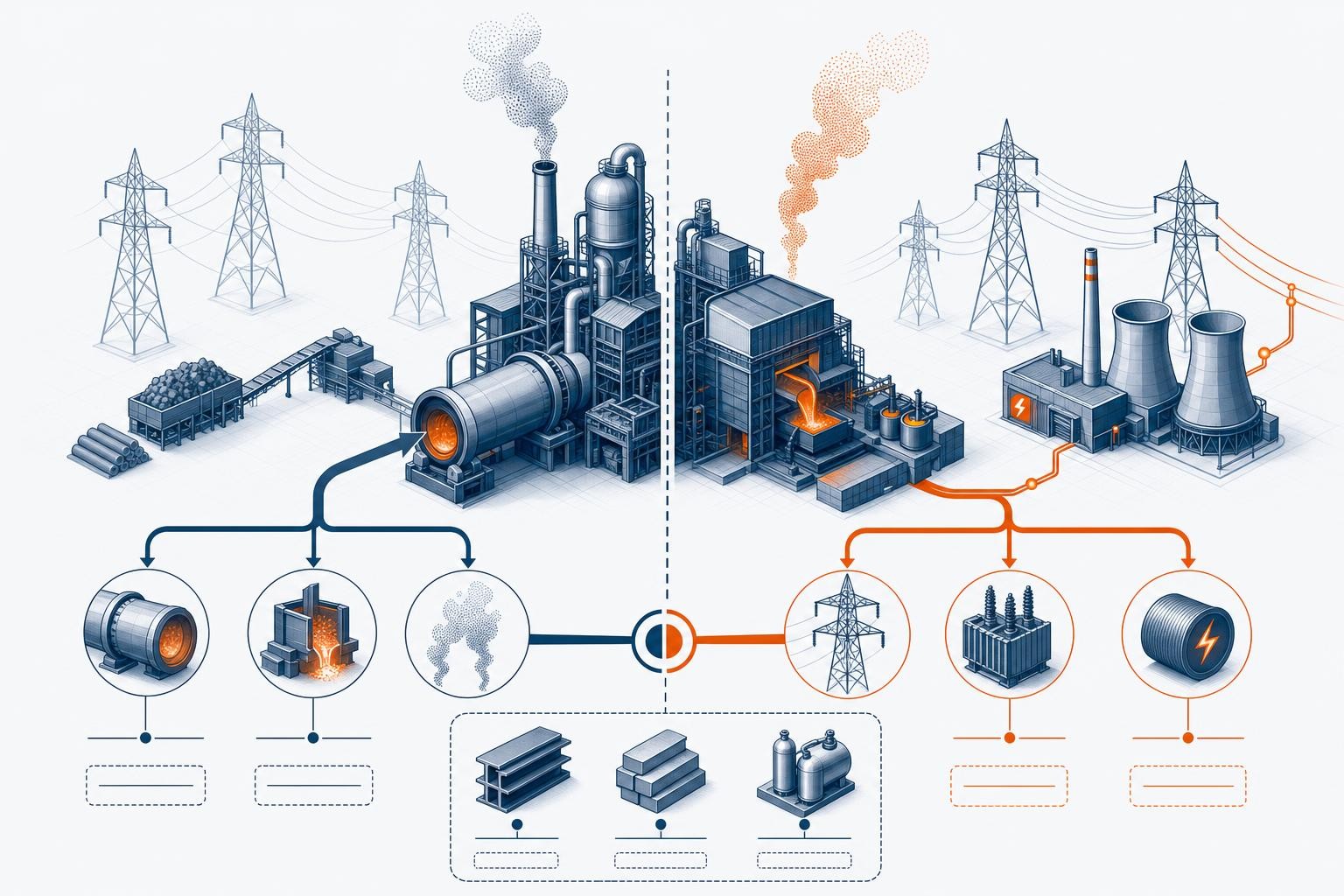
CBAM prices indirect emissions for cement and fertilisers but not for steel, aluminium, or hydrogen - and the reason why matters for your compliance strategy. Here's the full mechanics.