Becoming an Authorised CBAM Declarant: A Practical Guide for EU Importers
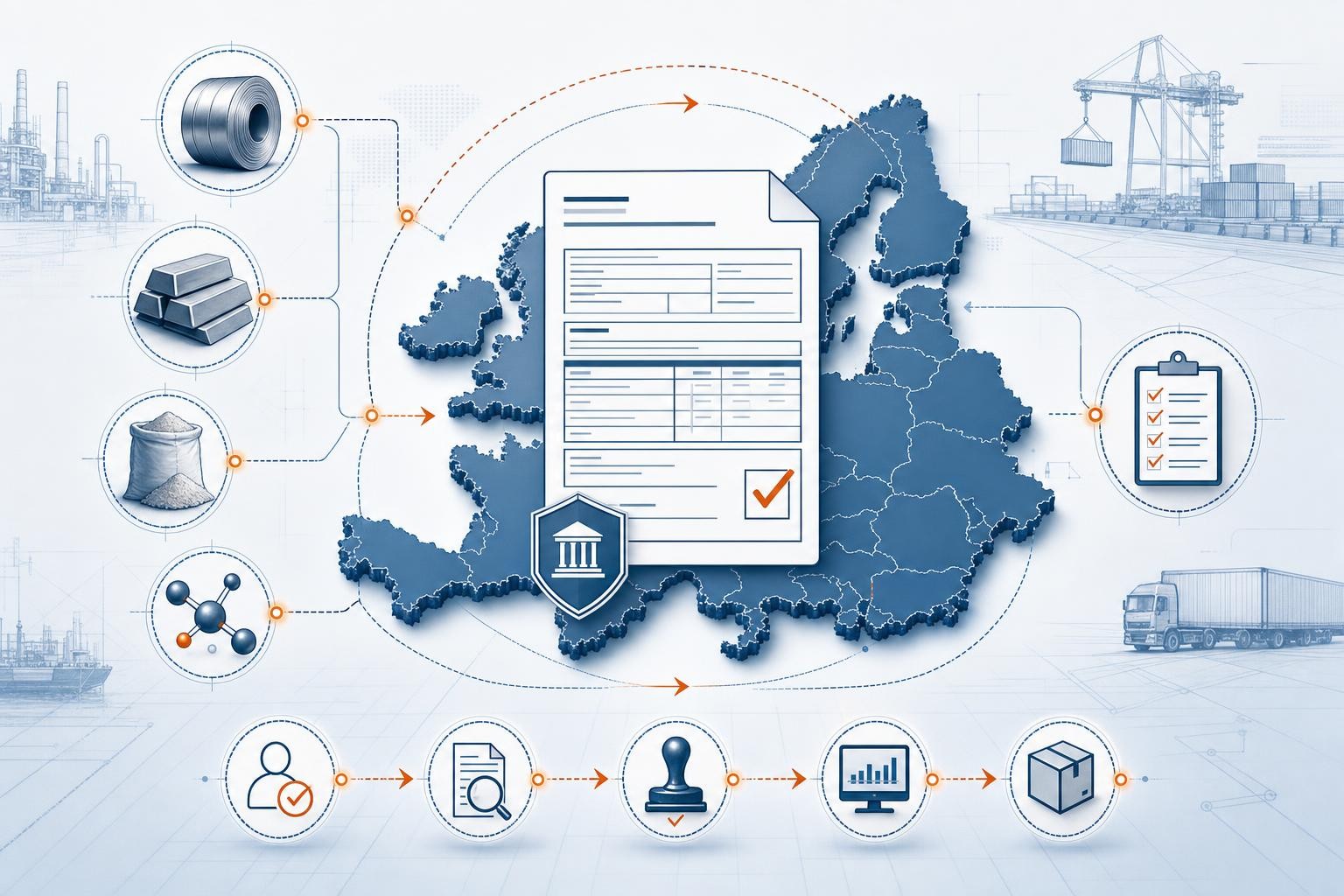
The 31 March 2026 application deadline for Authorised CBAM Declarant status has now passed. If you import steel, aluminium, cement, fertilisers, electricity, or hydrogen into the EU above the threshold, your legal position depends entirely on which side of that date you fall - and what you do next.
This guide cuts through the regulatory language to explain who needs the status, what the transitional easement under Regulation (EU) 2025/2083 actually protects, how financial guarantees fit into the picture, and the concrete steps between now and the first certificate surrender deadline on 30 September 2027.
Who Needs Authorised CBAM Declarant Status - and Why It's Not Optional
From 1 January 2026, only entities holding Authorised CBAM Declarant status may import CBAM-covered goods into EU customs territory. An importer without authorisation cannot lawfully proceed with imports of covered goods - national authorities will block them at the border.
The status requirement applies to two groups:
- EU-established importers who import more than 50 tonnes of CBAM goods per calendar year (the de minimis threshold introduced by the Omnibus simplification)
- Indirect customs representatives acting in their own name for non-EU importers - they must be authorised from the very first import, with no tonnage threshold
Importers whose total annual imports of CBAM goods do not exceed 50 tonnes are now exempt from CBAM reporting, declaration, and certificate-surrender obligations - a threshold that applies cumulatively across iron and steel, aluminium, fertilisers, and cement, but not electricity or hydrogen.
One important nuance: if an importer exceeds the 50-tonne threshold, all of its imports become subject to CBAM - not only the tonnes above the limit. So if you're running close to 50 tonnes, the decision to apply is binary, not graduated.
Electricity and hydrogen importers have no de minimis threshold. If you import either commodity, you need Authorised CBAM Declarant status before your first import, regardless of volume.
The Transitional Easement Under Reg. 2025/2083: What It Covers (and What It Doesn't)
The March 2026 deadline was itself a product of the Omnibus simplification. Under the original framework, importers needed authorisation before exceeding the threshold - with no grace period. Regulation (EU) 2025/2083 introduced a specific transitional easement: importers who submitted their application by 31 March 2026 may continue importing CBAM goods throughout 2026, and until their national competent authority (NCA) issues its decision, even if they exceed the 50-tonne threshold while the application is pending.
In plain terms: if you applied on time, you can keep importing. Your NCA is still processing your file; your supply chain is not at legal risk in the interim.
If you didn't apply by 31 March 2026, the picture is significantly worse. You are importing CBAM goods without authorisation, which is a separate and more serious infringement than simply failing to surrender certificates. Penalties for importing without authorisation can run substantially higher than the standard non-compliance rate - some national authorities have indicated figures several times the base €100/tonne rate. The correct course of action is to contact your NCA immediately, seek legal advice, and explore whether a late application or remediation path is available in your member state.
What a Financial Guarantee Involves
The authorisation process is not just an administrative registration. Your NCA assesses financial standing as part of the application - and for some applicants, a financial guarantee is required.
If an applicant was not established for the two financial years preceding the application, a financial guarantee may be required, covering the estimated value of CBAM certificates. Even for established businesses, NCAs may request supporting documentation such as financial audits to verify solvency and the capacity to meet certificate liabilities.
The precise mechanics - form of guarantee, acceptable instruments, and sizing methodology - sit with each NCA and vary across member states. As a planning rule of thumb, advisers commonly suggest budgeting roughly 5-10% of projected annual CBAM certificate liability for guarantee-related costs and bonds, though your NCA's specific requirements will govern.
To size that estimate, you need two inputs: your expected embedded emissions (tonnes CO₂e) across 2026 imports, and the prevailing certificate price. The first official CBAM certificate price for Q1 2026 was set at €75.36 per tonne of CO₂. Use that as a floor for planning; analyst forecasts suggest prices may rise through 2026 and into 2027.
The Road to 30 September 2027
Authorisation is the gate - but it's not the finish line. Here is the compliance timeline every authorised declarant needs to have locked in:
| Milestone | Date | What it means |
|---|---|---|
| Definitive phase live | 1 Jan 2026 | Certificate obligations accrue from this date |
| Quarterly certificate holding | Throughout 2026-27 | Hold at least 50% of estimated annual liability each quarter |
| CBAM certificate sales open | February 2027 | First opportunity to purchase certificates via national platform |
| Annual declaration + surrender | 30 September 2027 | Covers all 2026 imports; verified emissions must be declared and certificates surrendered |
Sales of CBAM certificates through the EU's central platform begin in February 2027, covering emissions from 2026 imports, with certificates priced using the average 2026 EU ETS allowance value.
The penalty for missing the surrender deadline is severe. Authorised declarants who fail to surrender sufficient certificates by 30 September 2027 face a penalty of €100 per tonne of CO₂ not covered, indexed to the European inflation rate - and paying the fine does not remove the obligation to surrender the missing certificates. You owe the certificates on top of the fine.
That double obligation - penalty plus outstanding certificates - is what makes late or incomplete compliance so costly. There is no "pay the fine and walk away" option.
Practical Next Steps: Where Do You Stand?
Your immediate priorities depend on which of three positions you're in right now.
Your NCA has granted status. Focus shifts entirely to compliance operations: confirm your emissions data collection is running for all 2026 imports, set up your CBAM Registry account for certificate management, and model your certificate purchasing plan ahead of the February 2027 sales opening. Check your quarterly holding obligation — you must hold at least 50% of estimated annual liability at each quarter-end. Book your accredited verifier now if you plan to use actual (rather than default) emissions values.
You are protected by the Reg. 2025/2083 transitional easement and may continue importing while your NCA processes the file. Monitor your application status in the CBAM Registry's Authorisation Management Module. If your NCA requests additional information, you typically have 30 days to respond — treat any such request as urgent. Use the waiting period to build out your emissions data infrastructure and financial guarantee arrangements so you are operationally ready the moment authorisation is granted.
Stop importing CBAM goods above the threshold immediately and seek legal advice from a specialist in your member state. Contact your NCA to understand whether a late application, voluntary disclosure, or remediation path is available. Document all steps taken. The longer unauthorised importing continues, the greater the enforcement exposure — NCAs have the power to impose penalties significantly above the standard €100/tonne rate for operating without authorisation.
The Authorisation Criteria: What NCAs Are Assessing
For importers whose applications are still pending, it helps to understand what your NCA is looking at. Under Implementing Regulation (EU) 2025/486, the key criteria are:
- Clean compliance record - no serious or repeated customs, tax, or CBAM-related infringements in the preceding years
- Financial standing - proof of solvency, no significant tax arrears, and demonstrated capacity to meet certificate liabilities
- Operational capacity - internal controls and data systems capable of managing emissions reporting and certificate handling
- EORI number - a valid Economic Operators Registration and Identification number is a prerequisite
Each NCA runs its own process. In Germany, for example, DEHSt assigned KPMG Law to handle application processing and communications. In Ireland, the EPA acts as NCA with Revenue (Customs Division) as the customs authority. Check your member state's NCA directly for current processing times and any country-specific documentation requirements.
Key Takeaways
- The 31 March 2026 deadline has passed. If you applied on time, the transitional easement protects your imports while your application is assessed. If you didn't, seek advice immediately.
- The 50-tonne de minimis threshold exempts most small importers - but it's cumulative across all CBAM goods, and it doesn't apply to electricity or hydrogen.
- Financial guarantees may be required as part of authorisation; plan for 5-10% of projected annual certificate liability as a rough sizing guide.
- 30 September 2027 is the first hard financial deadline - annual declaration and certificate surrender for all 2026 imports. The penalty for shortfall is €100/tonne CO₂, inflation-indexed, on top of the outstanding certificate obligation.
- Certificate sales open in February 2027. Don't wait until then to model your liability.
This article is general information, not legal or tax advice. CBAM rules and implementing acts are subject to change; confirm specifics against the official legal texts - in particular Regulation (EU) 2023/956 as amended by Regulation (EU) 2025/2083, and Implementing Regulation (EU) 2025/486 - and your national competent authority's guidance. For ongoing updates, subscribe to The CBAM Brief, our plain-English newsletter for compliance teams.
Related reading
CBAM Monitoring Plans: What Installation-Level Data Quality Actually Requires
The monitoring plan - not just the final emissions number - is now the primary object of CBAM scrutiny. Here's what IR 2025/2547 requires at the installation level, and why traceability is the recurring failure point.
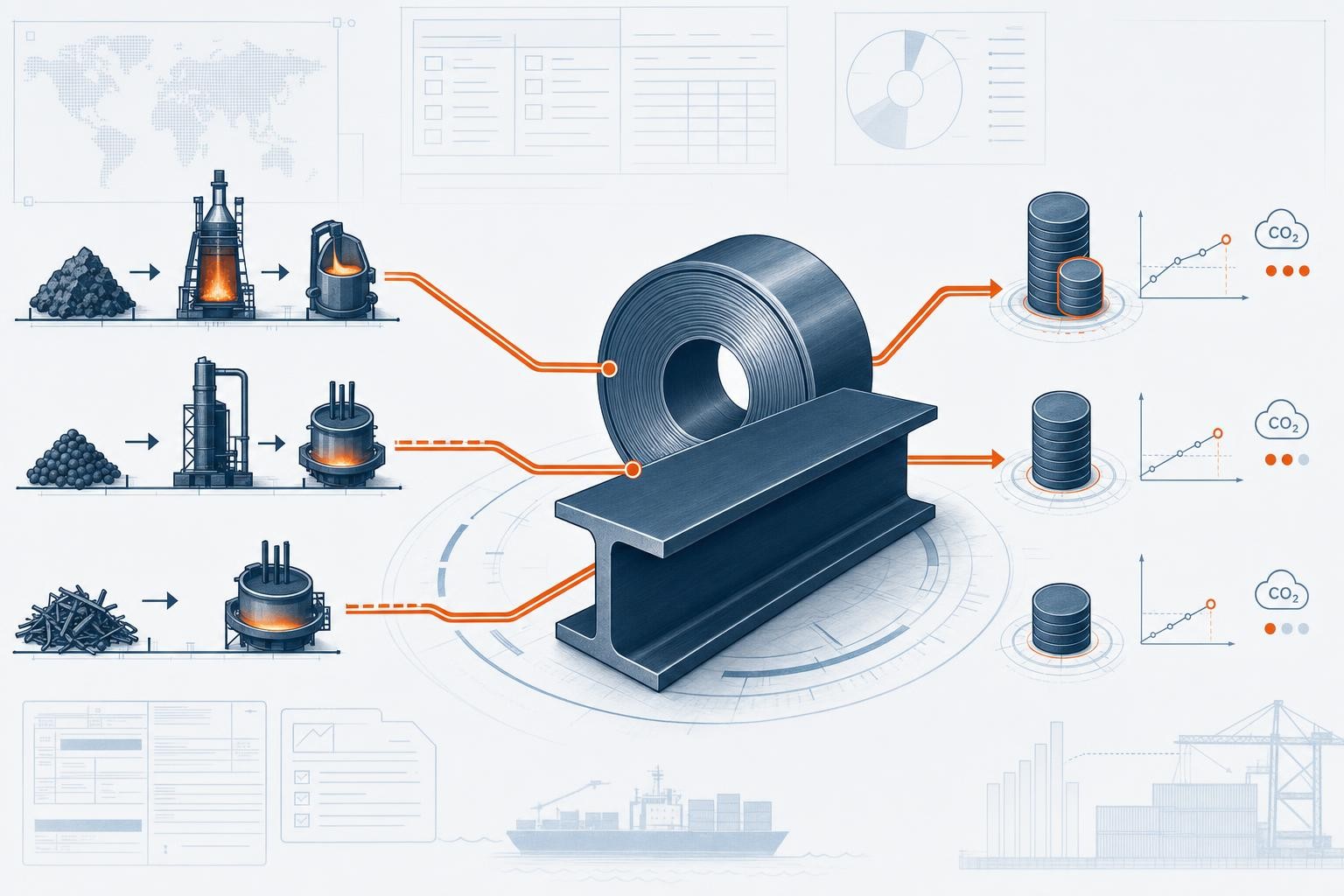
CBAM and Steel: Why Your Supplier's Production Route Is Now a Procurement Decision
Steel's CBAM cost isn't fixed - it swings by up to 19x depending on how your supplier makes steel. Here's how the BF-BOF, DRI-EAF, and Scrap-EAF benchmarks translate into real sourcing decisions.
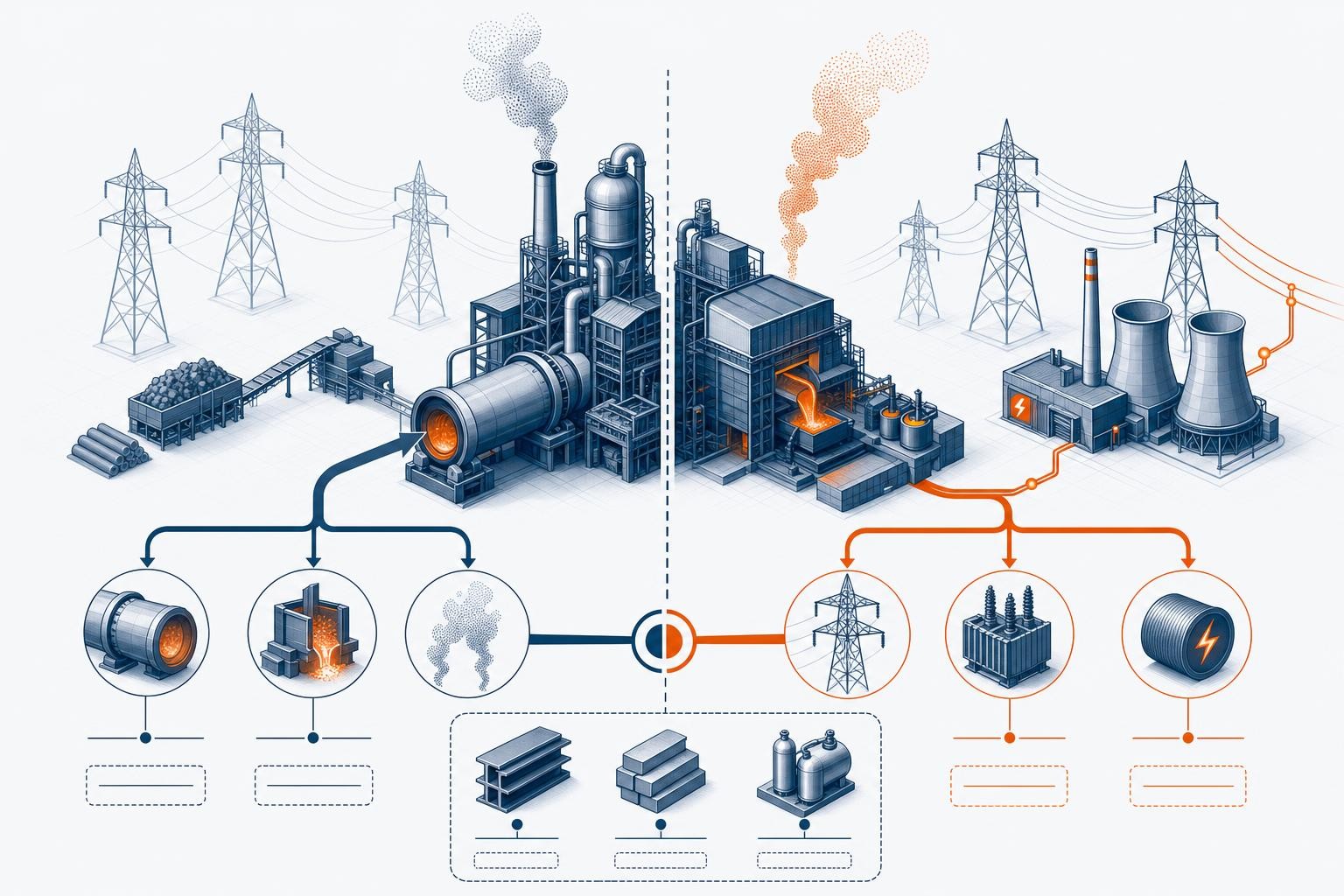
CBAM and Indirect Emissions: Why the Annex II Split Matters for Steel, Aluminium, and Hydrogen Importers
CBAM prices indirect emissions for cement and fertilisers but not for steel, aluminium, or hydrogen - and the reason why matters for your compliance strategy. Here's the full mechanics.