The CBAM Registry: A Plain-English Guide for EU Importers

The CBAM Registry is the EU's central platform for everything that matters under the definitive Carbon Border Adjustment Mechanism: getting authorised to import, managing certificates, and filing your annual declaration. If you import steel, aluminium, cement, fertilisers, electricity, or hydrogen into the EU above the threshold, this is the system you live in from 2026 onwards.
Independent guide. This is a plain-English explainer, not official guidance. The authoritative source for the CBAM Registry — user manuals, application instructions, and all regulatory updates — is the European Commission / DG TAXUD CBAM page. Always verify operational details there before acting.
Two registries, one name - don't confuse them
There is a naming overlap that trips people up.
The transitional CBAM Registry ran from October 2023 to December 2025. It was a reporting-only portal: you logged in, submitted quarterly reports on embedded emissions, and paid nothing. That system is now legacy. If you still have login credentials from the transitional phase, they do not automatically carry over.
The definitive CBAM Registry - live since 1 January 2026 - is an entirely different beast. It handles authorisation, certificate purchases, certificate holdings, annual declarations, and certificate surrender. This is the registry this guide is about.
What the CBAM Registry actually does
Once you are an authorised CBAM declarant, the Registry is where you:
- Apply for and hold authorised declarant status (via the Authorisation Management Module)
- Buy CBAM certificates from your national competent authority
- Monitor your certificate holdings against your accrued embedded emissions
- Submit your annual CBAM declaration (first deadline: 30 September 2027, covering 2026 imports)
- Surrender certificates to match your verified declaration
- Manage user roles and access controls for your compliance team
The Registry is the single operational platform through which every substantive obligation under the definitive regime is administered. Treat it with the governance discipline you would apply to any regulated financial system.
Who needs to be in the Registry?
You need authorised declarant status if you import CBAM-covered goods above the 50-tonne threshold - that is, if your cumulative annual net mass of cement, iron and steel, aluminium, and fertilisers exceeds 50 tonnes. Electricity and hydrogen are never exempt - they are in scope at any volume.
The authorisation requirement applies to:
- EU-established importers acting as the customs declarant for CBAM goods
- Indirect customs representatives (e.g. freight forwarders) who lodge the customs declaration in their own name
If you are below the 50-tonne threshold for the solid goods and you do not import electricity or hydrogen, you are currently exempt from authorisation, reporting, and surrender. Not sure where you stand? Use our free CBAM scope checker.
How to access the Registry: the EU Customs Trader Portal and UUM&DS
The CBAM Registry sits inside the EU Customs Trader Portal. Access is not a simple username-and-password login - it goes through the EU's Uniform User Management & Digital Signature system (UUM&DS), the same authentication layer used across EU customs IT systems.
In practice, this means:
- You need an EORI number (Economic Operators Registration and Identification). If you are already importing into the EU, you almost certainly have one. If not, apply to your national customs administration first.
- You request a UUM&DS user account through your national customs administration - the process is decentralised, so the exact steps vary by member state. Contact your national CBAM helpdesk for the specific procedure.
- Once authenticated, you access the CBAM Registry and its modules through the Trader Portal.
The login procedure varies by member state. The DG TAXUD site links to each National Competent Authority — check your country's specific instructions before you start, as some member states use additional national identity layers on top of UUM&DS.
How to become an authorised CBAM declarant
Authorisation is handled inside the Registry's Authorisation Management Module (AMM). Here is the sequence:
Your EORI is the key that unlocks UUM&DS and the Trader Portal. Apply to your national customs authority if you do not already have one.
Request a user account through your national customs administration. Each user who will work in the Registry must register individually.
Navigate to the CBAM Registry section and open the Authorisation Management Module (AMM).
Complete the AMM application form with your company details, EORI, member state of establishment, and supporting information. Your application goes to the National Competent Authority (NCA) in your member state of establishment — independently of where the goods are actually imported.
The NCA may request additional information. You typically have 30 days to respond; the assessment clock pauses while you do.
The NCA assessment can take up to 120 days. Once granted, your authorised declarant status is recorded in the Registry and validated by customs at the border in real time.
As of early January 2026, more than 4,100 CBAM economic operators had successfully obtained authorised declarant status across the EU.
What if I missed the 31 March 2026 deadline?
The 31 March 2026 deadline was the cut-off to keep importing provisionally while an application was pending. If you submitted your application by that date, you could continue importing CBAM goods throughout 2026 even if the NCA had not yet decided - a grace period while the 120-day clock ran.
That deadline has now passed. If you have not yet applied, the position is more difficult:
- You cannot lawfully import CBAM goods above the threshold without authorisation. Customs validates authorisation status in real time at the border; goods can be denied release for free circulation.
- Apply immediately. The European Commission and DG TAXUD continue to urge economic operators who have not yet submitted to do so as soon as possible via the Registry. The 120-day assessment window still applies once you apply.
- Consider an indirect customs representative. If your freight forwarder or customs agent holds authorised declarant status, they may be able to act on your behalf while your own application is processed - but confirm this arrangement carefully with them and with your NCA.
- Seek legal advice on any imports that may have occurred without authorisation. Enforcement triggers include importing covered goods without authorised declarant status.
The situation is recoverable, but the longer you wait, the more exposure accumulates. Apply now.
A quick decision tool: do you need to act?
The numbers to keep in mind
What comes next after authorisation
Getting authorised is the start, not the finish. Once you are in the Registry, the compliance calendar looks like this:
| Date | What happens |
|---|---|
| Now | Apply for authorised declarant status if you have not already |
| 1 February 2027 | Certificate sales open (for 2026 imports) |
| 30 September 2027 | First annual CBAM declaration due + first certificate surrender |
| From 2027 | Quarterly certificate-holding requirements apply |
The first CBAM certificate price, covering Q1 2026 imports, was published on 7 April 2026 at €75.36 per tonne of CO₂e. Prices from 2027 will be published weekly, based on EU ETS auction averages.
Where to go from here
The CBAM Registry is manageable once you understand its structure - but the detail is in the official documentation. For the authoritative source on everything from user manuals to NCA contact lists, go directly to the European Commission / DG TAXUD CBAM page.
For more on your obligations as a declarant, read our CBAM declarant guide. For the full compliance picture - certificates, embedded emissions, verification, and the annual declaration - see our CBAM compliance guide.
And if you want the Registry updates, Omnibus developments, and certificate prices delivered to your inbox as they happen, subscribe to The CBAM Brief - a short, plain-English newsletter for compliance teams who need to stay current without wading through EUR-Lex.
Related reading

CBAM Monitoring Plans: What Installation-Level Data Quality Actually Requires
The monitoring plan - not just the final emissions number - is now the primary object of CBAM scrutiny. Here's what IR 2025/2547 requires at the installation level, and why traceability is the recurring failure point.
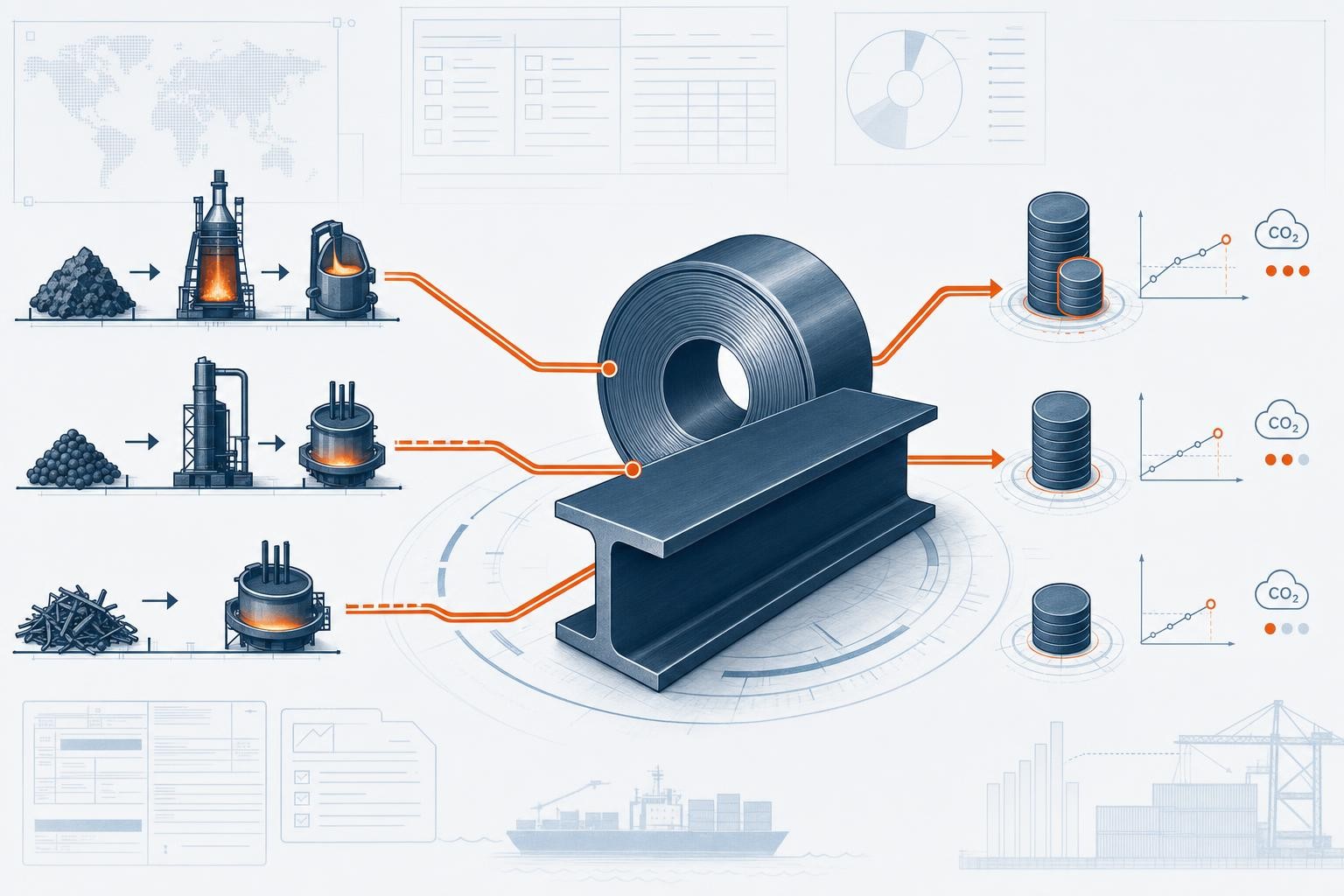
CBAM and Steel: Why Your Supplier's Production Route Is Now a Procurement Decision
Steel's CBAM cost isn't fixed - it swings by up to 19x depending on how your supplier makes steel. Here's how the BF-BOF, DRI-EAF, and Scrap-EAF benchmarks translate into real sourcing decisions.
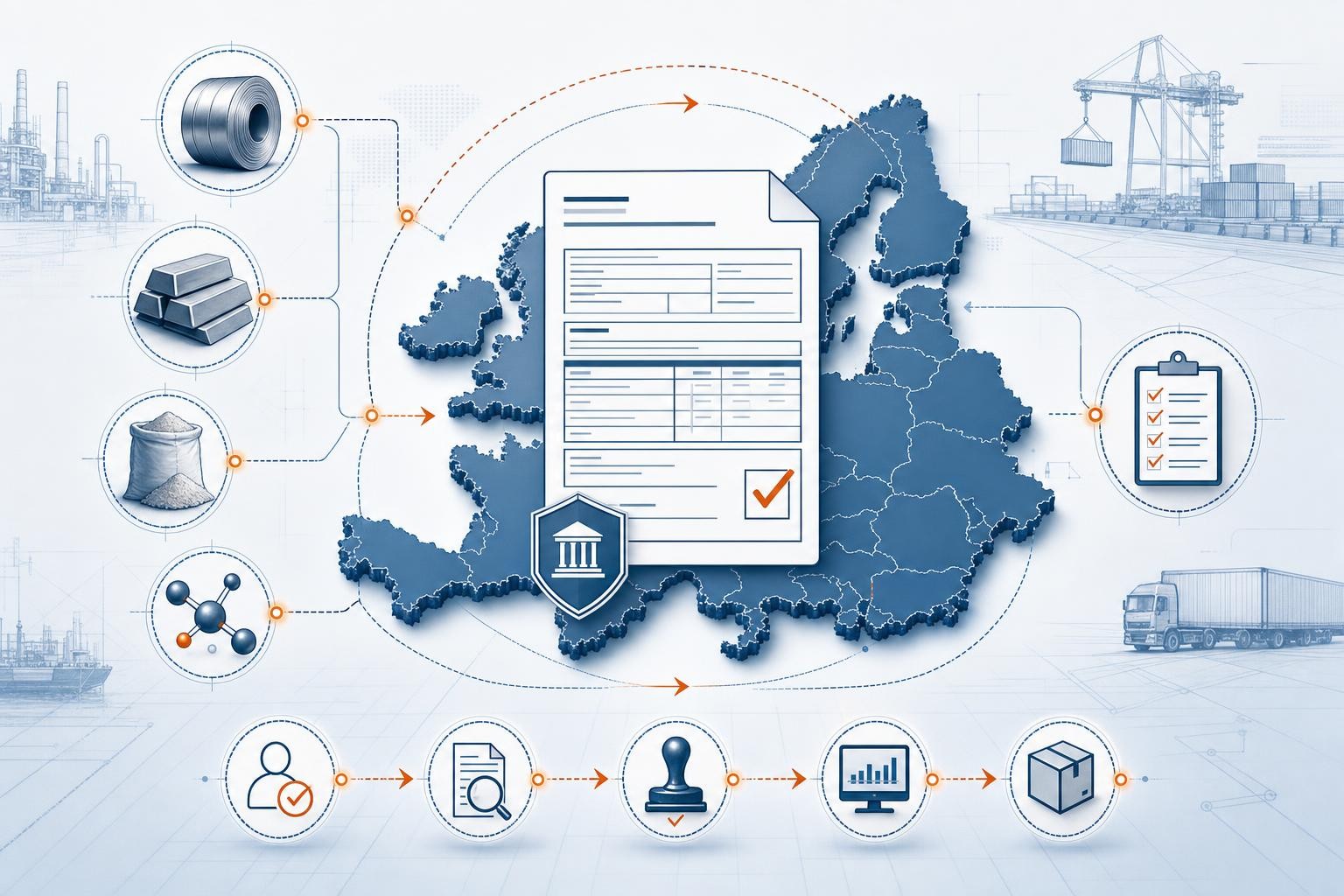
Becoming an Authorised CBAM Declarant: A Practical Guide for EU Importers
The 31 March 2026 deadline has passed. Here's what Authorised CBAM Declarant status means, what the transitional easement covers, how financial guarantees work, and what every importer must do before September 2027.