Beyond the EU: The Global Wave of Carbon Border Adjustments Taking Shape in 2026-2027
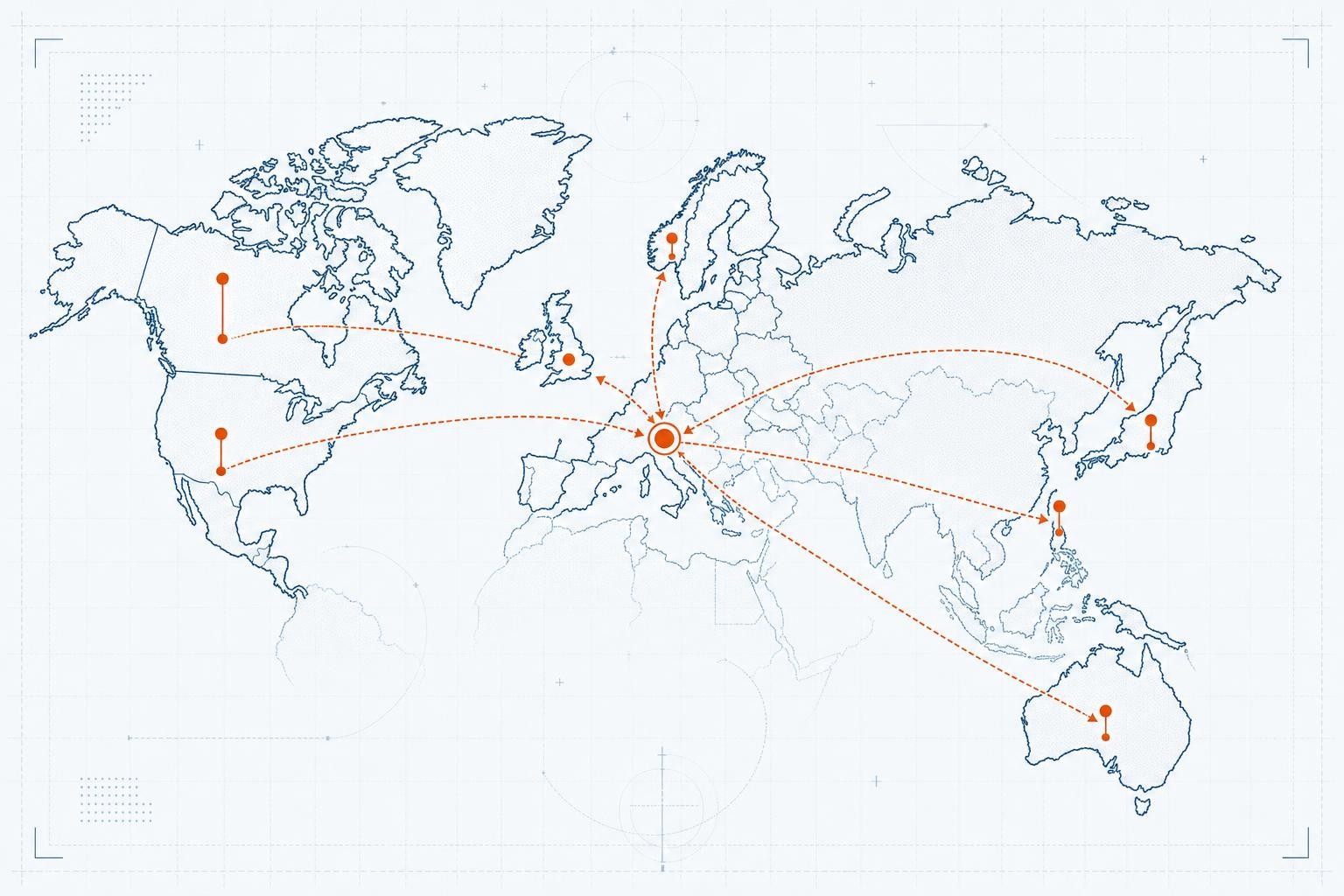
For the past two years, "CBAM" meant one thing: the EU's Carbon Border Adjustment Mechanism. That is changing fast. The EU mechanism is now fully operational, the UK launches its own version in January 2027, and a cluster of other jurisdictions - Australia, Canada, the United States, Japan, Taiwan, and Norway - are at various stages of study, consultation, or legislation. The world is not converging on a single carbon border system. It is building several, with different rules, different sectors, and different price signals.
This is a plain-English tour of where each jurisdiction stands today, what the differences mean for companies that trade across multiple markets, and what to watch in the next 18 months.
The EU CBAM: The Template Everyone Is Copying (or Reacting To)
The EU Carbon Border Adjustment Mechanism entered its definitive phase on 1 January 2026, becoming the first fully operational border carbon adjustment to charge costs based on the embedded emissions of imported goods. After a two-year reporting-only transitional phase, importers of steel, aluminium, cement, fertilisers, hydrogen, and electricity into the EU now face real financial obligations - buying and surrendering CBAM certificates priced against the EU ETS weekly auction average.
The mechanism is already expanding. In December 2025, the European Commission proposed extending CBAM to approximately 180 downstream products - manufactured goods incorporating materials already covered, such as car doors, gearboxes, and household appliances. In June 2026, EU member states agreed to broaden the mechanism to these new imported products.
The EU's free-allocation adjustment factor means the effective cost starts modest - the CBAM rate is proportional to remaining free EU ETS allocations, set at 2.5% of the ETS price in 2026, rising to 100% by 2034 - but the trajectory is clear and the compliance infrastructure is live.
For a detailed breakdown of the EU CBAM registry, authorisation process, and certificate mechanics, see our CBAM Registry plain-English guide and our definitive period explainer.
The UK CBAM: Next in Line for 2027
The UK launches its own Carbon Border Adjustment Mechanism on 1 January 2027, covering the same core sectors as the EU - steel, aluminium, cement, fertilisers, and hydrogen - but with several important differences. Electricity is excluded from the UK scope. There is no certificate trading system; instead, the UK uses a direct liability model. The UK also sets a £50,000 annual registration threshold, and sector-specific CBAM rates differ from the EU's single-rate approach, reflecting each sector's remaining free allocation under the UK ETS.
Crucially, the UK CBAM launches without a transitional reporting phase - it goes straight to financial obligations from day one.
We have a dedicated post covering the UK CBAM in full, including a side-by-side comparison with the EU regime: The UK CBAM Arrives in 2027: How It Differs from the EU's.
If you trade across both the EU and UK, you will face two separate CBAM regimes with different sector coverage, different rate-setting methodologies, different thresholds, and different compliance calendars. Mapping your exposure to both is now an urgent planning task, not a future one.
The Global Picture: A Country-by-Country Status Check
| Jurisdiction | Status | Sectors in Scope (or Proposed) | Key Timeline |
|---|---|---|---|
| 🇪🇺 European Union | ✅ Enacted & Operational | Steel, aluminium, cement, fertilisers, hydrogen, electricity | Definitive phase: 1 Jan 2026 |
| 🇬🇧 United Kingdom | ✅ Enacted, launching 2027 | Steel, aluminium, cement, fertilisers, hydrogen (electricity excluded) | Launch: 1 Jan 2027 |
| 🇳🇴 Norway | ✅ Law passed, implementing 2027 | Same as EU CBAM (EEA adoption) | Parliament passed law; 2027 target |
| 🇦🇺 Australia | 📋 Recommended (not enacted) | Cement & clinker first; lime, steel, glass, ammonia proposed next | Recommendations under 2026–27 Safeguard review |
| 🇨🇦 Canada | 🔍 Under study / consultation | Not yet defined | Consulted since 2021; no enacted legislation |
| 🇺🇸 United States | 📝 Multiple bills proposed | Steel, aluminium, cement, glass, fertiliser, hydrogen (varies by bill) | Bills in Congress; none enacted |
| 🇯🇵 Japan | 🔍 Under discussion | Not yet defined | No formal proposal |
| 🇹🇼 Taiwan | 🔍 Under consideration | Not yet defined | Responding to EU CBAM pressure |
Norway - Enacted, Implementing in 2027
Norway is the most advanced non-EU jurisdiction. Norway's parliament, Stortinget, formally passed the national CBAM law, incorporating the EU's CBAM into the EEA Agreement, with a target implementation date of 2027. The Norwegian scheme mirrors the EU's approach directly - same six sectors, same certificate pricing mechanism linked to EU ETS auction prices. Importers are expected to register for CBAM declarant status in 2026 ahead of the 2027 launch. For companies exporting to Norway, the compliance logic is essentially the same as for the EU.
Australia - Recommended, Not Yet Enacted
Australia's Carbon Leakage Review, completed in February 2025, is the most substantive non-EU/UK policy development to date. The Review recommended phased implementation of a border carbon adjustment for a select group of commodities, initially covering cement and clinker, with lime, steel, glass, and ammonia and derivatives identified as candidates for a subsequent phase. The architecture is designed to mirror Australia's Safeguard Mechanism - the domestic industrial carbon pricing framework - rather than the EU ETS.
Critically, this is a recommendation, not enacted law. The Australian government will consider the recommendations as part of the 2026-27 review of the Safeguard Mechanism. No implementation date has been set, and detailed design work - including benchmarking, data requirements, and compliance mechanics - remains to be done.
Canada - Consulting, Not Legislating
Canada has been exploring border carbon adjustments since at least 2021, when the federal government ran a public consultation on the concept. The EU CBAM's entry into force has sharpened the debate: Canadian policymakers are watching the EU rollout closely, and the EU mechanism places pressure on Canada to maintain and potentially strengthen its industrial carbon pricing system to avoid CBAM costs on Canadian exports to Europe.
However, Canada's domestic carbon pricing landscape is complicated. In March 2025, the Canadian government eliminated the federal consumer carbon tax, reducing the federal Fuel Charge rates to zero, though the industrial Output Based Pricing System remains intact. A Canadian BCA has not been included in recent federal climate strategy documents, and no legislation has been tabled. The status is: active interest, no enacted proposal.
United States - Multiple Bills, No Enacted Law
The US picture is the most politically complex. Several bills are in play simultaneously, with different philosophies:
- The Clean Competition Act (Senator Whitehouse, D-RI, reintroduced 2025): pairs a domestic carbon intensity baseline with a border adjustment on energy-intensive imports, including fossil fuels, petrochemicals, steel, aluminium, cement, and more. It would impose a levy starting at $55/tonne on imports whose carbon intensity exceeds the US baseline.
- The Foreign Pollution Fee Act of 2025 (Senators Cassidy, R-LA, and Graham, R-SC): would impose tariffs on imported iron and steel, aluminium, cement, glass, fertiliser, hydrogen, and solar components based on their pollution intensity relative to US manufacturing standards - without requiring a domestic carbon price. This is the bill that most closely resembles a "foreign pollution fee" rather than a traditional BCA.
The FPFA is notable as a Republican-sponsored bill that frames border carbon charges as a national security and competitiveness measure rather than a climate policy. Neither bill has been enacted. The Foreign Pollution Fee Act was not included in the 2025 budget reconciliation bill.
Japan and Taiwan - Watching and Responding
Japan has been identified in research as a likely candidate to adopt carbon pricing in response to the EU CBAM, but no formal BCA proposal has been tabled. A Potsdam Institute for Climate Impact Research study found that Canada, Japan, South Korea, and Taiwan are among the most likely trading partners to adopt their own carbon pricing in response to the EU CBAM - a dynamic that could lead to 73% more CO₂ emissions avoided compared to the EU acting alone.
Taiwan is responding primarily through domestic carbon pricing reform and supply-chain decarbonisation investment rather than a formal BCA proposal. Taiwanese manufacturers are already adjusting: Taiwan Cement Corporation committed to investing in low-carbon Turkish cement production in anticipation of CBAM costs in the EU market.
The Interoperability Problem: Why a Patchwork Is the Real Risk
Each of these schemes is being designed independently, with different sector coverage, different emissions accounting methodologies (Scope 1 only vs. Scope 1 and 2), different thresholds, different credit mechanisms for carbon prices already paid abroad, and different administrative systems.
The International Chamber of Commerce has warned that "a patchwork of uncoordinated national interventions could create severe compliance challenges for companies trading internationally." The IISD has put it more bluntly: "a multitude of different systems for measuring, reporting, and verifying embedded emissions at the border would be a nightmare scenario."
The EU has taken steps toward interoperability - making voluntary contributions to harmonise carbon intensity data and MRV (monitoring, reporting, and verification) standards through the International Forum on Clean Mobility and Aviation. The Climate Club, which includes the EU, UK, and G7 partners, issued joint voluntary principles on addressing carbon leakage in September 2025. But fully harmonised systems remain unlikely in the near term.
For a multinational importer or exporter, the practical consequence is this: you may soon need to track embedded emissions data, verify it to different standards, and report it to different authorities - all for the same physical product crossing different borders.
What to Watch in 2026-2027
The next 18 months will be decisive for the shape of the global BCA landscape. Key milestones to track:
- EU CBAM expansion: The European Commission's December 2025 proposal to extend CBAM to ~180 downstream products from 2028 is moving through the legislative process. EU member states agreed in June 2026 to broaden the mechanism. Watch for the European Parliament's position and final adoption timeline.
- Australia's Safeguard Mechanism review (2026-27): The government will formally respond to the Carbon Leakage Review recommendations. Whether it endorses, modifies, or defers the BCA proposal will determine whether Australia becomes the third jurisdiction with enacted border carbon legislation.
- UK CBAM go-live (1 January 2027): With no transitional phase, UK importers of covered goods need to be registered and ready before the end of 2026.
- Norway's 2027 implementation: Norwegian importers are expected to apply for CBAM declarant status during 2026.
- US legislative dynamics: The Foreign Pollution Fee Act and Clean Competition Act remain live proposals. The political framing - competitiveness and national security rather than climate - gives border carbon charges unusual bipartisan appeal in the current US environment.
- WTO scrutiny: Discussions on BCA compatibility with WTO rules are intensifying. The outcome of any formal WTO challenge to the EU CBAM would set a precedent for every scheme that follows.
- Interoperability standards: Watch for progress through the Climate Club and the OECD on harmonised MRV methodologies. Any convergence here would significantly reduce the compliance burden for globally trading companies.
The single most valuable thing you can do now: map your product portfolio against the six EU CBAM sectors and identify which of your supply chains touch markets with active or proposed BCAs. That emissions data — installation-level, verified — will be required by multiple schemes, not just the EU's. Building the data infrastructure once, to the highest standard, is far cheaper than retrofitting it jurisdiction by jurisdiction.
The Bottom Line
The EU CBAM is not a one-off experiment. It is the first instance of a policy instrument that is spreading - at different speeds, with different designs, and with no guarantee of mutual recognition between schemes. The World Economic Forum has noted that "border carbon adjustments are becoming a meaningful feature of the global trading system," while also acknowledging that "fully harmonized systems remain unlikely in the near term."
For importers and exporters operating across multiple markets, the strategic question is no longer whether to engage with carbon border pricing - it is how many versions of it you will need to comply with simultaneously, and whether your emissions data and supplier relationships are ready for that reality.
Related reading
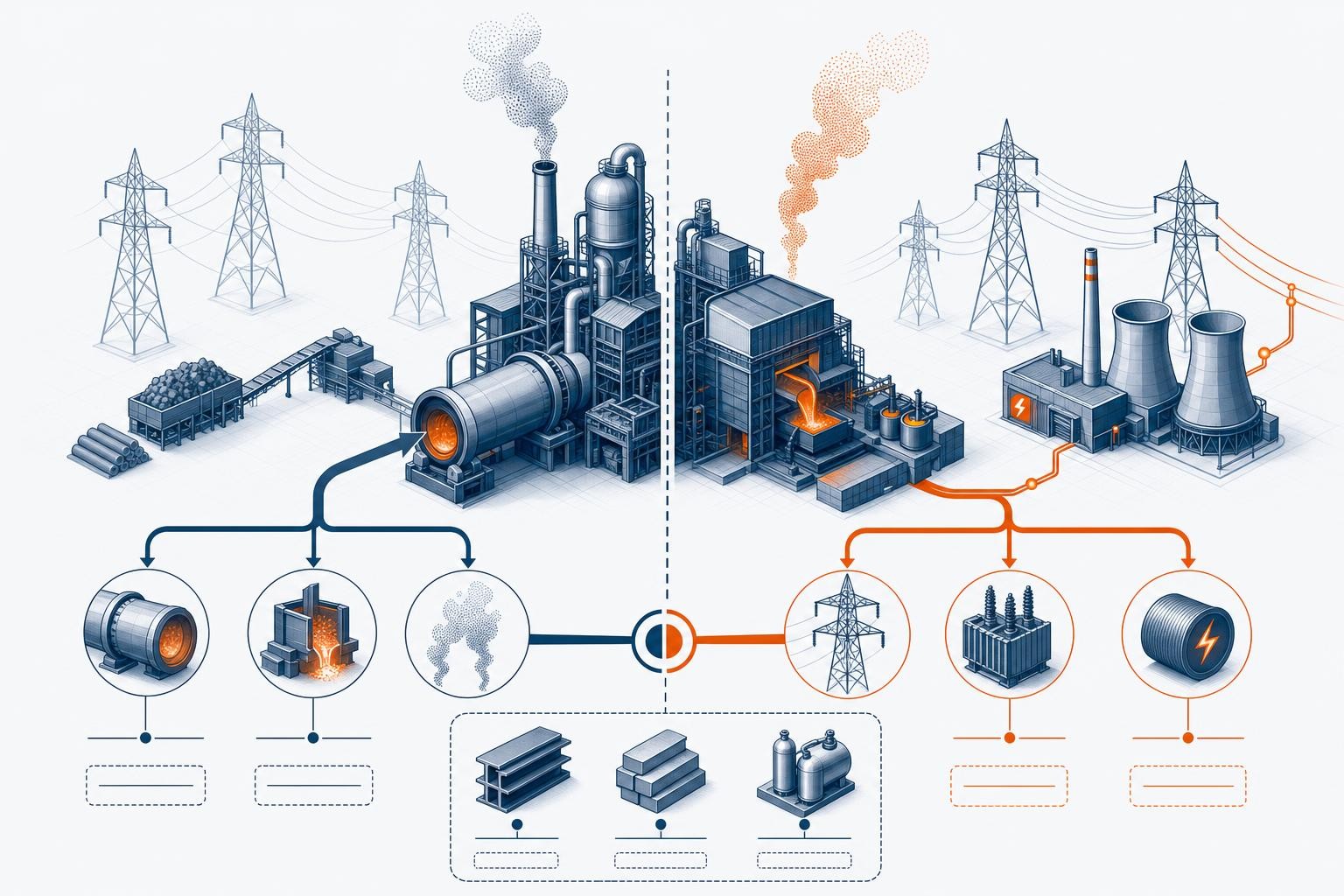
CBAM and Indirect Emissions: Why the Annex II Split Matters for Steel, Aluminium, and Hydrogen Importers
CBAM prices indirect emissions for cement and fertilisers but not for steel, aluminium, or hydrogen - and the reason why matters for your compliance strategy. Here's the full mechanics.
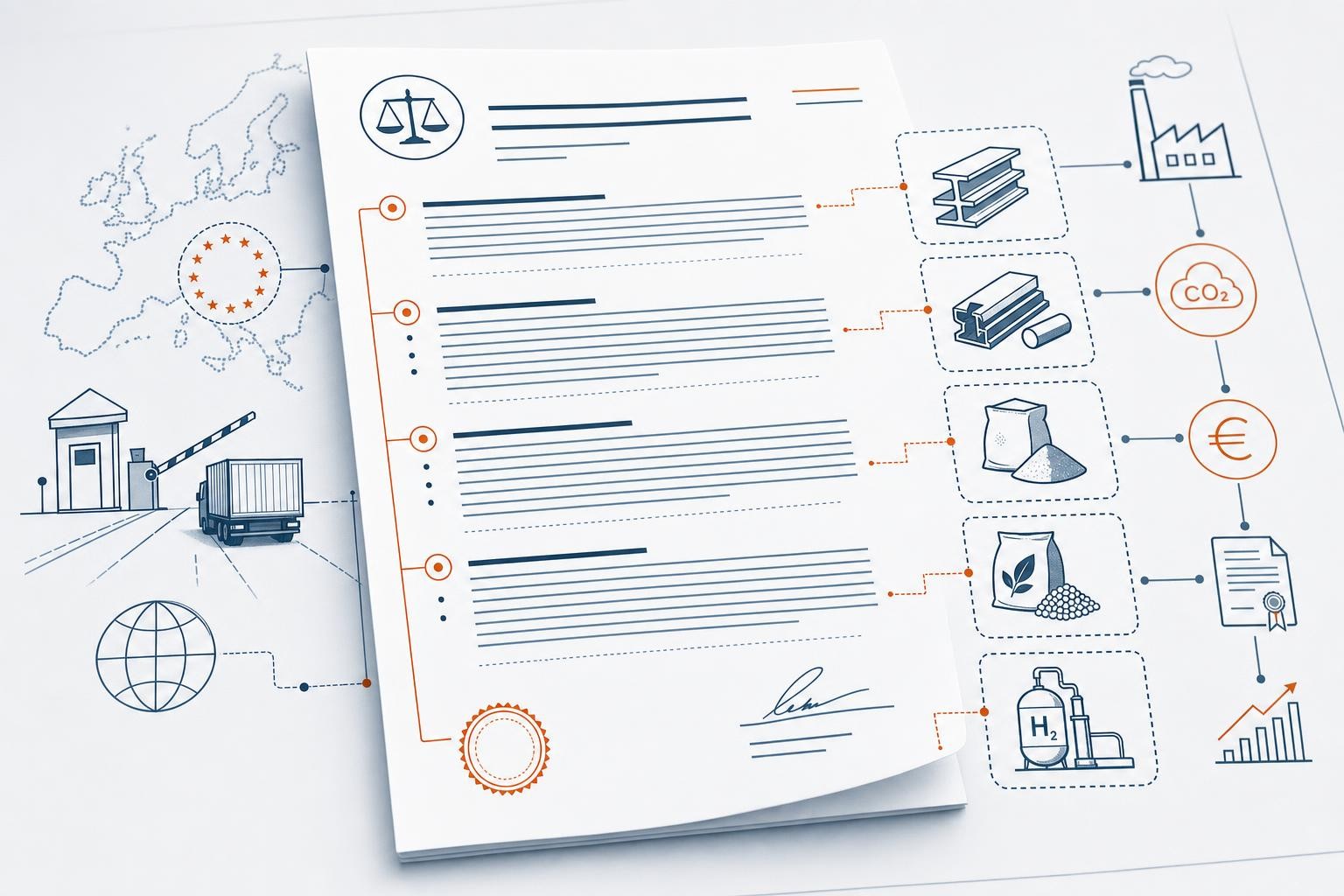
Making Your Supply Contract CBAM-Ready: A Clause-by-Clause Drafting Guide
CBAM is now a contracting problem. This clause-by-clause guide covers emissions data, verification, price pass-through, Incoterms, indemnity, and change-in-law for EU importers of steel, aluminium, cement, fertilisers, and hydrogen.
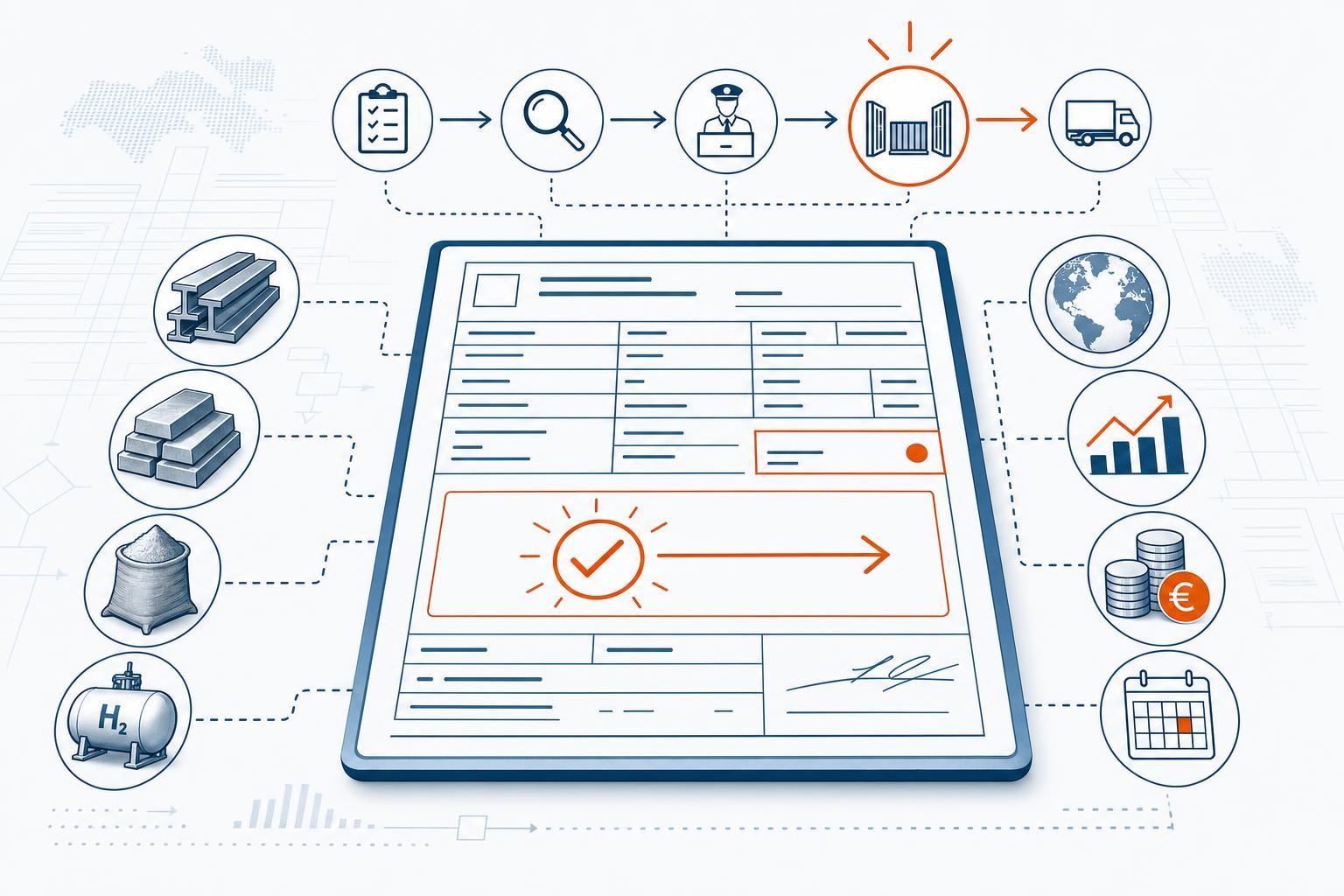
CBAM and Customs Procedures: How Release for Free Circulation Changes Everything
CBAM obligations attach at release for free circulation, not at physical arrival. That single fact makes your choice of customs procedure a genuine compliance and cash-flow lever. Here's the practical guide.