CBAM and Customs Procedures: How Release for Free Circulation Changes Everything
Most CBAM compliance conversations focus on the registry, certificates, and emissions data. Far fewer focus on the moment the obligation actually bites - and that gap is where expensive mistakes happen.
The trigger is not when your goods arrive at the EU border. It is not when they clear the port. It is the moment they are declared for release for free circulation. Everything else in CBAM flows from that single point in the Union Customs Code (UCC). And because different customs procedures delay or redirect that moment, the procedure you choose is a genuine compliance and cash-flow lever - not just an operational detail.
The trigger point: release for free circulation
In alignment with the CBAM Regulation as of 1 January 2026, the validation of CBAM authorisations for CBAM goods is enforced by customs before release for free circulation, including the monitoring of the 50-tonne threshold.
That enforcement architecture matters. Since 1 January 2026, CBAM-covered goods may be imported into the EU - or declared for release for free circulation - only by authorised CBAM declarants (EU Regulation 2025/486). Customs systems check the declarant's CBAM account number (TARIC certificate Y128) in real time before the goods move into free circulation. If the check fails, the goods do not move.
Article 25 of the CBAM Regulation provides that "customs authorities shall not allow the importation of goods by any other person than an authorised CBAM declarant."
The corollary is equally important: goods that never reach free circulation do not trigger a CBAM obligation at that point. That is the foundation for everything that follows.
Inward processing (IP): the re-export escape and the Y422 trail
Inward processing allows goods to enter the EU customs territory for processing - manufacturing, repair, transformation - with customs duties and VAT suspended. The UCC principle carries directly into CBAM.
CBAM is not applied if the goods are not declared for entry to the EU territory - for example, temporary admission or inward processing of goods. More precisely: if the processed products (or the original goods) are re-exported, no CBAM obligation arises. The goods were never released for free circulation.
If, however, the processed products are subsequently declared for release for free circulation, CBAM bites at that moment - on the processed goods, not on the original inputs as they crossed the border.
Worked example. A German manufacturer imports 200 tonnes of steel billets from India under inward processing (procedure code 5100). It rolls them into structural sections and re-exports 180 tonnes to the UK. The remaining 20 tonnes of sections are released for free circulation in Germany. CBAM applies only to those 20 tonnes, at the point of release, and only the 20 tonnes count toward the 50-tonne threshold for that calendar year.
TARIC additional code Y422
If you place CBAM goods (listed in Annex I to Regulation (EU) 2023/956) under inward processing, you must indicate the TARIC documentation code Y422 in your customs declaration.
The obligation does not stop there. Y422 is linked to TARIC measures and must be declared in all subsequent declarations until customs supervision for the processed goods is definitively terminated, either by release for free circulation or by re-export.
In practice, that means Y422 must appear on:
- The initial IP declaration (procedure 5100)
- Any transit declaration (T1) discharging the IP
- Any customs warehousing declaration (7151) that follows
- Any new IP declaration (5151) or temporary admission declaration (5351) that follows
When CBAM goods previously placed under inward processing are released for free circulation, both Y422 and Y128 (the CBAM account number) should be declared. The Y422 tells customs the goods have a CBAM history; Y128 confirms the declarant is authorised.
Operationally, this means your customs broker needs to track the Y422 chain across every declaration in the IP lifecycle. A missing code on an intermediate declaration is not just a paperwork error - it breaks the audit trail that customs uses to verify whether CBAM was correctly applied or correctly deferred.
Y422 must follow the goods through every customs declaration until the IP is discharged — not just the first and last. Brief your customs broker explicitly. A gap in the chain can trigger a compliance query even if the final release-for-free-circulation declaration is correct.
Customs warehousing and temporary admission: deferral, not avoidance
Goods sitting in a customs warehouse are not in free circulation. They have entered the EU customs territory, but they have not been released into the EU internal market. The CBAM obligation - and the contribution to the 50-tonne threshold - does not arise until they are entered for free circulation.
Goods imported under a special procedure, such as temporary admission, inward processing, or customs warehousing, are not in scope at the time of import. If they are later released to free circulation, they will be in scope at that point and will count towards the registration threshold.
The same logic applies to temporary admission: goods admitted temporarily (for display, testing, or use) without being released for free circulation do not trigger CBAM.
The cash-flow angle
This is where the certificate timeline becomes relevant. CBAM certificate sales on the common central platform start on 1 February 2027, covering embedded emissions from 2026 imports. There is no obligation to hold CBAM certificates during 2026. As certificate sales on the common central platform begin only from February 2027, there is no legal obligation to hold certificates during 2026.
From 2027, the quarterly holding rule applies: from 2027 onwards, an authorised CBAM declarant must ensure that, at the end of each quarter, the number of CBAM certificates held on their account in the CBAM Registry is equal to at least 50% of embedded emissions of all goods they have imported since the beginning of the calendar year.
What this means for warehousing decisions. An importer who warehouses goods in Q4 2026 and releases them for free circulation in Q1 2027 will have those goods counted in the 2027 compliance year, not 2026. The certificate obligation, the quarterly holding requirement, and the annual declaration all shift by a year. That is a legitimate cash-flow and planning consideration - but it is deferral, not avoidance. The obligation follows the goods when they eventually enter free circulation.
Worked example. An importer brings 300 tonnes of aluminium extrusions into a customs warehouse in November 2026. It releases 100 tonnes for free circulation in December 2026 (2026 compliance year) and the remaining 200 tonnes in March 2027 (2027 compliance year). The 100 tonnes released in 2026 count toward the 2026 annual declaration due 30 September 2027. The 200 tonnes released in 2027 count toward the 2027 annual declaration due 30 September 2028.
Outward processing and returned goods
Outward processing is the mirror image of inward processing: EU goods are temporarily exported for processing abroad and re-imported. Outward processing means that Union goods may be temporarily exported from the customs territory of the Union in order to undergo processing operations. The processed products resulting from these goods can be re-imported and released for free circulation with total or partial relief from import duty.
For CBAM, two scenarios matter:
Scenario 1 - Returned goods (Article 203 UCC). EU-origin goods exported and re-imported without modification, or re-imported within three years, qualify as returned goods. Returned goods - EU-origin goods reimported under Article 203 of the Union Customs Code - shall be declared with zero embedded emissions in the CBAM declaration. This means no CBAM certificates are required for these goods. The trap: the returned-goods status must be properly documented. Without proper documentation linking the reimport to the original export, the goods may be treated as standard CBAM imports.
Scenario 2 - Processed goods re-imported as CBAM goods. If EU aluminium is exported for further processing in Turkey and re-imported as aluminium profiles (still a CBAM good), a carbon levy may apply based on emissions linked to the overseas processing. The CBAM obligation attaches to the embedded emissions from the processing operation outside the EU - not to the original EU-origin material, which already bore EU carbon costs.
The practical implication: if your supply chain involves outward processing of CBAM goods, map each flow carefully. The re-import classification - returned goods vs. processed product - determines whether you declare zero emissions or calculated emissions, and whether you need certificates.
Who declares: the non-EU seller problem
DDP (Delivered Duty Paid) Incoterms create a structural CBAM problem. Under DDP, the non-EU seller nominally acts as the importer of record. But non-EU exporters cannot become declarants themselves. Importers not established in the EU always require an indirect representative who - regardless of the quantities declared - must be registered as an authorised CBAM declarant (Article 5(2) of Regulation (EU) 2023/956).
Until recently, non-EU exporters have often been able to declare goods for import directly in the EU and deliver on a DDP basis without the EU customer having to act as the importer for customs purposes. For goods covered by CBAM, this approach remains generally possible from 2026 onwards, but only if an authorised indirect CBAM declarant is involved.
The obligation to submit the CBAM declaration, however, arises only once the importer represented by that indirect representative exceeds the 50-tonne threshold.
Practical guidance. If you buy on DDP terms from a non-EU supplier:
- Identify who is acting as the customs declarant in the EU. If it is the non-EU seller's freight forwarder, check whether that forwarder holds authorised CBAM declarant status.
- If not, either renegotiate Incoterms (DAP or FCA puts the EU buyer in the importer role) or ensure the forwarder obtains CBAM authorisation before the next shipment.
- Confirm in writing who holds the CBAM account number being declared on Y128 - and that it matches the party named as declarant in the customs declaration.
A mismatch between the customs declarant and the CBAM account holder is a compliance failure, not a technicality.
The 50-tonne threshold and special procedures
The 50-tonne threshold is measured on goods released for free circulation across a calendar year. Goods under IP, warehousing, or temporary admission do not count until they are released. This is not a loophole - it is how the UCC and CBAM Regulation interact by design.
That said, structuring import flows purely to stay below the threshold is a different matter. The CBAM Regulation's anti-circumvention provisions - covered in detail in our anti-circumvention guide - address exactly this: artificial splitting of shipments, resource shuffling, and slight modifications designed to avoid obligations. One paragraph here is enough: if the commercial rationale for using a special procedure is genuine (processing for re-export, warehousing for inventory management), the procedure is legitimate. If the rationale is threshold avoidance, it is not.
Operational checklist: aligning customs procedures with CBAM
For every CBAM commodity flow, identify the procedure code used at first entry: 4000 (release for free circulation), 5100 (inward processing), 7100/7151 (customs warehousing), 5300/5351 (temporary admission), or 2100 (outward processing). The procedure code determines when — and whether — CBAM applies.
Pull every open inward processing authorisation covering CBAM goods. Confirm that Y422 has been declared on the initial IP entry and on every subsequent declaration in the chain. If any intermediate declaration is missing Y422, raise a correction with your customs authority before the IP is discharged.
The party named as declarant on the customs declaration must be an authorised CBAM declarant. Check that Y128 carries the correct CBAM account number. For DDP shipments, confirm the freight forwarder or customs agent holds authorisation — not just the EU buyer.
Build a running log of goods released for free circulation, by CN code and date. Goods under IP, warehousing, or temporary admission do not count until released. This log is your early-warning system for approaching the 50-tonne threshold and your source data for the annual CBAM declaration.
For IP and outward processing flows, retain the re-export declarations, INF documents, and bill of discharge. For returned goods, retain the original export declaration and evidence of identity (e.g. serial numbers, marks). These documents are the proof that CBAM was correctly not applied — or correctly applied at zero emissions.
Before filing the annual CBAM declaration, reconcile the customs import declarations (procedure 4000 and any IP discharges into free circulation) against the goods and quantities you intend to declare. The customs authority can cross-check both datasets. Unexplained discrepancies attract verification.
A note on record-keeping
The CBAM Regulation requires declarants to keep records sufficient to verify the annual declaration. For flows involving special procedures, that means retaining not just the release-for-free-circulation declaration but the entire customs chain: the original IP or warehousing entry, the intermediate declarations carrying Y422, and the discharge document. The minimum retention period under EU customs law is three years from the end of the year in which the declaration was accepted; CBAM verification timelines suggest keeping records for at least five years.
The customs data and the CBAM Registry data are now linked in real time. The definitive CBAM Registry integrates seamlessly with national customs import systems, TARIC, and the EU Customs Single Window. This seamless interconnection ensures real-time data exchange and efficient validation of declarants. That integration cuts both ways: it makes legitimate flows smoother, and it makes discrepancies visible to authorities faster than they were during the transitional period.
If your customs team and your CBAM compliance team are working from different datasets, fix that now - before the first annual declaration is due on 30 September 2027.
Related reading
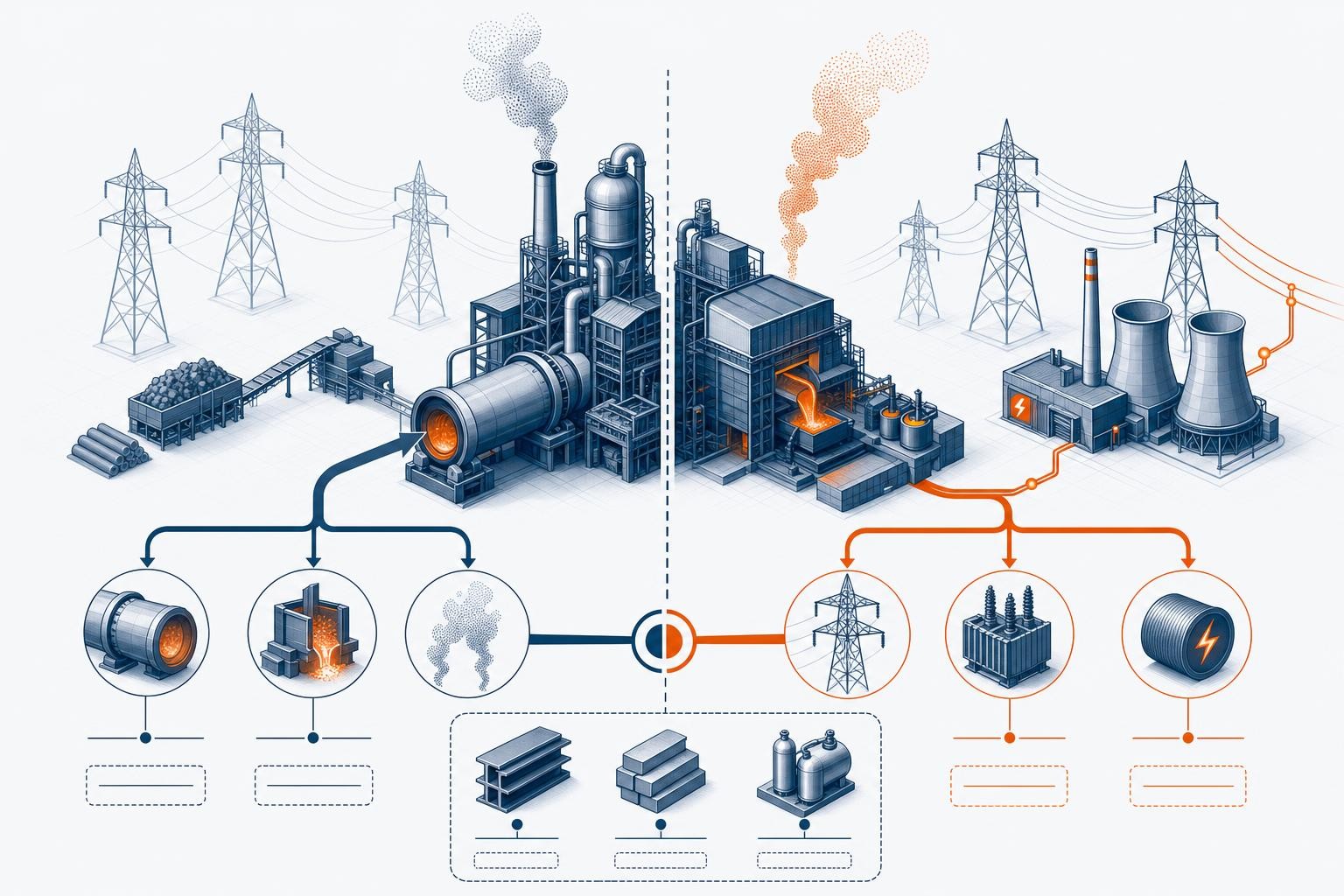
CBAM and Indirect Emissions: Why the Annex II Split Matters for Steel, Aluminium, and Hydrogen Importers
CBAM prices indirect emissions for cement and fertilisers but not for steel, aluminium, or hydrogen - and the reason why matters for your compliance strategy. Here's the full mechanics.
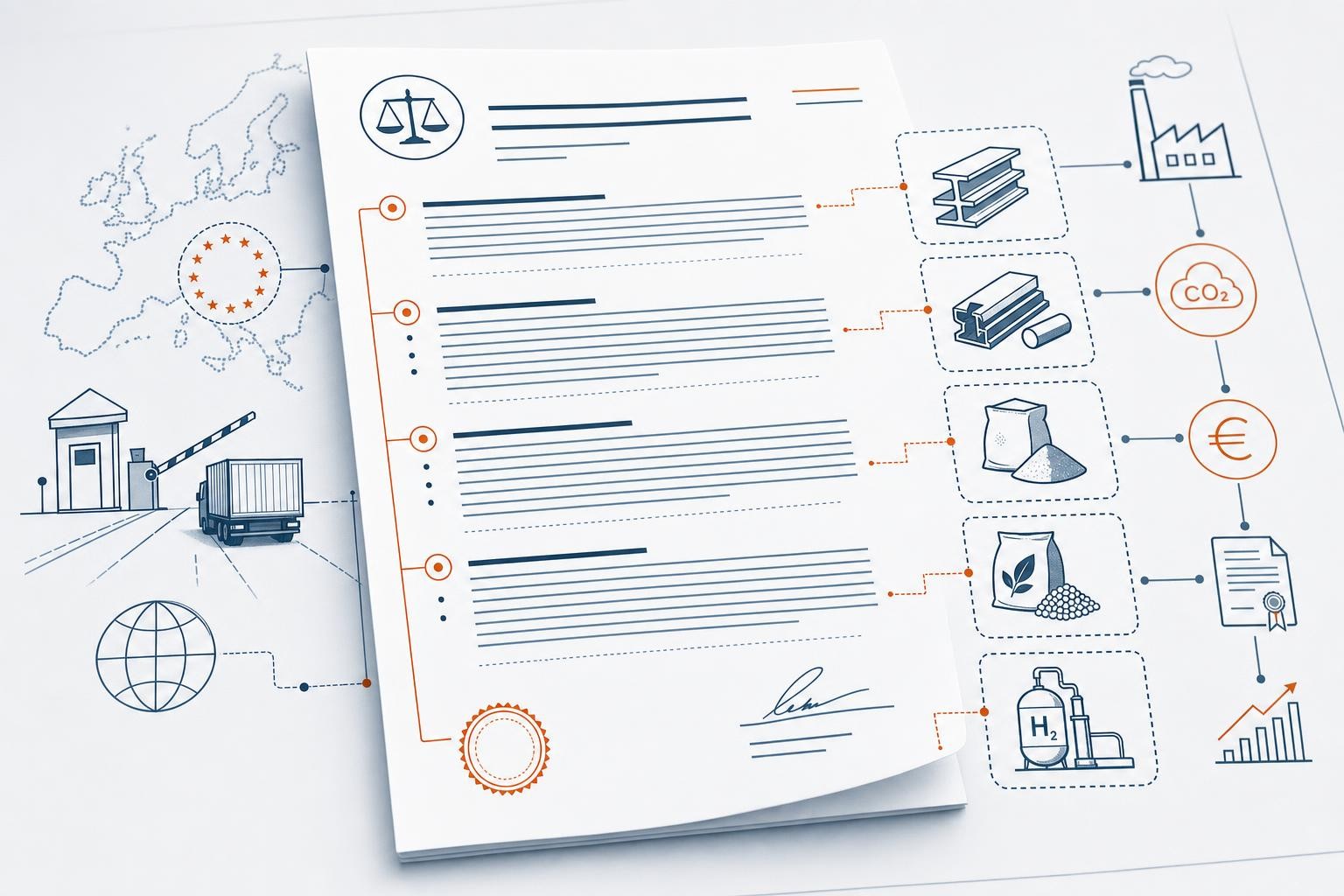
Making Your Supply Contract CBAM-Ready: A Clause-by-Clause Drafting Guide
CBAM is now a contracting problem. This clause-by-clause guide covers emissions data, verification, price pass-through, Incoterms, indemnity, and change-in-law for EU importers of steel, aluminium, cement, fertilisers, and hydrogen.
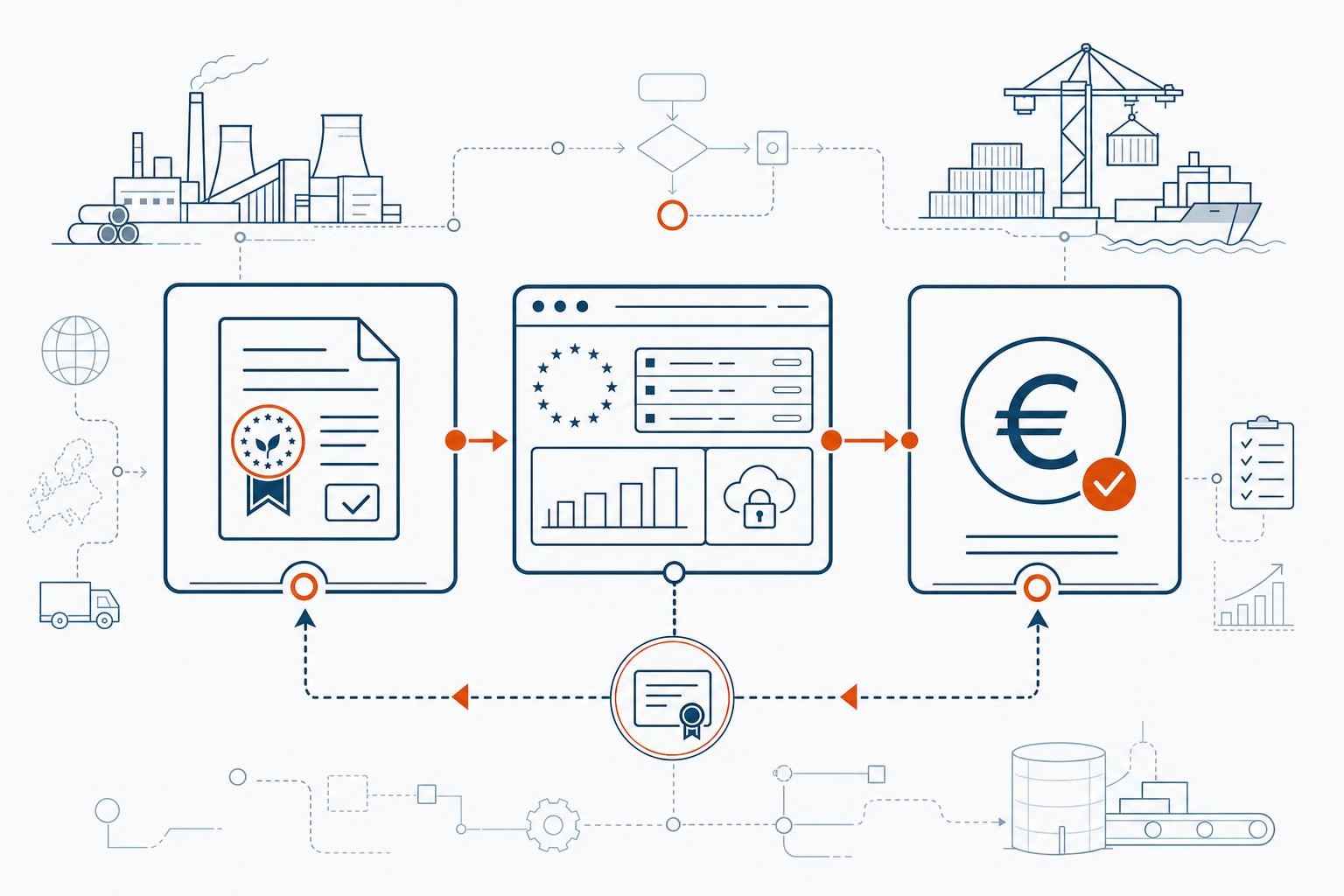
Inside the July 2026 Draft Rules: How CBAM Certificate Buying and Repurchase Will Actually Work
The European Commission published a draft delegated regulation on 9 July 2026 setting out the mechanics of CBAM certificate purchases and repurchases. Here's what treasury teams need to know before February 2027.