CBAM and Iron & Steel: A Plain-English Guide for Importers
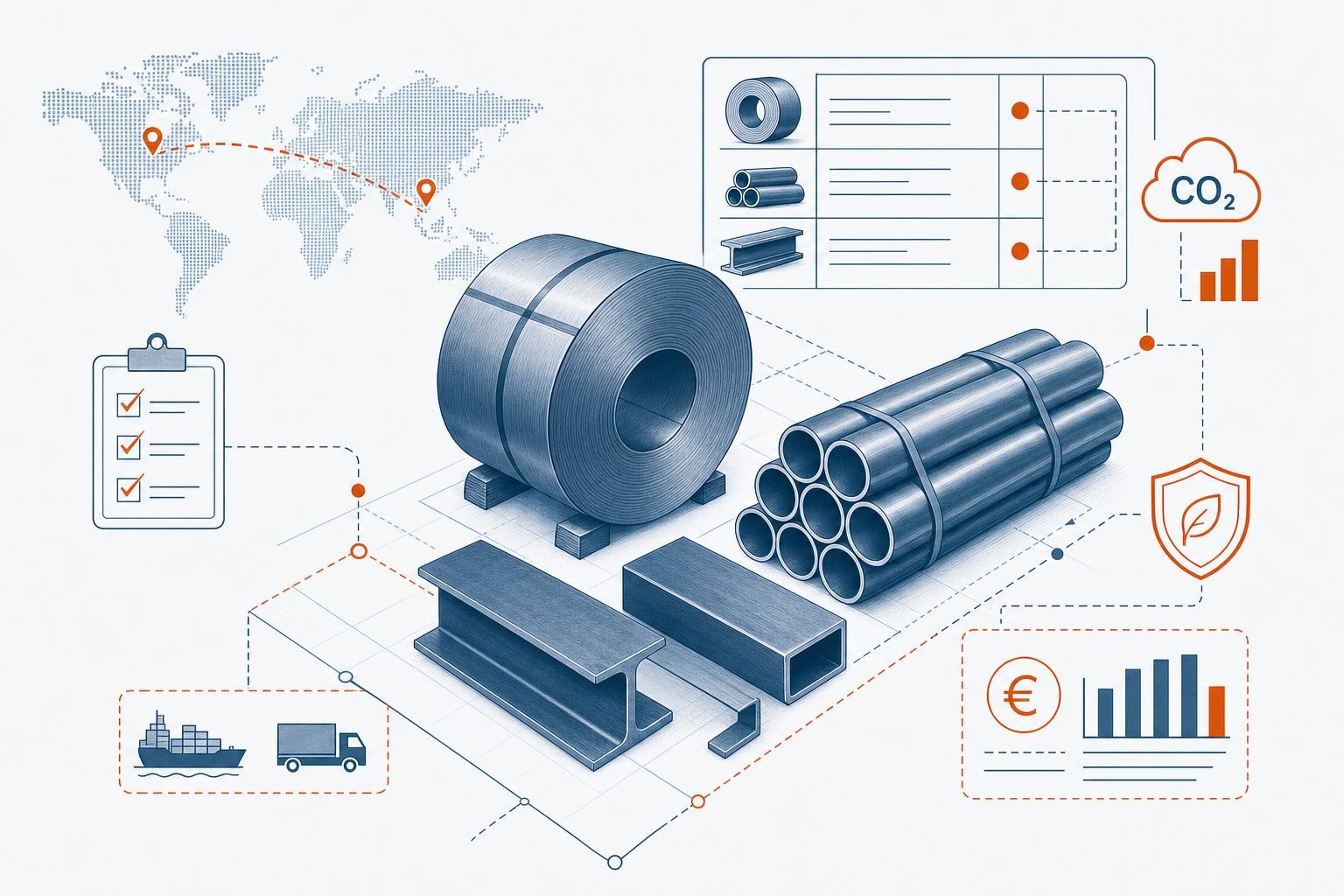
If you import steel into the EU, CBAM is already live and costing you money - even if the bills are still small. The definitive phase started on 1 January 2026, and the first certificate surrender deadline is 30 September 2027. This guide explains exactly how the rules apply to iron and steel: what's in scope, how emissions are counted, what default values will cost you, and the four things to do right now.
Is your steel in scope?
Iron and steel is one of the six sectors covered by CBAM under Annex I of Regulation (EU) 2023/956. The other five are cement, aluminium, fertilisers, electricity, and hydrogen.
Scope follows the CN code of the good crossing the border - not what you make from it. A hot-rolled steel coil is covered. A machine tool assembled from steel is not. Use the CBAM scope checker or the full goods and CN-codes reference to confirm your specific codes.
The iron and steel chapter is broad. The core coverage is CN chapter 72 (iron and steel), which includes semi-finished products, flat-rolled products, bars, rods, wire, tubes, pipes, and structural sections. A few sub-headings are carved out - notably ferrous waste and scrap (7204) and certain ferro-alloys - so check the exact listing rather than assuming the whole chapter applies.
The downstream items you might not expect
Here is where steel importers are sometimes caught out. Annex I deliberately brings certain downstream steel articles into scope to prevent circumvention - most notably CN 7318 (screws, bolts, nuts, washers, and similar fasteners) and tubes, pipes, and fittings. The logic is straightforward: without these inclusions, importers could sidestep CBAM by buying steel in the form of bolts rather than bars.
If you import fasteners (screws, bolts, nuts, washers — CN 7318) or tubes and pipe fittings from outside the EU, those goods are in scope today. Check your CN codes against Annex I before assuming you are clear.
The Commission has also proposed extending CBAM to roughly 180 additional downstream product lines - vehicle parts, machinery, radiators, and more - from 1 January 2028, but that proposal (COM(2025)989) had not been adopted as of June 2026 and must pass the ordinary legislative procedure before it becomes law. Watch this space; we track it in The CBAM Brief.
How embedded emissions are counted for steel
Not all CBAM sectors are treated the same way. Under Annex II of Regulation (EU) 2023/956, iron and steel (along with aluminium and hydrogen) is subject to direct emissions only - indirect emissions from the electricity used in production are not charged. This contrasts with cement and fertilisers, where both direct and indirect emissions are priced.
In practice, "direct emissions" means the CO₂e released during the steelmaking process itself - from blast furnaces, basic oxygen furnaces, electric arc furnaces, and so on - up to the point the goods cross the EU border.
A note of caution: the treatment of indirect emissions for steel is an area the Commission has flagged for future review. The regulation explicitly tasks the Commission with collecting data on indirect emissions in Annex II sectors "with a view to further extension ... as soon as possible." The exact methodology is refined through implementing acts, so always check the latest published rules on DG TAXUD rather than relying on older guidance.
For complex steel goods - products with multiple precursors, such as fabricated sections or fasteners - you need to trace embedded emissions through the supply chain. For complex goods, at least 80% of reported embedded emissions must be based on actual data from upstream producers. The remaining 20% may use default values.
Actual values vs default values: the cost difference matters
You have two ways to declare embedded emissions: actual verified data from the producing installation, or the Commission's default values published in Implementing Regulation (EU) 2025/2621.
Default values carry a conservative mark-up that is phased in over time: 10% in 2026, 20% in 2027, and 30% from 2028 onwards - confirm the exact rates against IR 2025/2621 and any subsequent revision. The mark-up is deliberate: it is designed to incentivise importers to collect real data rather than rely on the fallback.
The practical implication: default values for steel are deliberately conservative and typically higher than actual installation-level emissions, meaning CBAM costs will be higher than if verified data is used. For steel specifically, the gap can be significant - default values for some origins and product types are set at emission intensities that do not reflect modern electric-arc-furnace or DRI production routes.
The official default values are published by CN code and country of origin. We do not reproduce specific per-product figures here because they are subject to revision; use the default-values reference for the current published numbers.
| Actual verified data | Default values | |
|---|---|---|
| Source | Installation-level monitoring, third-party verified | Commission-published table (IR 2025/2621) |
| Accuracy | Reflects your supplier's real footprint | Conservative estimate; may overstate emissions |
| Mark-up | None | 10% (2026) → 30% (2028+) |
| Effort | Requires supplier engagement + accredited verifier | No supplier data needed |
| Cost trend | Stable or lower as mills decarbonise | Rises each year with mark-up ramp |
| Best for | High-volume, long-term supply relationships | One-off or low-volume imports only |
The 50-tonne threshold and steel
Steel tonnage counts towards the single mass-based threshold introduced by the 2025 Omnibus simplification. If your total annual imports of CBAM goods across all six sectors stay below 50 tonnes per legal entity, you are exempt from the authorised-declarant requirement and certificate obligations. Electricity and hydrogen are excluded from this threshold.
If you import, say, 40 tonnes of steel coil and 15 tonnes of aluminium profiles, you are over the threshold and fully in scope. The 50-tonne test is applied across all CBAM goods combined, not sector by sector.
What a steel importer should do first
Pull your import data by CN code and annual tonnage. Cross-check every code against Annex I. Pay particular attention to fasteners (CN 7318) and tube/pipe fittings — these are frequently overlooked. Use the scope checker for a quick first pass.
If you are over the 50-tonne threshold, you must hold authorised-declarant status to import CBAM goods. Apply via the CBAM Registry → Authorisation Management Module (AMM) using your EORI number. Your National Competent Authority has up to 120 days to assess the application — do not leave this late.
Contact your steel suppliers and ask for installation-level emissions data in the format required by IR 2025/2547. For the 2026 import year, verifications cannot take place until the calendar year closes, but you should be building the data pipeline now. Actual data is almost always cheaper than defaulting — especially as the mark-up ramp accelerates.
Your 2026 exposure is calculated as: embedded emissions × CBAM factor × certificate price. The CBAM factor in 2026 is just 2.5% — so costs are modest now but climb steeply (10% by 2028, 48.5% by 2030). Use the cost calculator to model your exposure across years and stress-test against default vs actual emissions.
Interactive: is your steel import likely in scope?
Use this decision tool to quickly sense-check whether a specific steel product triggers CBAM obligations.
Key dates for steel importers
| Milestone | Date |
|---|---|
| Definitive phase begins; certificates required | 1 January 2026 |
| Authorised-declarant applications open | Now - allow up to 120 days for approval |
| First CBAM declaration covers | Full calendar year 2026 |
| Certificate surrender deadline (2026 imports) | 30 September 2027 |
| Default-value mark-up rises to 20% | 1 January 2027 |
| Default-value mark-up rises to 30% | 1 January 2028 |
| Commission target for default-value revision | December 2027 |
A note on sources and staying current
The rules for CBAM are still being refined. The core legal basis is Regulation (EU) 2023/956 as amended by the 2025 Omnibus (Regulation (EU) 2025/2083). Default values are set in Implementing Regulation (EU) 2025/2621. Verification rules are in IR 2025/2546. All are published on EUR-Lex and the DG TAXUD CBAM page.
Implementing acts are updated periodically - the Commission has indicated a target of December 2027 for the next default-value revision. Always verify figures against the current published regulation before making compliance or commercial decisions.
This is plain-English guidance, not legal advice. Confirm your position with a qualified customs or legal adviser.
Want the key CBAM updates for steel and other sectors delivered to your inbox? Subscribe to The CBAM Brief - free, no spam, straight to the point.
Related reading
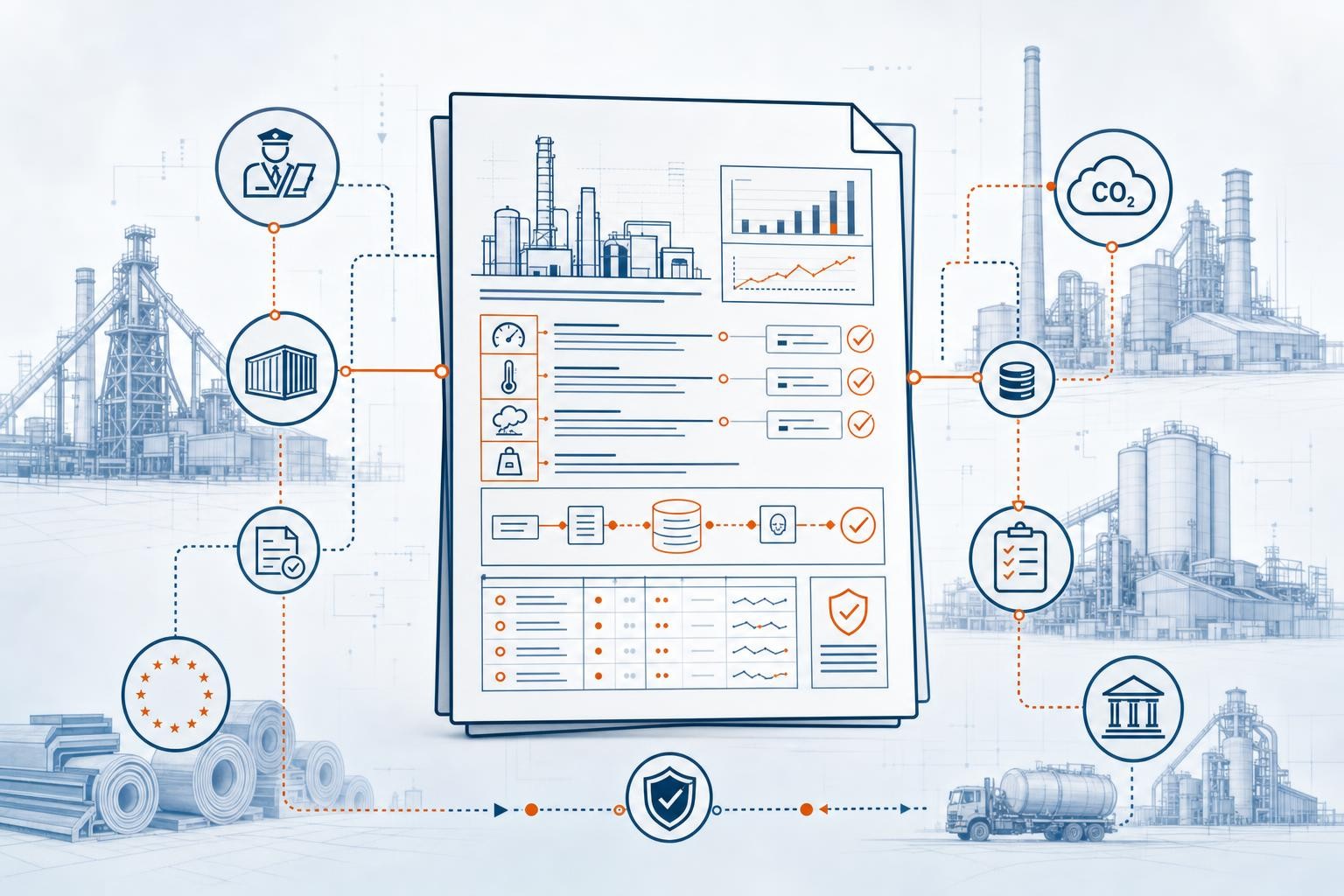
CBAM Monitoring Plans: What Installation-Level Data Quality Actually Requires
The monitoring plan - not just the final emissions number - is now the primary object of CBAM scrutiny. Here's what IR 2025/2547 requires at the installation level, and why traceability is the recurring failure point.
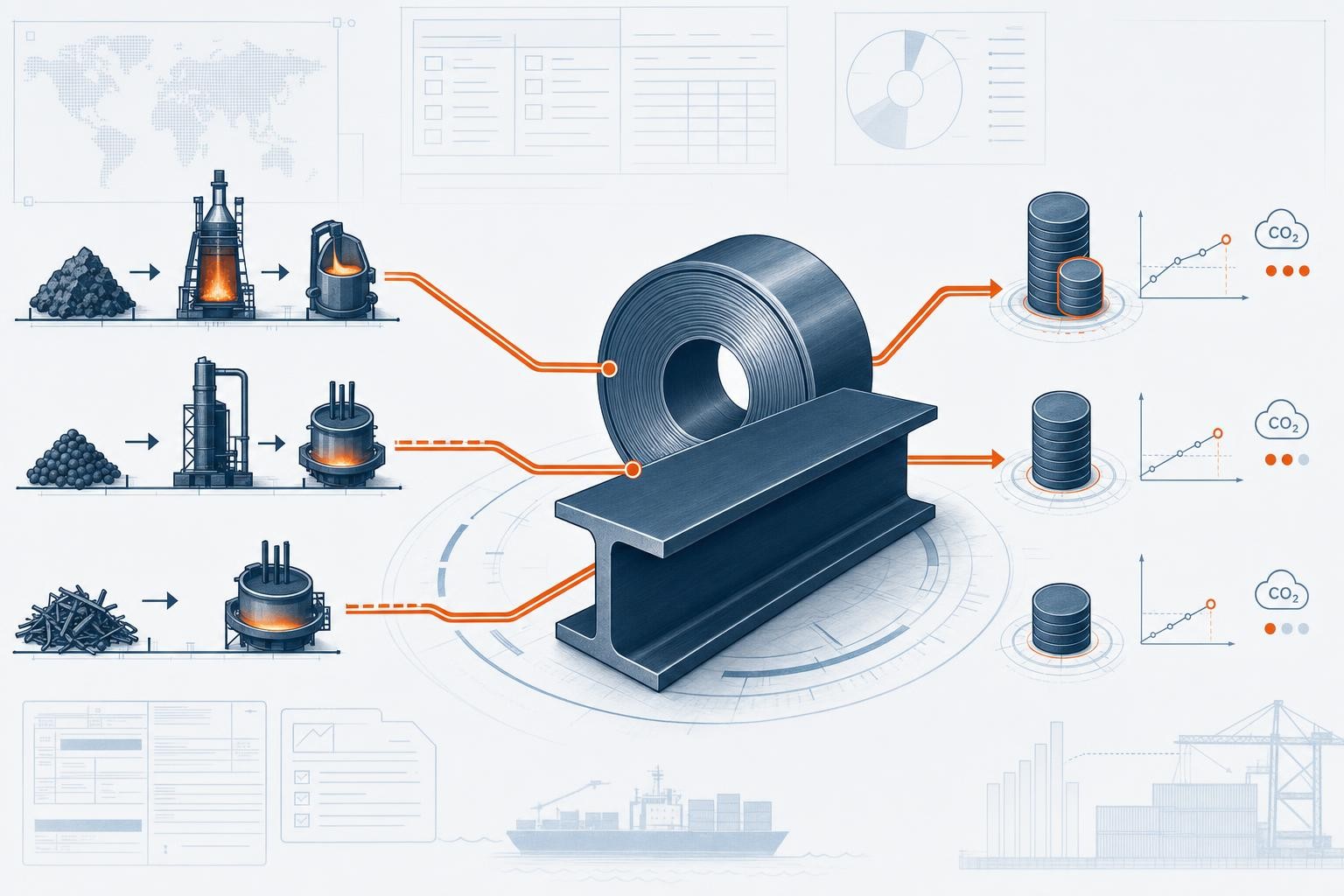
CBAM and Steel: Why Your Supplier's Production Route Is Now a Procurement Decision
Steel's CBAM cost isn't fixed - it swings by up to 19x depending on how your supplier makes steel. Here's how the BF-BOF, DRI-EAF, and Scrap-EAF benchmarks translate into real sourcing decisions.
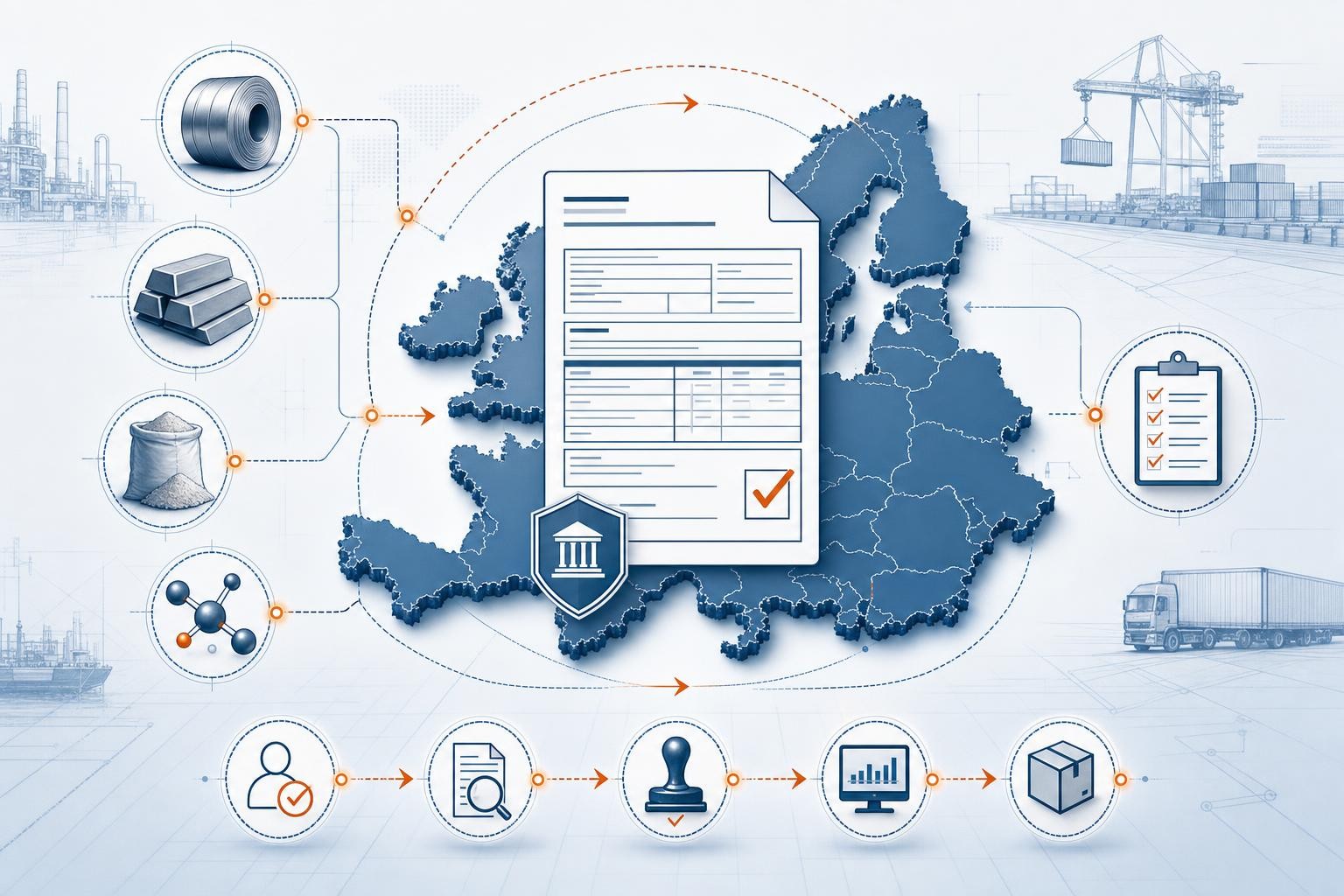
Becoming an Authorised CBAM Declarant: A Practical Guide for EU Importers
The 31 March 2026 deadline has passed. Here's what Authorised CBAM Declarant status means, what the transitional easement covers, how financial guarantees work, and what every importer must do before September 2027.