CBAM Emissions Verification: A Plain-English Guide for EU Importers

You've collected installation-level emissions data from your non-EU suppliers. Good. But under the CBAM definitive period, that data is only usable in your annual declaration if an accredited third-party verifier has signed off on it. This guide covers the verification process from start to finish - who can verify, what they actually do, what it costs, and why the clock is already running.
Why verification exists - and who it applies to
The short answer: verification is the price of using actual emissions values instead of the Commission's published default values.
Importers who rely entirely on the Commission's default values published in Implementing Regulation (EU) 2025/2621 do not need a verifier at all. Default values are deliberately set high - with a punitive mark-up of 10% above the calculated default in 2026, rising to 20% in 2027 and 30% from 2028 onward - to incentivise importers to use real data. If your suppliers genuinely produce at lower emission intensities than the defaults, verification is how you prove it and cut your certificate bill accordingly.
The first CBAM certificate price for Q1 2026 was set at €75.36 per tonne of CO₂e. At that price, the gap between a verified actual value and a default value can be significant. For Chinese blast-furnace steel, for example, the Commission default sits at roughly 3.17 tCO₂e per tonne against typical actual values closer to 2.0 tCO₂e - a difference that compounds quickly across large import volumes.
Verification applies only when you use actual embedded emissions data. If you use default values for every installation, you have no verification obligation — but you will pay the default mark-up. The decision is commercial, not just administrative.
Who can act as a CBAM verifier?
Not every sustainability auditor or carbon consultant qualifies. The rules are specific.
A CBAM verifier must be a third-party body accredited under EN ISO/IEC 14065 by a National Accreditation Body (NAB) that is a recognised member of European Accreditation (EA). The legal basis sits in Delegated Regulation (EU) 2025/2551, which sets the conditions for accreditation, oversight, and mutual recognition between NABs.
Key points on eligibility:
- EU-based verifiers apply for accreditation to their own member state's NAB - for example, DAkkS in Germany, COFRAC in France, RvA in the Netherlands, or ACCREDIA in Italy.
- Non-EU verifiers (including UK-based firms accredited by UKAS) may qualify if their NAB holds a recognised mutual recognition agreement with EA. Confirm EA membership status before engaging any non-EU firm.
- Existing EU ETS verifiers are the most likely candidates, as the accreditation standard overlaps substantially - but their scope must specifically reference the CBAM activity groups they intend to verify. EU ETS accreditation alone is not automatically sufficient.
- Verifiers cannot register in the CBAM Registry until 1 September 2026. A verifier who has not completed Registry registration by the time you submit your declaration cannot be referenced in it.
Each verifier issues a separate verification report per installation, filed using an electronic template provided by the Commission via the CBAM Registry under IR 2025/2546.
What the verifier actually checks
Verification under IR 2025/2546 covers five core areas at each production installation:
- Activity data accuracy - production volumes, fuel consumption, input material weights, and process-specific data used in the embedded emissions calculation.
- Emission factor appropriateness - whether the factors applied correspond to the actual production route in use.
- Calculation methodology - whether the formulas used comply with IR 2025/2547.
- Monitoring plan compliance - whether the installation's monitoring plan is documented, implemented, and consistently followed.
- Completeness - whether all relevant emission sources and GHGs are captured, including indirect emissions where required (cement and fertiliser installations, for example).
The verifier must be independent of the installation they verify. They cannot provide consulting or advisory services to the same installation - keep verification and advisory work with separate firms.
The on-site inspection rule - and the bottleneck it creates
This is the most operationally demanding part of the verification regime.
For the first verification period (covering calendar year 2026 imports), the verifier must conduct a mandatory physical site visit to each non-EU installation. Remote or document-only verification is not permitted under DR 2025/2551. The visit includes a facility walk-through, process observation, document review, and data sampling.
From the second consecutive year onward, there is limited flexibility. Under IR 2025/2546, a virtual site visit or a waiver of the physical visit is possible - but only where specific conditions are met and only if a physical visit was conducted the year before. The default expectation remains physical presence.
Why this matters for your planning: Verifier registration in the CBAM Registry opens 1 September 2026, giving accredited firms just 13 months to conduct site visits across thousands of non-EU facilities in China, India, Turkey, the UAE, Egypt, and elsewhere. Demand will concentrate in Q4 2026 and Q1 2027 as the 30 September 2027 declaration deadline approaches. Importers who wait until late 2026 to identify a verifier face genuine availability risk - the regulation provides no force majeure clause, no good-faith waiver, and no exemption for importers who cannot locate an accredited verifier in time. The only legal fallback is to use default values.
What does verification cost?
Fees vary widely depending on installation complexity, number of product types, and geography. Based on market data as of mid-2026, indicative ranges are:
| Installation type | Typical examples | Indicative fee range |
|---|---|---|
| Simple | Single-product steel mill, one production route | €5,000 – €15,000 |
| Medium | Multi-product aluminium smelter, 2–4 product lines | €15,000 – €30,000 |
| Complex | Fertiliser complex, multiple GHGs, 5+ process units | €30,000 – €50,000 |
These are indicative figures only. Travel costs for long-haul site visits (a steel mill in India costs more to visit than one in Turkey) add directly to fees. A single accredited verifier can cover multiple installations in one engagement, and multi-installation contracts typically attract volume discounts of 15-25% relative to per-installation pricing - worth negotiating if you have several suppliers in the same country or region.
An importer sourcing actual values from ten medium-complexity installations faces indicative first-cycle verification costs of roughly €120,000-€250,000. For importers with 50 or more installations, first-cycle costs can exceed €2 million.
How to find a qualified verifier
No central EU-published list of CBAM-accredited verifiers exists yet. The practical routes are:
- Your member state's NAB - each maintains a public register of accredited verification and validation bodies under ISO 14065. Contact them directly.
- The EA database at european-accreditation.org - searchable by accreditation scope.
- Established EU ETS verifiers - firms such as Bureau Veritas, SGS, DNV, TÜV SÜD, and RINA are among those preparing CBAM verification services, drawing on existing ISO 14065 accreditation.
Before committing, confirm three things: (1) the verifier's accreditation body is an EA member; (2) their accreditation scope covers the specific CBAM activity group for your sector; and (3) they have completed or are progressing CBAM Registry registration (open from 1 September 2026).
Ask any candidate verifier whether they have sector-specific experience — steel, cement, aluminium, fertilisers, electricity, and hydrogen each have distinct calculation methodologies. A verifier with EU ETS experience in your sector is a stronger candidate than a generalist ISO 14065 body without it.
Practical first steps for importers
The 30 September 2027 declaration deadline sounds distant. It isn't - not when mandatory physical site visits must be completed at potentially dozens of non-EU installations worldwide, and verifier capacity is finite.
Run the numbers. For each supplier installation, compare the certificate cost saving from using actual values against the verification fee and administrative burden. High-volume imports from lower-emission producers are the clearest candidates for verification. Low-volume or high-emission-intensity installations may not justify the cost.
Suppliers need to accommodate a physical site visit in 2026 or early 2027. Give them as much notice as possible — particularly for installations in countries where verifier availability is thin. Ask them to begin assembling monitoring documentation: process flow diagrams, fuel consumption records, activity data logs, and emissions calculations under IR 2025/2547.
Contact your member state's NAB and the EA database. Shortlist two or three candidates per region or sector. Check EA membership, CBAM activity group scope, and sector experience. Begin conversations now — before the September 2026 registry opening, when demand will accelerate.
If you have multiple suppliers in the same country, a single verifier conducting several site visits in one trip reduces travel costs and may attract volume discounts. A single accredited verifier can issue separate verification reports for each installation.
Verification reports must be ready before you submit your annual CBAM declaration on 30 September 2027. Work backwards: full-year 2026 data is available from January 2027; site visits and document review take weeks; report issuance takes additional time. Target completing all verifications by June 2027 at the latest to leave margin for corrections.
The bottom line
Verification is not a bureaucratic formality. It is the mechanism that converts your suppliers' actual emissions performance into a lower certificate bill - and it comes with a hard constraint: mandatory physical site visits in year one, a tight global verifier market, and a fixed declaration deadline of 30 September 2027.
If you are still deciding which installations to verify versus accept defaults for, our guide to default values vs actual values covers the financial trade-offs in detail. If you need to understand the Registry mechanics around submitting your declaration, the CBAM Registry plain-English guide is the place to start.
The one thing that is clear: verifier capacity will be the binding constraint for many importers in 2026 and 2027. Start the selection process now.
Plain-English guidance, not legal or tax advice. The authoritative rules on verification are set out in Delegated Regulation (EU) 2025/2551 and Implementing Regulation (EU) 2025/2546, both in force from 1 January 2026. Always consult a qualified trade compliance adviser for your specific situation.
Subscribe to The CBAM Brief - short, plain-English updates on CBAM developments delivered to your inbox as they happen.
Related reading
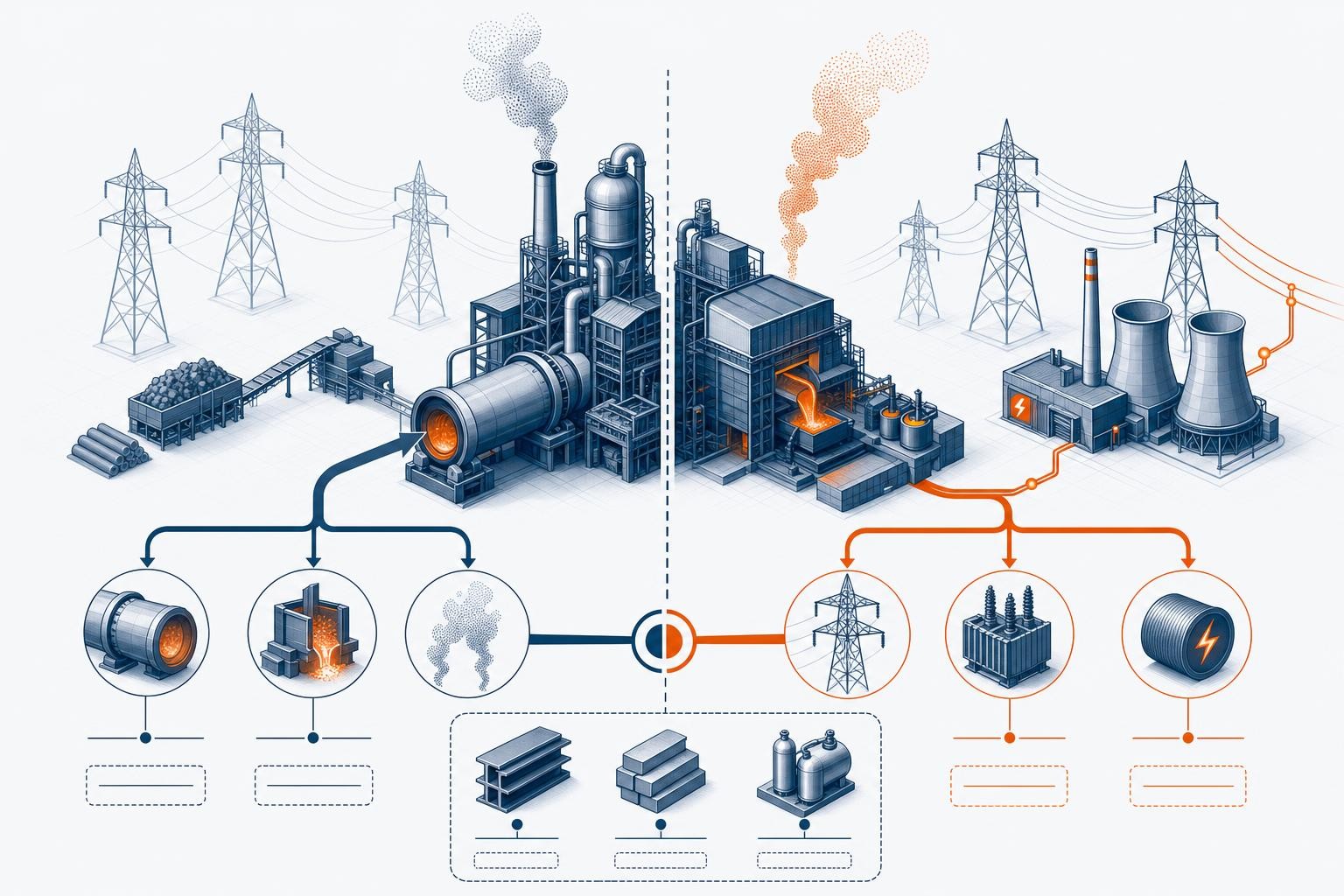
CBAM and Indirect Emissions: Why the Annex II Split Matters for Steel, Aluminium, and Hydrogen Importers
CBAM prices indirect emissions for cement and fertilisers but not for steel, aluminium, or hydrogen - and the reason why matters for your compliance strategy. Here's the full mechanics.
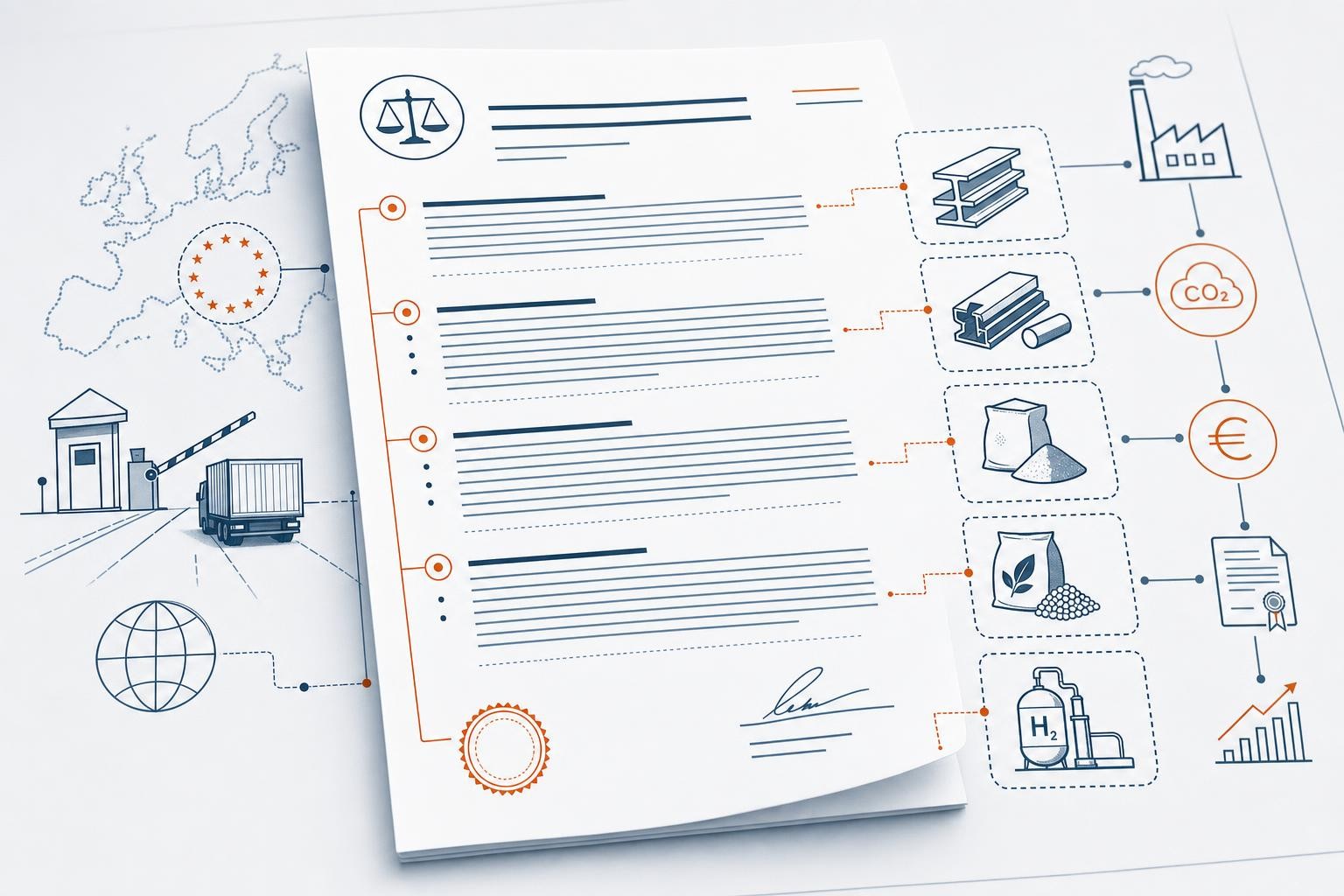
Making Your Supply Contract CBAM-Ready: A Clause-by-Clause Drafting Guide
CBAM is now a contracting problem. This clause-by-clause guide covers emissions data, verification, price pass-through, Incoterms, indemnity, and change-in-law for EU importers of steel, aluminium, cement, fertilisers, and hydrogen.
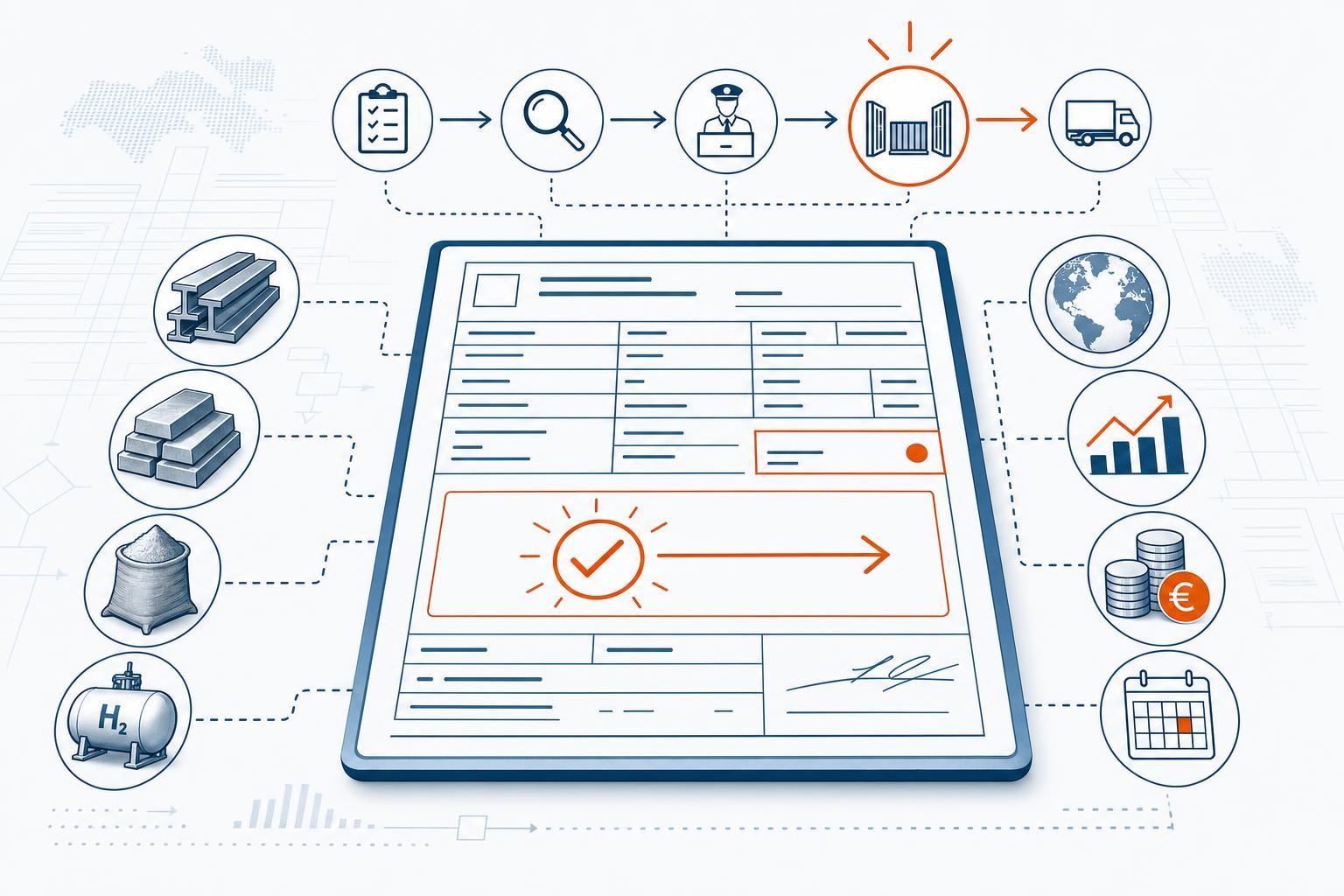
CBAM and Customs Procedures: How Release for Free Circulation Changes Everything
CBAM obligations attach at release for free circulation, not at physical arrival. That single fact makes your choice of customs procedure a genuine compliance and cash-flow lever. Here's the practical guide.