Is the EU CBAM Legal Under WTO Rules? What the Debate Means for Importers
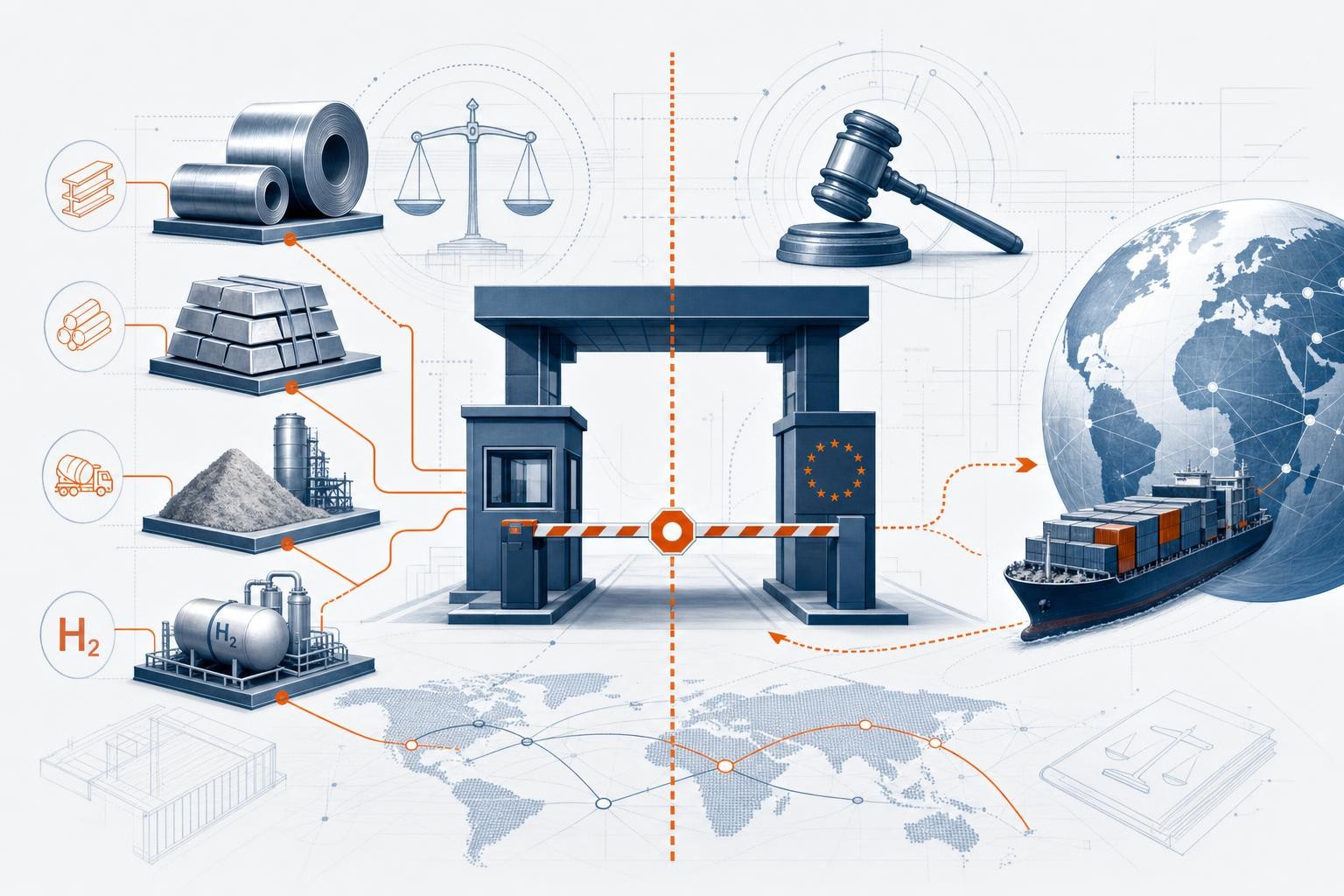
A carbon border charge that one bloc calls a climate necessity, and several major economies call an illegal trade barrier. That is the live tension around the EU's Carbon Border Adjustment Mechanism - and it is no longer just diplomatic noise. A formal WTO dispute is already on the docket, more are signalled, and the legal arguments on both sides are serious. Here is what is actually being argued, where the real legal risk sits, and - most importantly - what it means for you as an importer.
The Challengers' Case
South Africa, India, China, and Brazil have voiced their concern over the legality and equity of the CBAM, with South Africa indicating it intends to lodge a formal complaint at the WTO. They are not alone: various WTO members - including Brazil, China, India, Indonesia, Japan, South Korea, Taiwan, and Turkey - have made statements that CBAM measures are not consistent with the EU's international obligations.
The objections cluster around two distinct but related arguments.
The trade-law argument. CBAM has sparked controversy due to concerns over its compatibility with WTO rules, particularly in relation to the Most-Favoured-Nation (MFN) principle, National Treatment, and non-discrimination. In plain English: challengers argue that CBAM treats imported goods less favourably than equivalent EU-produced goods, and that it treats imports from different countries differently - both of which are presumptively prohibited under GATT Articles I and III.
On 12 May 2025, Russia submitted the first formal WTO request for consultations over CBAM, describing the mechanism and the EU ETS as "discriminatory" and alleging they serve as tariff-like barriers under the pretext of climate protection. India, South Africa, and others are watching that case closely and may join as third parties or file their own complaints.
The equity argument. Developing nations say the mechanism compromises the "common but differentiated responsibilities" (CBDR-RC) principle, established under the Paris Agreement on climate change in 2015. The core claim is that the EU - a historically large emitter - is imposing a uniform carbon price on countries at very different stages of development and with very different historical contributions to climate change.
Between 2020 and 2024, India formally objected 29 times at the WTO's Committee on Trade and Environment, articulating that CBAM violates WTO non-discrimination provisions and climate justice principles. For India, whose steel exports to Europe account for more than 60% of the sector's total exports, CBAM raises questions about whether unilateral measures can impose uniform carbon pricing without considering the differentiated responsibilities outlined in the Paris Agreement.
A 2024 study by the Centre for Science and Environment found that goods subject to CBAM accounted for nearly 10% of India's total exports to the EU in 2022-23, and India estimates the levy could add an average tax burden of around 25% on affected exports.
The EU's Legal Defense
The EU's position is that CBAM was designed from the outset to be WTO-compatible, and it rests on three pillars.
Parity, not discrimination. EU trade chief Valdis Dombrovskis stated that "the European Commission had designed CBAM carefully so that it was compatible with WTO rules, applying the same carbon price on imported goods as on domestic EU producers." The argument is that CBAM does not discriminate between domestic and foreign goods - it applies the same ETS carbon cost to both.
The Article XX environmental exception. The EU may rely on its objective of climate change mitigation to invoke a general exception of environmental nature under Article XX of the GATT 1994. It may successfully argue that CBAM falls under measures legitimately aimed at the protection of "human, animal or plant life or health" under Article XX(b), and the "conservation of exhaustible natural resources" under Article XX(g).
Free allowances are being phased out. One of the sharpest criticisms is that EU industries still receive free ETS allowances while imports face the full CBAM charge - an asymmetry critics call discriminatory. The EU's answer is that CBAM's gradual introduction is aligned with the phase-out of free allowances under the EU ETS to support the decarbonisation of EU industry. Starting in 2026, free allowances begin declining, with the CBAM factor beginning at 2.5% in the first year and gradually increasing to 100% by 2034. The EU's position is that the two tracks are deliberately synchronised, not contradictory.
Where the Real Legal Risk Sits
Most trade-law scholars agree that the EU's hardest test is not the headline GATT articles - it is the chapeau of Article XX.
The Article XX chapeau analysis is dispositive regardless of which sub-paragraph applies. The EU invokes Article XX(g), which permits measures relating to the conservation of exhaustible natural resources, subject to the chapeau requirement that such measures not constitute arbitrary or unjustifiable discrimination between countries where the same conditions prevail.
The chapeau requires that a measure be "not applied in a manner which would constitute a means of arbitrary or unjustifiable discrimination between countries where the same conditions prevail, or a disguised restriction on international trade." The Appellate Body in US - Shrimp notably specified that in order to satisfy the chapeau, some flexibility must be allowed to exporting countries in complying with the importing country's measure: requiring "essentially the same" practices is not allowed, but requiring practices "comparable in effectiveness" is acceptable.
This creates two specific pressure points for the EU:
Free allowances during the transition. The EU must eliminate its current system of free emissions certificates, since handing out free certificates to EU industries while applying CBAM to imports would represent a blatant form of discrimination in violation of GATT Article XX. The certificates have strong support from EU industries, so this represents a political hurdle.
Least-developed countries (LDCs). LDCs may challenge the WTO legality of CBAM based on its failure to provide preferential treatment to their benefit in light of CBDR-RC in relation to the chapeau of Article XX of the GATT 1994. The EU currently offers no exemptions for LDCs - the EU has announced that no exemptions will be granted, including for the UK or for Ukraine. Only countries with EU-linked carbon markets (such as Switzerland) are exempt.
Whether CBAM will enjoy the protection of the Article XX exceptions will depend most of all on whether the EU has met the requirements of the chapeau, by engaging in appropriate consultation with potentially affected WTO members, pursuing good regulatory cooperation with trading partners, and taking particular care in the even-handed design of the CBAM.
The free-allowances overlap is the sharpest legal vulnerability. Critics argue that EU producers still benefit from partial free ETS allocations while importers face the full CBAM charge — a gap that narrows each year through 2034 but is real today. The EU's counter is that the CBAM adjustment factor accounts for this overlap. A WTO panel would scrutinise this closely.
The Outlook: Slow, Uncertain, and Complicated
Even if a formal WTO panel is established, a resolution is years away - and the outcome is genuinely uncertain.
Russia filed the first formal WTO request for consultations over CBAM on 12 May 2025, marking the first legal challenge to the mechanism in the WTO dispute settlement system. A panel, if established, would take years to report. Then either side can appeal - and that is where the system breaks down.
The WTO's dispute settlement system is currently in a state of crisis, primarily due to the paralysis of its Appellate Body, which has been rendered non-operational following the United States' continued blockage of new appointments. Even when a panel report is released after a lengthy process, there is no certainty about its implementation, as the parties have the option of appealing before the Appellate Body. Given the deadlock in appointing members to the AB, the appeal would be sent "into the void." A dysfunctional AB ostensibly extends the timeline of disputes between the parties with no result in sight.
Even if CBAM is found WTO-illegal by a dispute panel, the EU could appeal the recommendation, leading to prolonged processes and potential delays in implementing fundamental changes. As an example, a US-EU dispute on aerospace subsidies took 17 years to settle.
There is also a diplomatic track running in parallel. Under the EU-India Strategic Agenda, adopted in September 2025, the EU committed to deducting the carbon prices effectively paid in India from CBAM financial adjustments, offering potential for cooperation. Whether India's emerging Carbon Credit Trading Scheme qualifies for such deductions remains contested, but the bilateral channel is open.
What This Means for Importers: Stay Calm, Stay Compliant
The WTO debate is real and the legal arguments are serious. But for EU importers, the practical message is straightforward.
CBAM obligations are fully in force regardless of any WTO dispute. On 1 January 2026, the EU's CBAM transitioned to enforcement, triggering financial obligations for importers to purchase certificates reflecting embedded emissions. No WTO challenge - however well-founded - suspends those obligations while proceedings are underway. WTO disputes operate between governments, not between governments and private importers.
A resolution, if it comes, is years away. Even an optimistic timeline puts a panel report at 2027-2028 at the earliest, with implementation of any ruling taking years beyond that. Plan your compliance around the rules as they stand today.
Watch the free-allowances phase-out. The legal tension around residual free ETS allocations is real, but it resolves itself over time as the phase-out proceeds through 2034. The EU has built the adjustment factor into the CBAM certificate calculation precisely to address this.
Third-country carbon prices matter. If your suppliers are in a country developing its own carbon pricing - India's CCTS, Turkey's ETS, or others - the deductibility of those prices from your CBAM liability is an active area of EU rulemaking. Track it.
Your compliance obligations do not pause for geopolitics. Whatever happens at the WTO, you need authorised CBAM declarant status, verified emissions data from your suppliers, and a plan for certificate purchases. Start there.
The Bigger Picture
The CBAM WTO dispute is, at its core, a question about whether the global trading system can accommodate unilateral climate measures - and whether the Paris Agreement's principle of differentiated responsibilities has any teeth in trade law. The India-CBAM dispute reveals whether climate-trade architecture can accommodate differentiated responsibility or fracture into competing blocs that impose asymmetric burdens.
That is a genuinely important question. But it will be answered slowly, in Geneva and Brussels, over the next several years. In the meantime, the CBAM is law, it is enforced, and the penalties for non-compliance are real.
This article is general information, not legal advice. WTO law and CBAM implementing rules are complex and subject to change. If you need advice on your specific situation, consult a qualified trade lawyer or customs adviser. The authoritative source for CBAM rules is the European Commission's CBAM hub at taxation-customs.ec.europa.eu.
Related reading
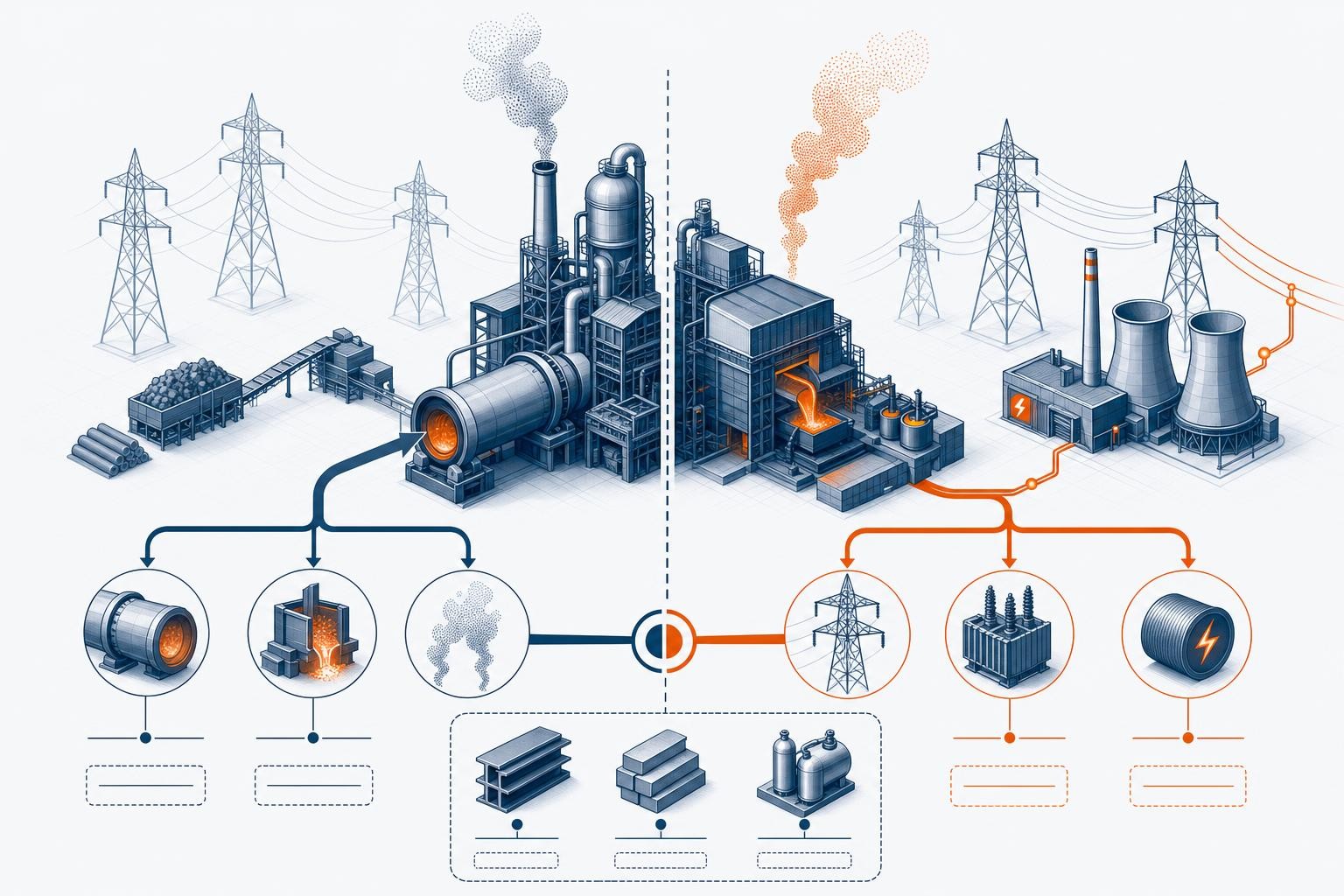
CBAM and Indirect Emissions: Why the Annex II Split Matters for Steel, Aluminium, and Hydrogen Importers
CBAM prices indirect emissions for cement and fertilisers but not for steel, aluminium, or hydrogen - and the reason why matters for your compliance strategy. Here's the full mechanics.
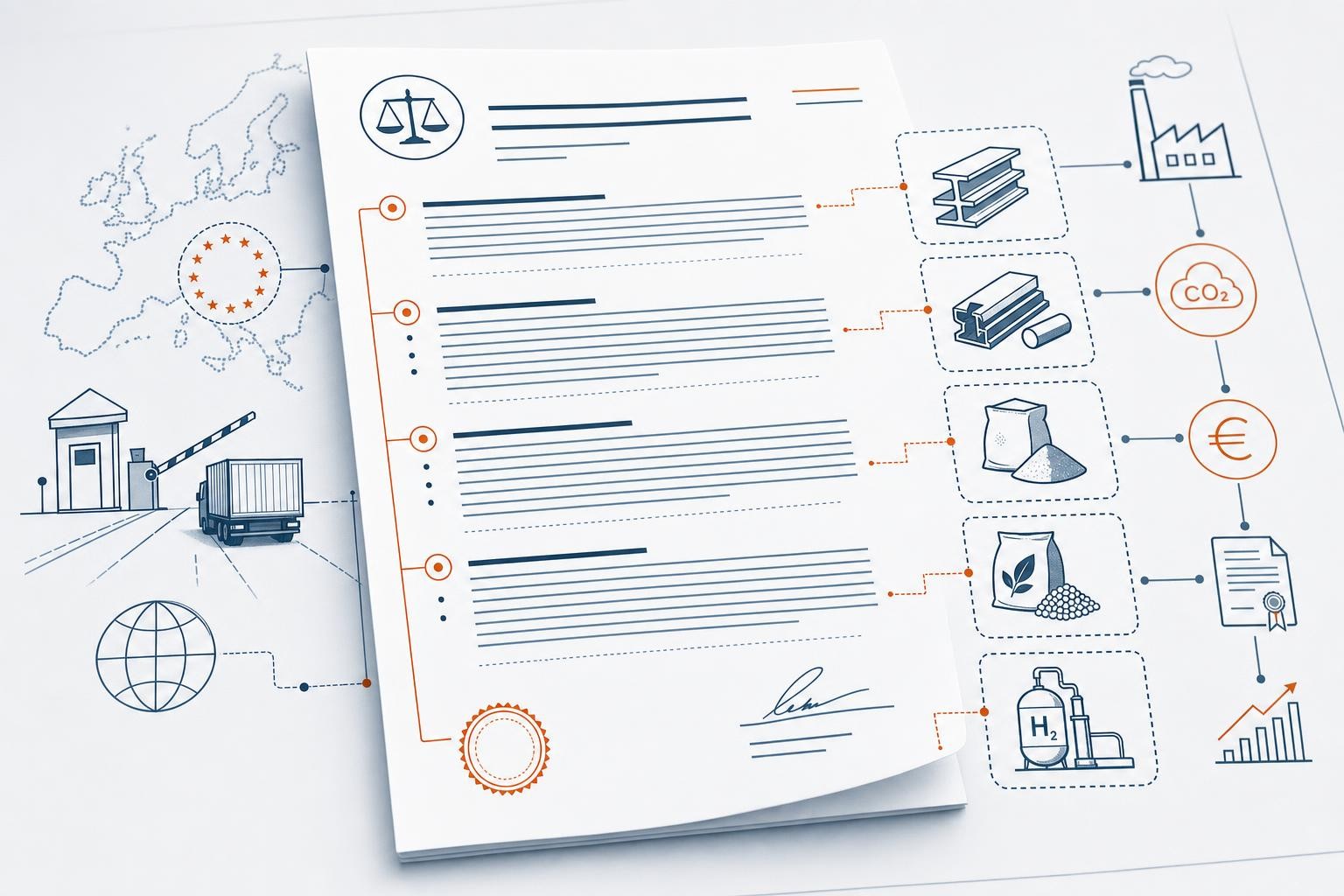
Making Your Supply Contract CBAM-Ready: A Clause-by-Clause Drafting Guide
CBAM is now a contracting problem. This clause-by-clause guide covers emissions data, verification, price pass-through, Incoterms, indemnity, and change-in-law for EU importers of steel, aluminium, cement, fertilisers, and hydrogen.
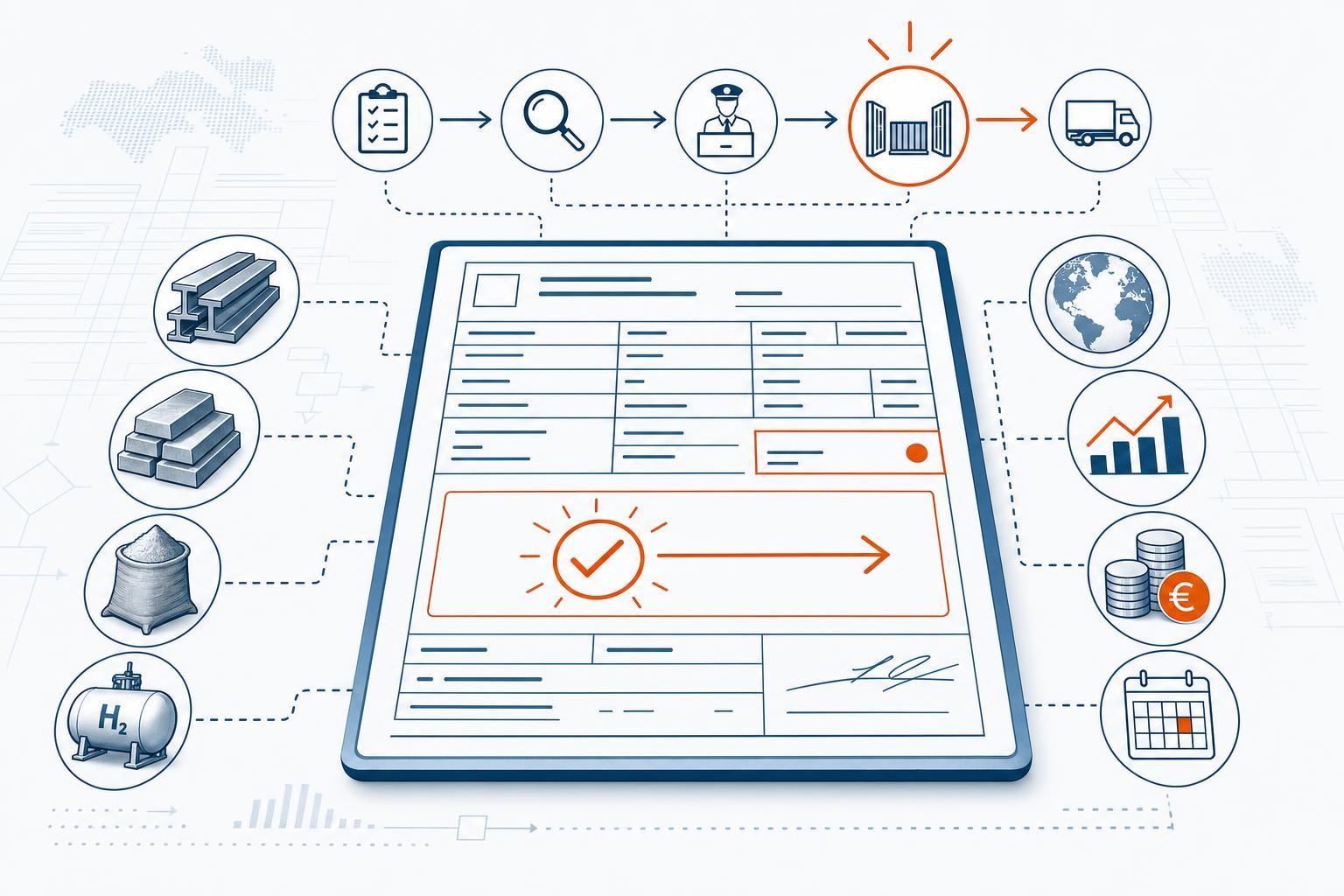
CBAM and Customs Procedures: How Release for Free Circulation Changes Everything
CBAM obligations attach at release for free circulation, not at physical arrival. That single fact makes your choice of customs procedure a genuine compliance and cash-flow lever. Here's the practical guide.