Collect Once, Use Twice: How CBAM Supplier Data Feeds Your Scope 3 and CSRD Disclosures

If your company imports steel, aluminium, cement, fertilisers, electricity, or hydrogen into the EU, there's a reasonable chance two separate teams are currently chasing the same non-EU suppliers for emissions data - one for CBAM compliance, one for Scope 3 and CSRD reporting. Neither team knows the other has already asked.
That duplication is expensive, confusing for suppliers, and entirely avoidable. The core insight is simple: the verified, installation-level emissions figure a supplier produces for your CBAM declaration is, in large part, the same number your sustainability team needs for Scope 3 Category 1 and your CSRD/ESRS E1 climate disclosure. You can collect it once and use it twice - if you understand where the overlap is genuine, where it isn't, and how to govern the data properly.
Why this matters right now
CBAM's definitive phase launched on 1 January 2026, and the first annual declaration - covering all 2026 imports - is due by 30 September 2027. This is no longer a rehearsal. From 1 January 2026, every tonne of carbon embedded in CBAM-covered imports carries a direct financial cost, with certificates purchased and surrendered against declared emissions.
At the same time, CSRD is live for large companies. Under ESRS E1, in-scope companies must disclose their gross Scope 3 GHG emissions broken down by significant category, and the simplified ESRS package being adopted in 2026 explicitly preserved those Scope 3 GHG disclosure requirements. The GHG Protocol's Scope 3 Standard, which ESRS E1 is built on, defines Category 1 - purchased goods and services - as the upstream emissions from everything a supplier produces for you. For an importer of CBAM goods, that's exactly the same supply chain.
Two regulatory clocks are ticking. The data they need overlaps substantially. The question is whether your organisation is set up to collect it once or twice.
Where the data genuinely overlaps
Think of it this way. When a Turkish steel mill calculates the CO₂ embedded in a tonne of hot-rolled coil it ships to your EU facility, it is producing a number that simultaneously belongs in three places:
- Your CBAM declaration - as the embedded emissions figure on which your certificate liability is calculated.
- Your Scope 3 Category 1 inventory - as the cradle-to-gate GHG data for a purchased good, under the GHG Protocol's supplier-specific method.
- Your CSRD/ESRS E1 disclosure - as part of the value-chain emissions your sustainability report must cover.
The GHG Protocol describes the supplier-specific method as collecting "product-level cradle-to-gate GHG inventory data from goods or services suppliers" - which is precisely what CBAM's actual-value pathway requires. CBAM pushes importers toward verified, installation-specific data rather than EU default values, and that verified primary data is exactly what raises the quality of Scope 3 estimates, which often rely on spend-based or average-data proxies.
Default values under CBAM Implementing Regulation (EU) 2025/2621 include a mark-up above best-available data - 10% in 2026, rising to 20% in 2027 and 30% from 2028 - to incentivise importers to obtain real, verified emissions data from their suppliers. In other words, the financial penalty for not collecting primary supplier data is built into the default-value structure itself. The same investment in supplier engagement that reduces your CBAM certificate bill also upgrades your Scope 3 from a spend-based estimate to a verified primary figure.
The practical overlap: A verified actual-value CBAM data package from a supplier — covering direct process emissions and, where applicable, purchased electricity emissions at installation level — is the raw material for a supplier-specific Scope 3 Category 1 calculation. You don't need to ask twice. You need one well-designed data request.
Where the two regimes do NOT line up
This is the part that trips teams up. The overlap is real, but it is not a clean copy-paste. Data collected for CBAM needs mapping before it can be used for Scope 3 and CSRD - not blind copying.
System boundary. CBAM embedded emissions cover only Scope 1 (direct) and, for cement and fertilisers, Scope 2 electricity emissions from the production process. A full carbon footprint typically includes Scope 3 upstream and downstream emissions - raw material extraction, transport, end-of-life - none of which CBAM captures. The CBAM boundary ends at the production installation gate. Shipping the goods to the EU is outside it.
Scope coverage. CBAM currently covers six sectors. Your Scope 3 Category 1 covers your entire purchased goods and services spend - every supplier, every material, every geography. CBAM data gives you high-quality primary data for a slice of your supply chain, not all of it.
Terminology and units. CBAM classifies emissions as "direct" and "indirect" (electricity-related), not as Scope 1/2/3. The GHG Protocol uses Scope language. These map onto each other, but not perfectly - for example, on-site electricity generation is Scope 1 under the GHG Protocol but classified as a direct emission under CBAM. Allocation rules for complex goods (where precursor emissions must be attributed to specific products) also differ in detail between the CBAM methodology and standard LCA/GHG Protocol approaches.
Verification standards. CBAM requires third-party verification by an EU-accredited verifier under specific CBAM rules. CSRD requires limited assurance from a statutory auditor or accredited verifier under ESRS. These are related but not identical standards - a CBAM verification statement is strong evidence for CSRD purposes, but it does not automatically satisfy CSRD assurance requirements without mapping.
| Dimension | CBAM | Scope 3 Cat 1 (GHG Protocol) | CSRD / ESRS E1 |
|---|---|---|---|
| What's covered | 6 sectors (steel, aluminium, cement, fertilisers, electricity, hydrogen) | All purchased goods & services | All material Scope 3 categories |
| Emissions boundary | Direct + electricity indirect at installation gate | Cradle-to-gate (can include upstream Scope 3 of supplier) | Full value chain, upstream & downstream |
| Primary data driver | Mandatory for actual values; defaults carry mark-up | Preferred but not legally mandated | Required where material; limited assurance |
| Verification | EU-accredited third-party verifier | No mandatory verification standard | Limited assurance by statutory auditor/accredited body |
| Reporting unit | tCO₂e per tonne of product (product-level) | tCO₂e per category or supplier | tCO₂e gross, by material category |
| Deadline (2027) | 30 September 2027 (first annual declaration) | Aligned to CSRD reporting cycle | Wave 1: FY2026 data reported in 2027 |
A practical 'collect once, use twice' playbook
The goal is a single supplier-engagement workflow that satisfies both regimes. Here's how to build it.
Start by overlaying your CBAM-covered import list with your Scope 3 Category 1 supplier register. For most industrial importers, CBAM suppliers are also among the highest-spend, highest-emission Category 1 suppliers. This is where primary data has the biggest impact on both your certificate bill and your Scope 3 quality.
Build a single supplier data template that captures: (a) the CBAM-required fields — direct process emissions, electricity consumption and grid factor, production volume, precursor emissions for complex goods; and (b) the additional fields Scope 3 needs — upstream raw material emissions if available, any renewable energy certificates, and the supplier's own Scope 1/2 boundary. Flag which fields are CBAM-mandatory and which are Scope 3 enhancements. Suppliers see one ask, not two.
CBAM requires third-party verification of actual values. Commission that verification to also produce a data package formatted for your Scope 3 inventory. Brief your verifier upfront — the marginal cost of producing a dual-use output is low if it's scoped in from the start.
Store the verified supplier data in a shared repository accessible to trade/customs, sustainability, and finance teams. Agree on a data owner (typically sustainability or ESG, with customs as a co-owner for CBAM-specific fields). Document the mapping between CBAM terminology and GHG Protocol terminology so neither team mistranslates the other's numbers.
When populating your Scope 3 inventory from CBAM data, apply the boundary adjustments explicitly: note that CBAM figures exclude upstream raw material emissions and transport; add those separately using secondary data where primary data is unavailable. Document the mapping in your methodology note — auditors and CSRD assurance providers will ask.
Add a data provision clause to new or renewing supply agreements requiring verified emissions data in a specified format and timeline. This protects you against supplier non-response — the single biggest cause of falling back on default values and inflated CBAM costs.
The governance traps to avoid
Even with the best intentions, organisations running CBAM and Scope 3 in parallel fall into predictable traps.
Unclear data ownership. Trade and customs teams own CBAM declarations. Sustainability teams own Scope 3. Finance owns the certificate budget. Without a named data owner and a shared process, the same supplier data gets collected three times in three formats, or not at all. Assign ownership before the data collection cycle starts.
Inconsistent supplier engagement. If procurement sends a CBAM data request in Q1 and sustainability sends a Scope 3 questionnaire in Q3, suppliers disengage. Consolidate into a single annual supplier engagement cycle with a clear deadline tied to your CBAM declaration timeline.
Treating CBAM data as a direct copy. The temptation is to paste CBAM embedded-emissions figures straight into your Scope 3 inventory. Resist it. The boundary differences are real. A CBAM figure that excludes upstream raw material emissions will understate your Scope 3 Category 1 if used without adjustment. Document the delta.
Ignoring the sectors CBAM doesn't cover. CBAM data improves your Scope 3 quality for six sectors. The rest of your supply chain still needs a methodology - spend-based, average-data, or hybrid. Don't let the quality of CBAM data create a false sense of completeness for your overall Scope 3 inventory.
Use this tool to check your overlap
The widget below helps you quickly assess which of your CBAM-covered suppliers also represent material Scope 3 Category 1 exposure - and where a single data collection effort would have the highest dual-use return.
A note on what this guide is - and isn't
This article is general information for EU importers thinking through the relationship between CBAM, Scope 3, and CSRD. It is not legal or regulatory advice, and it does not substitute for advice from a qualified professional on your specific situation. Regulatory frameworks in this area are evolving - the CBAM Simplification Regulation, ESRS revisions, and GHG Protocol updates are all in motion in 2026. Check primary sources and seek specialist advice before making compliance decisions.
If you want a structured starting point for your CBAM data strategy - including a supplier data template and a readiness checklist - the free resources below are a practical next step.
Related reading
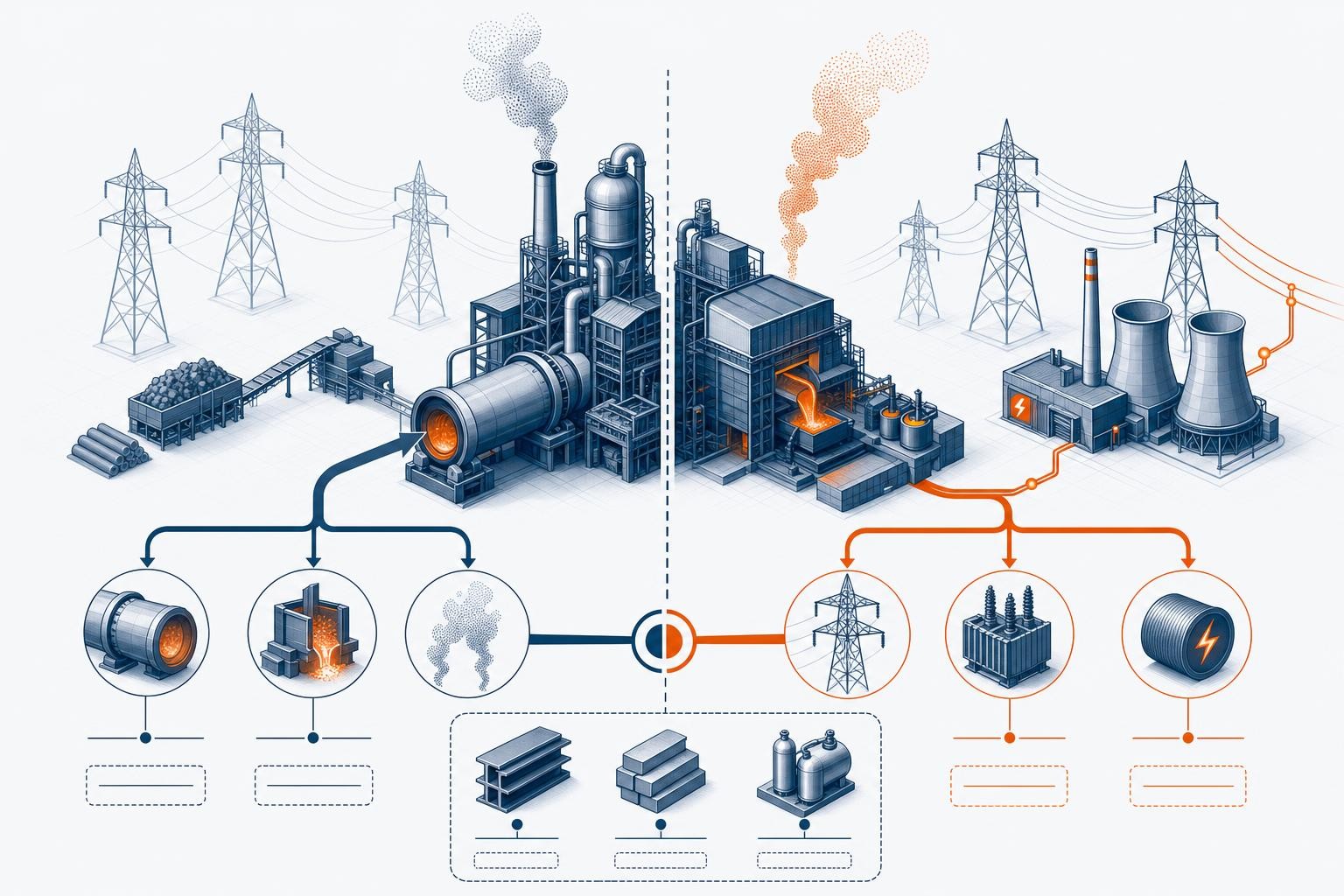
CBAM and Indirect Emissions: Why the Annex II Split Matters for Steel, Aluminium, and Hydrogen Importers
CBAM prices indirect emissions for cement and fertilisers but not for steel, aluminium, or hydrogen - and the reason why matters for your compliance strategy. Here's the full mechanics.

Making Your Supply Contract CBAM-Ready: A Clause-by-Clause Drafting Guide
CBAM is now a contracting problem. This clause-by-clause guide covers emissions data, verification, price pass-through, Incoterms, indemnity, and change-in-law for EU importers of steel, aluminium, cement, fertilisers, and hydrogen.
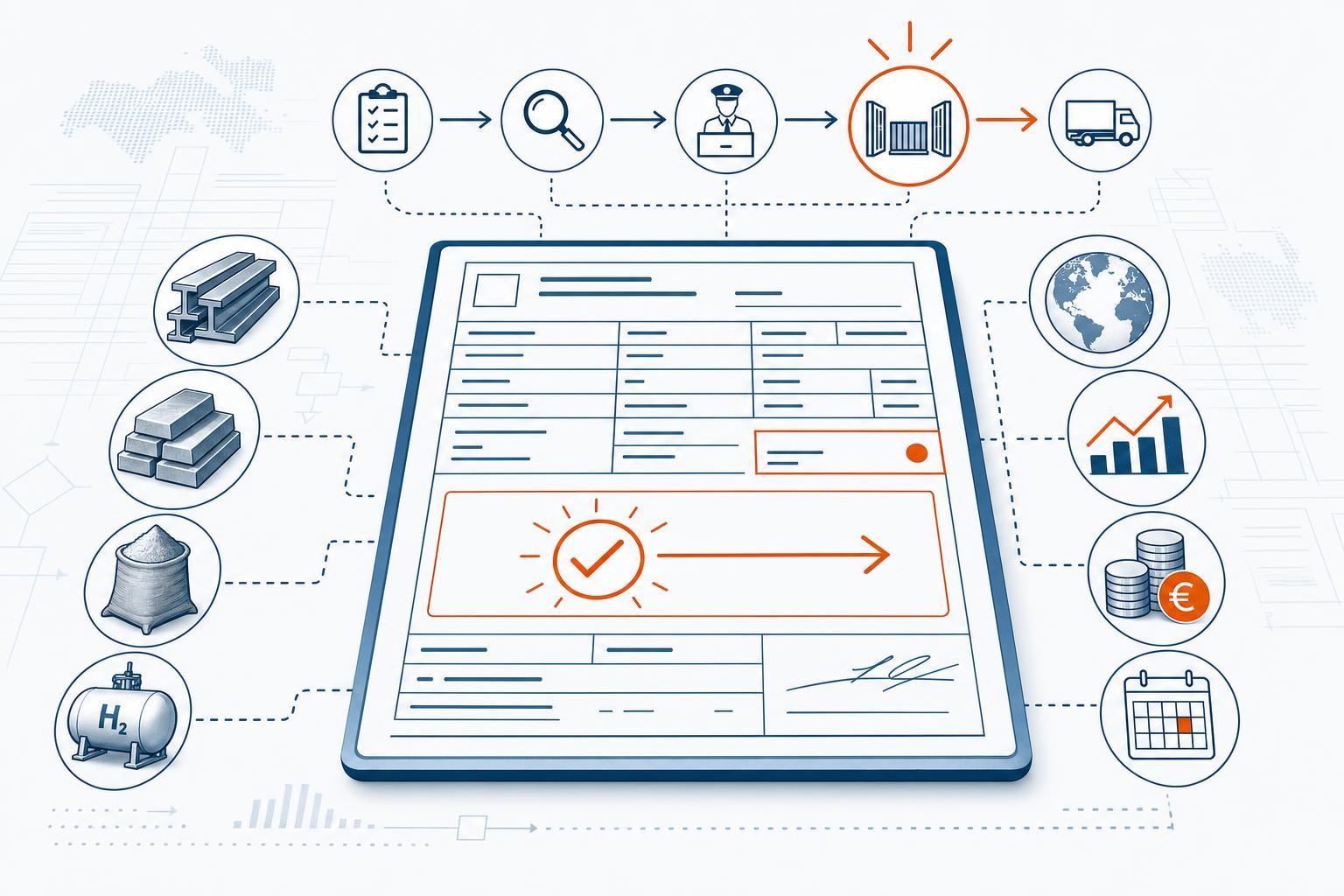
CBAM and Customs Procedures: How Release for Free Circulation Changes Everything
CBAM obligations attach at release for free circulation, not at physical arrival. That single fact makes your choice of customs procedure a genuine compliance and cash-flow lever. Here's the practical guide.