Does Recycled Metal Cut Your CBAM Bill? How Scrap Content Is Counted - and What's Changing
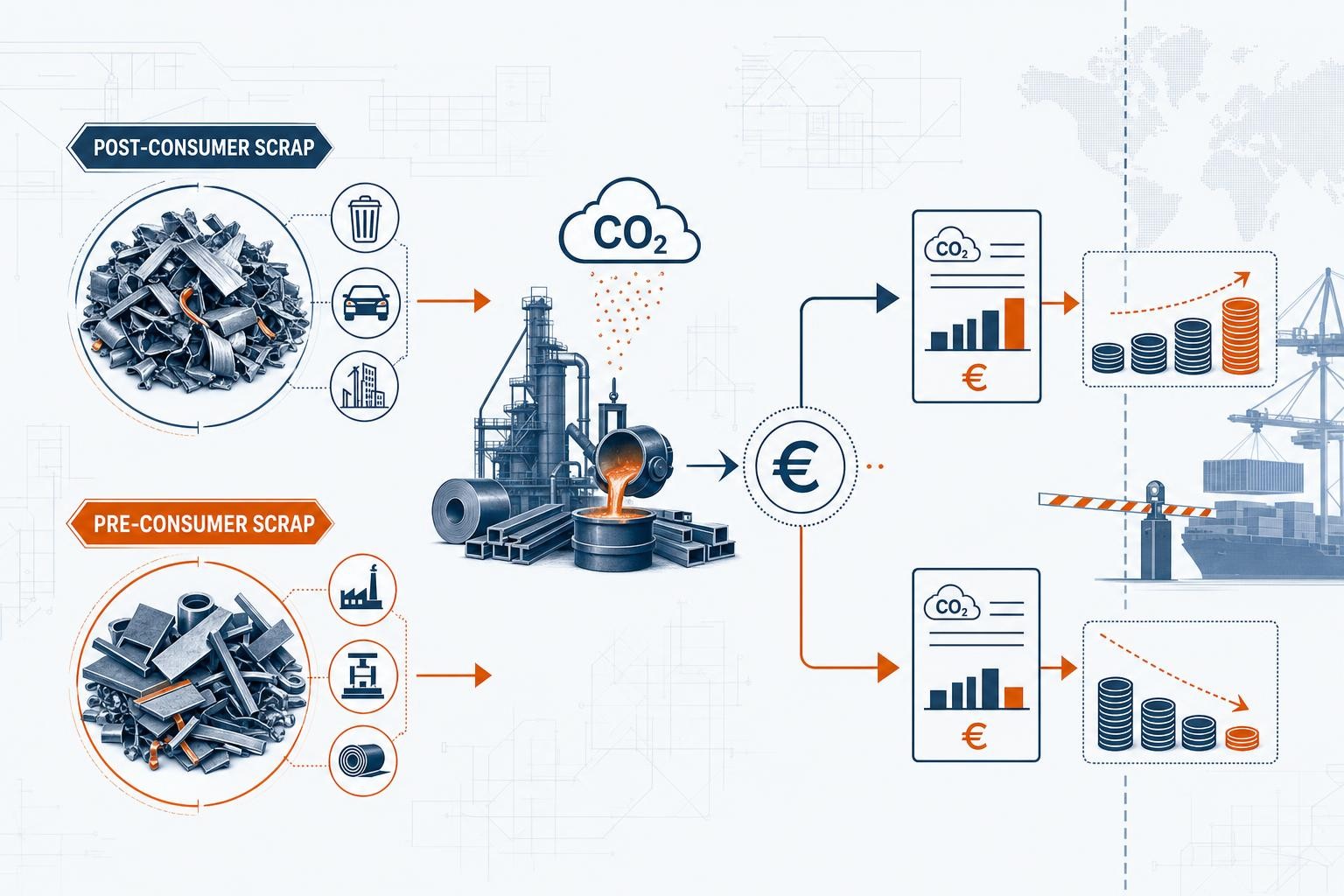
Short answer: Yes - for now. Under current CBAM rules, post-consumer scrap carries zero embedded emissions, so steel made in an electric arc furnace (EAF) and secondary aluminium produced from recycled scrap both attract far lower CBAM costs than their primary-production equivalents. That advantage is real, it is significant, and it is worth building into your sourcing strategy. But the rules are tightening. A proposal to count pre-consumer (manufacturing) scrap as a CBAM input is already moving through the EU legislative process - and importers who don't understand the distinction between scrap types will be caught out.
Why scrap type matters to your CBAM bill
CBAM certificates are priced against the embedded CO₂ in your imports. The lower the embedded emissions, the fewer certificates you surrender. Scrap content directly affects that number - but only if you understand which scrap the rules are talking about.
There are two categories, and CBAM treats them very differently:
- Post-consumer scrap - metal recovered from end-of-life products: old cars, demolished buildings, used beverage cans. This is the scrap that has already "served its purpose" in the economy.
- Pre-consumer scrap - offcuts, trimmings, and rejects generated during manufacturing, before any product reaches a consumer. Think stamping offcuts from an automotive press shop, or rolling mill crop ends.
Under CBAM's current methodology, remelted aluminium scrap is allocated zero emissions and therefore zero carbon costs. The same zero-rating principle applies to scrap steel inputs. Scrap material itself is assigned zero embedded emissions in the CBAM methodology, and this zero-rating creates a structural incentive for exporters who use post-consumer scrap as feedstock: higher scrap content directly reduces the embedded emissions attributed to their CBAM steel output.
In practice, this means two production routes stand out as low-CBAM options today.
The two low-carbon routes and their numbers
EAF steel: the scrap-fed furnace
The blast furnace and basic oxygen furnace (BF-BOF) route, dominant in China, India, and Russia, produces approximately 2.0 tCO₂ per tonne of crude steel. The electric arc furnace (EAF) route using scrap steel produces approximately 0.4 to 0.6 tCO₂ per tonne, with a central estimate of 0.5 tCO₂/t used in Commission reference scenarios.
The gap is enormous. The scrap-EAF benchmark of 0.072 tCO₂e/t is 19 times lower than the BF-BOF benchmark of 1.370 tCO₂e/t, reflecting the structural carbon advantage of electric arc furnace steelmaking using recycled scrap as the primary charge.
One important caveat: the EAF's electricity consumption matters. In regions with renewable or low-carbon electricity, scrap-EAF can achieve 0.3-0.5 tCO₂/t. In regions with coal-heavy grids, scrap-EAF may reach 1.0-1.2 tCO₂/t despite using 100% scrap feedstock. Grid carbon intensity is therefore a second variable to check when evaluating an EAF supplier.
Secondary aluminium: near-zero direct emissions
Secondary aluminium (from recycled scrap) produces 0.05 to 0.10 tCO₂/t in direct process emissions - a fraction of the 1.4+ tCO₂/t benchmark for primary aluminium. The benchmark for primary aluminium is set at 1.423 tCO₂/t of aluminium produced. The benchmark for secondary aluminium, which the EU defines as metal more than 50% sourced from scrap, is set at 0.091 tCO₂/t.
Secondary aluminium carries a CBAM benchmark of 0.091 tCO₂/t - roughly 16 times lower than the 1.423 tCO₂/t benchmark for primary aluminium.
The loophole - and the proposal closing it
The zero-rating for scrap created an obvious arbitrage opportunity. The initial CBAM methodology was problematic because it accepted scrap used in metal production as "zero-emission," especially creating an unwarranted incentive for the use of pre-consumption scrap - scrap generated during the production process that has never reached the consumer. Importers could turn to using more scrap in their production to artificially lower the carbon footprint of their products and unfairly reduce their CBAM obligations.
Norwegian aluminium producer Norsk Hydro was at the forefront of lobbying for the expansion of CBAM to cover the downstream and scrap, warning that 35% of EU aluminium recycling capacity could close if remelted aluminium scrap entered the bloc free from a carbon levy.
The European Commission responded. As stated in the Commission proposal dated December 17, 2025, pre-consumption scraps in the iron, steel, and aluminium production processes will now be considered a "precursor," meaning the embedded emissions contained in pre-consumption scraps will no longer be considered zero and will be included in CBAM calculations.
The European Commission's December 17, 2025 proposal reclassifies pre-consumer scrap as a CBAM "precursor" input, ending its zero-emission treatment for iron, steel, and aluminium.
On June 12, 2026, the Council largely agreed with the Commission's original proposal, introducing new measures bringing pre-consumer metal scrap into CBAM's scope and empowering the Commission to act when deceptive practices are detected during reporting by high-risk companies. The proposal now heads into trilogue negotiations with the European Parliament before it becomes law.
What stays zero-rated: Post-consumer scrap - end-of-life metal - continues to be treated as carrying zero embedded emissions. While pre-consumer scrap content is now being proposed to be brought into scope, post-consumer scrap content continues to be treated as zero emission and remains outside the mechanism. This distinction is the crux of the new compliance challenge.
Enacted vs. proposed — know the difference. The zero-rating for post-consumer scrap is current law. The reclassification of pre-consumer scrap as a CBAM precursor is a proposal (Commission December 2025, Council general approach June 2026) that still requires European Parliament agreement and a final legislative text before it takes effect. Plan for it, but do not treat it as settled law yet.
What this means for your sourcing decisions
The recycled-content advantage is real and durable for post-consumer scrap - that zero-rating is not under threat in the current proposal. The risk is for importers who have been relying on suppliers who blend in pre-consumer scrap to show artificially low emissions figures.
The proposal targets misreporting that shifts material into lower-emission categories. The Commission warned about cases that label pre-consumer scrap as post-consumer scrap. As a result, CBAM pre-consumer scrap reporting will likely require stronger proof of origin.
The practical implication: you need to know not just how much scrap your supplier uses, but what kind.
The documentation you need from suppliers
This is where many importers are under-prepared. Claiming a lower embedded-emissions figure - whether for EAF steel or secondary aluminium - requires supplier data that can withstand verification. Here is what to request:
For steel suppliers:
- Confirmation of production route (EAF vs. BF-BOF vs. DRI-EAF)
- Scrap share by mass (>50% scrap qualifies for the scrap-EAF route classification under CBAM's mass-balance rule)
- Breakdown of scrap type: post-consumer vs. pre-consumer, with supporting documentation (e.g., scrap purchase records, certificates of origin)
- Grid carbon intensity for the installation's electricity supply (relevant for EAF indirect emissions)
- Verified actual embedded emissions data at installation level - exporters without actual production data force their EU importers to use conservative default values, which are set above actual emissions for most modern mills and create cost pressure
For aluminium suppliers:
- Confirmation of primary vs. secondary classification (>50% scrap = secondary under CBAM)
- Scrap sourcing documentation distinguishing post-consumer from pre-consumer inputs
- Direct process emissions data (excluding electricity, which is out of CBAM scope for aluminium)
- PFC (perfluorocarbon) emissions data for any primary smelting component
Sourcing checklist: recycled content and CBAM
Use this before onboarding a new steel or aluminium supplier, or when reviewing existing ones ahead of your annual CBAM declaration.
- Confirm production route in writing - EAF or secondary remelting, not just "low-carbon"
- Request scrap share by mass - verify it crosses the >50% threshold for route classification
- Separate post-consumer from pre-consumer scrap - get documentary evidence for each category
- Obtain installation-level verified emissions data - avoid default values wherever possible
- Check grid carbon intensity - especially for EAF suppliers in coal-heavy markets
- Flag pre-consumer scrap exposure now - map which suppliers use it and in what volumes, before the proposal becomes law
- Build a document trail - scrap purchase records, supplier declarations, and third-party verification reports should be retained for at least five years
The bottom line
Recycled content is a genuine, legally grounded lever to reduce your CBAM bill - not a workaround. EAF steel using scrap carries a CBAM benchmark of 0.072 tCO₂e/t, compared to 1.370 tCO₂e/t for BF-BOF steel - a 19-fold difference. Secondary aluminium tells a similar story.
The rules are changing, but in a targeted way. Post-consumer scrap retains its zero-emission status. Pre-consumer scrap - the manufacturing offcuts that were being used to game the system - is the target of the new proposal. The importers who will navigate this well are those who already know what type of scrap their suppliers use, and who have the documentation to prove it.
The EU Council adopted its general approach on bringing pre-consumer metal scrap into CBAM's scope on June 12, 2026, ahead of trilogue negotiations with the European Parliament.
Start those supplier conversations now, before the legislative text is finalised and the verification clock starts ticking.
Related reading
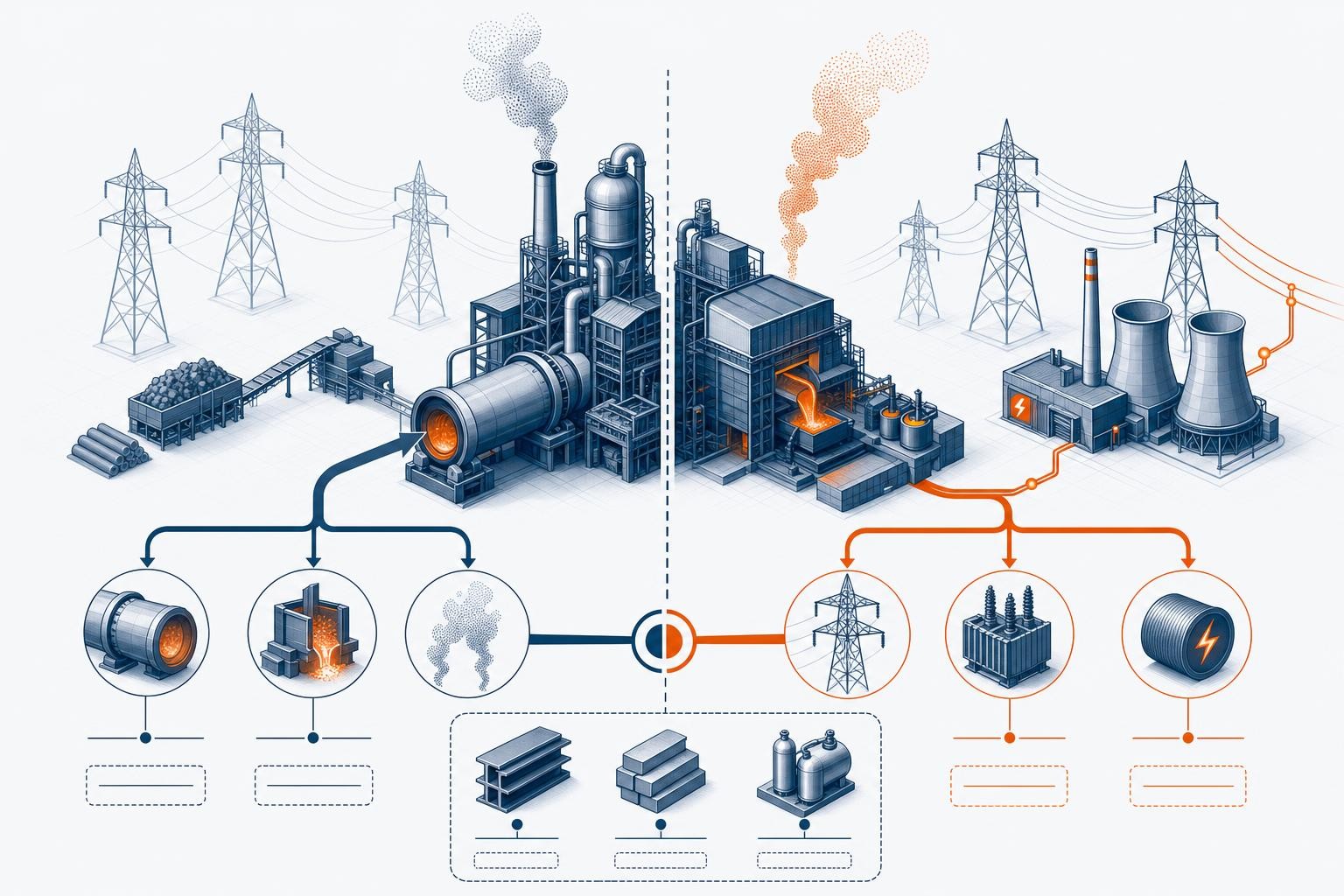
CBAM and Indirect Emissions: Why the Annex II Split Matters for Steel, Aluminium, and Hydrogen Importers
CBAM prices indirect emissions for cement and fertilisers but not for steel, aluminium, or hydrogen - and the reason why matters for your compliance strategy. Here's the full mechanics.
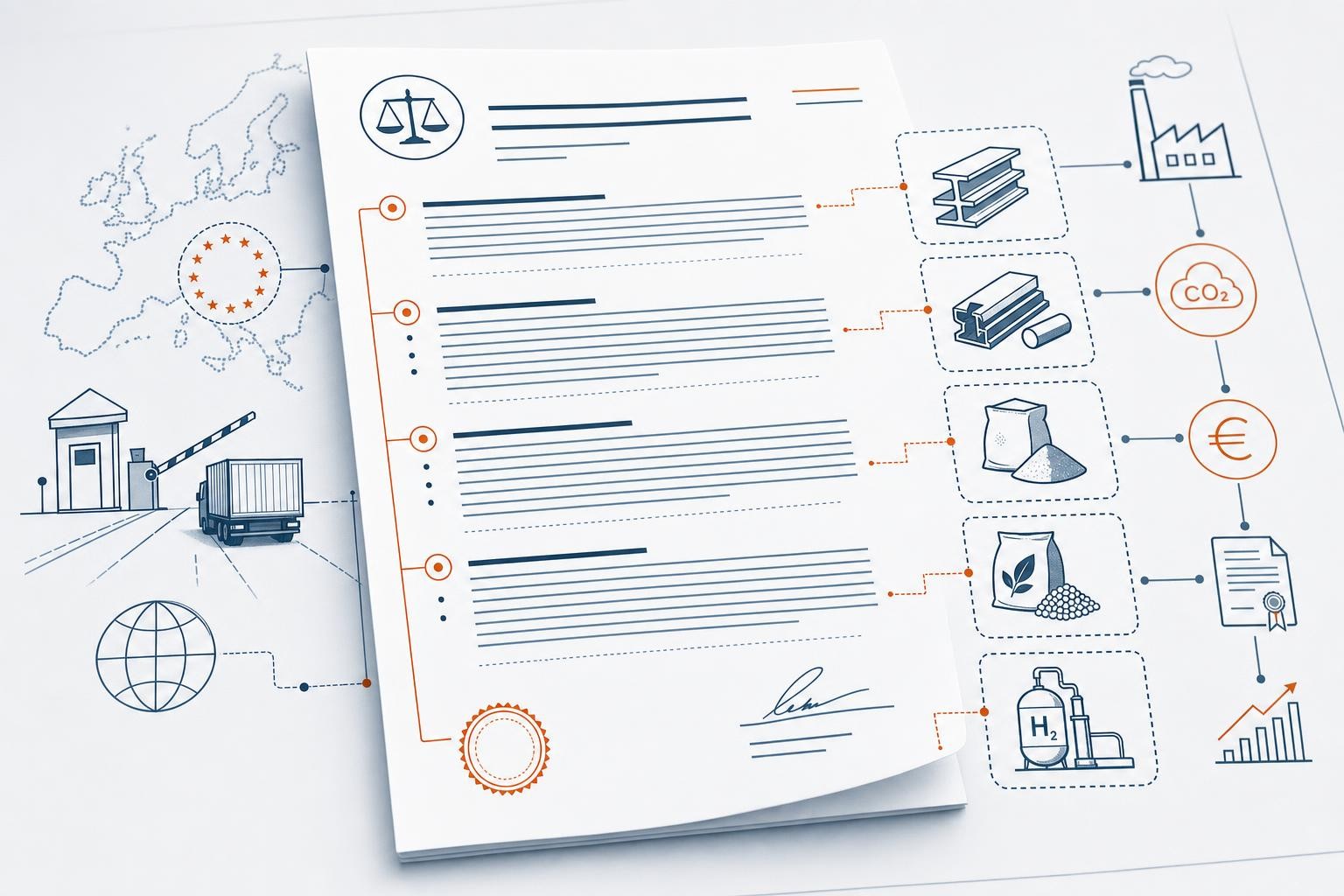
Making Your Supply Contract CBAM-Ready: A Clause-by-Clause Drafting Guide
CBAM is now a contracting problem. This clause-by-clause guide covers emissions data, verification, price pass-through, Incoterms, indemnity, and change-in-law for EU importers of steel, aluminium, cement, fertilisers, and hydrogen.
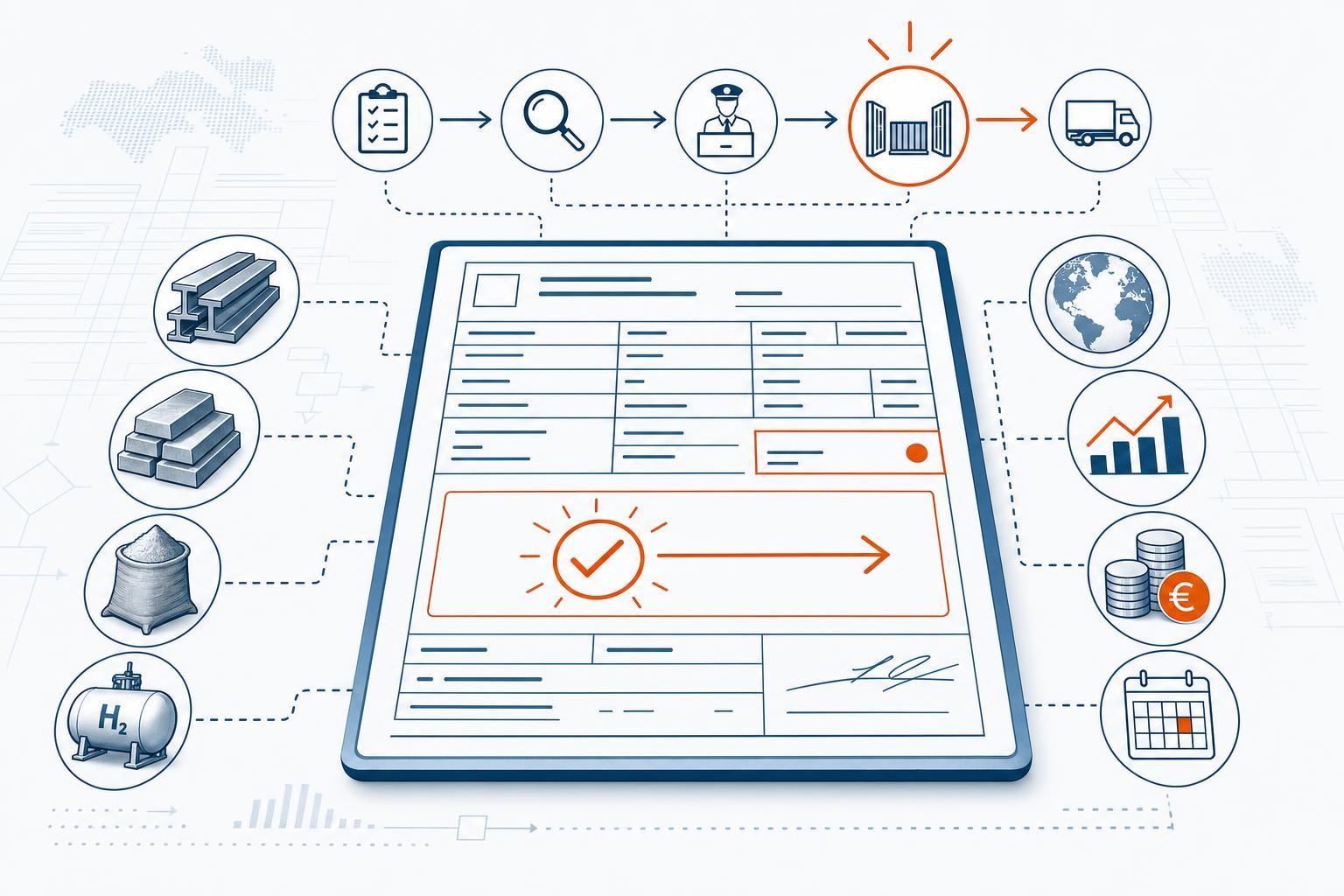
CBAM and Customs Procedures: How Release for Free Circulation Changes Everything
CBAM obligations attach at release for free circulation, not at physical arrival. That single fact makes your choice of customs procedure a genuine compliance and cash-flow lever. Here's the practical guide.