CBAM Is Exporting Carbon Pricing: What a Wave of New Supplier-Country Carbon Markets Means for EU Importers
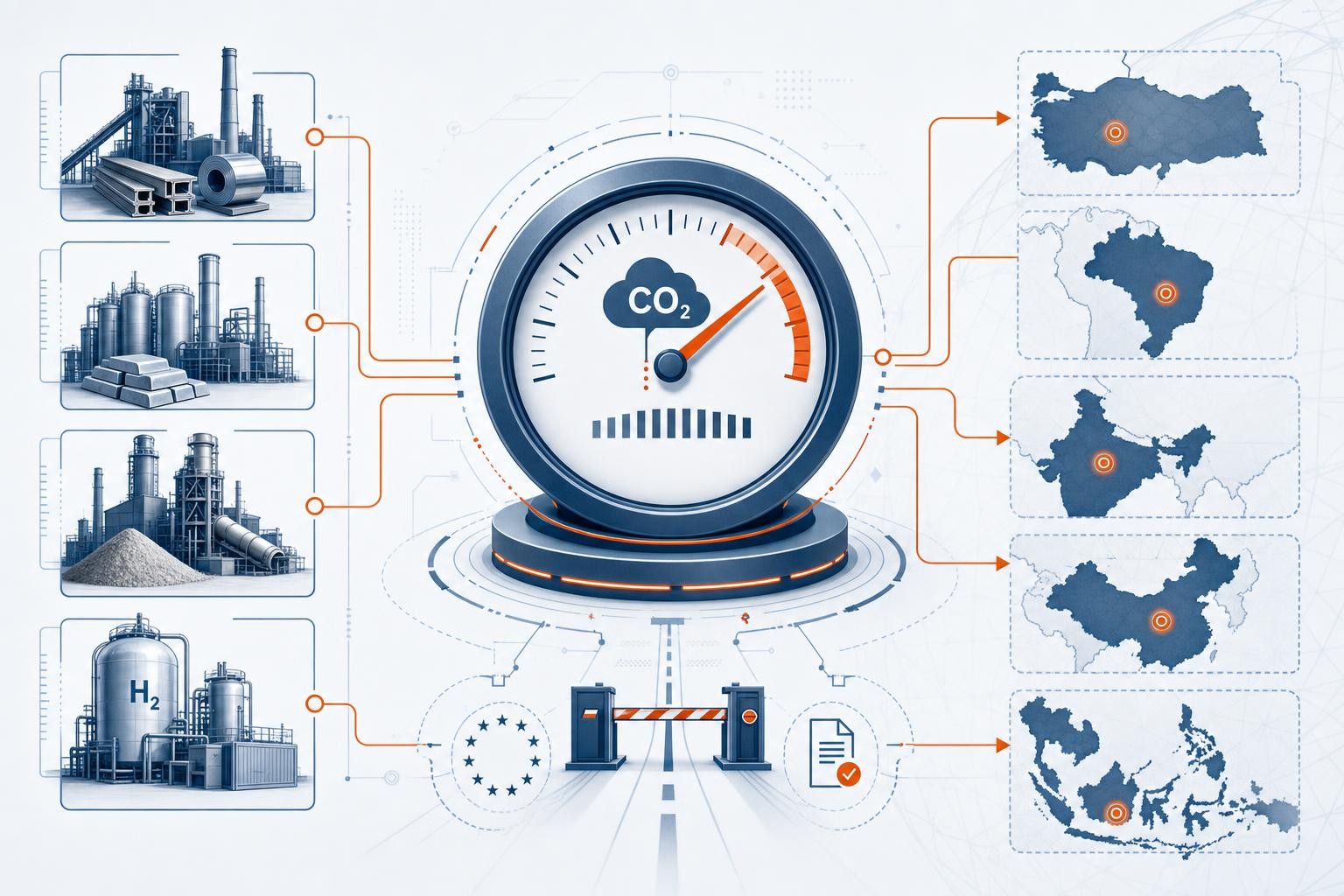
Something quiet but significant is happening in the countries that supply your steel, aluminium, cement and fertilisers. One by one, they are building carbon markets - and CBAM is a named reason why.
That matters directly to you as an EU importer. Under CBAM's rules, a carbon price genuinely paid in the country where your goods were produced can be deducted from your CBAM certificate obligation. Supplier-country carbon policy is becoming a cost lever. The question is which countries are moving fast enough, and credibly enough, to make that deduction real.
How the deduction works - in brief
CBAM certificate prices track the EU ETS carbon price. When you import a CBAM-covered good, your obligation is roughly: embedded tonnes of CO₂ × EU ETS price × the applicable CBAM factor (which rises from 2.5% in 2026 to 100% by 2034).
If your supplier's country has a qualifying carbon pricing scheme and the carbon cost was effectively paid on the production of those specific goods, you can claim a deduction - reducing the number of certificates you need to surrender. The European Commission published draft implementing rules on this deduction in May 2026, drawing on evidence gathered during the transitional period. The rules require a certified carbon price report, prepared by an independently accredited verifier, setting out the calculation steps and supporting evidence. Free allowances, tax rebates, and indirect cost compensation that reduce the effective price paid must be netted off.
The deduction is not automatic. It requires independently verified evidence of the carbon price actually paid — not just proof that a carbon market exists in the exporting country. A scheme that is announced but not yet operational, or one where free allocations cover most of a facility's emissions, may yield little or no deductible amount. See our detailed guide on the carbon-price-paid-abroad deduction for the full evidence requirements.
The country roundup
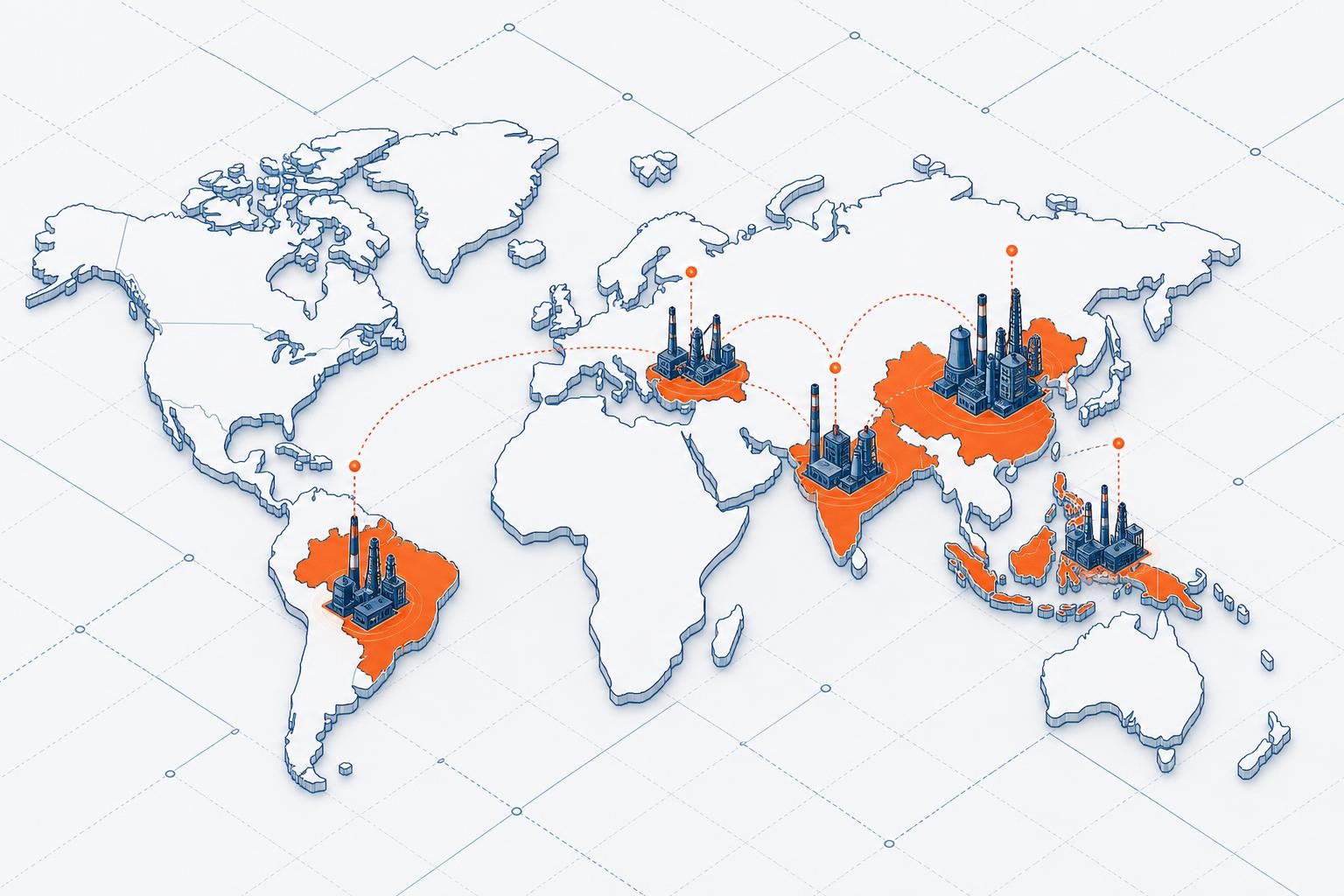
Turkey - the most exposed, and now the most active
Turkey supplies nearly 30% of the EU's imported cement and around 9% of its imported iron and steel, making it one of the most CBAM-exposed trading partners in the world. The response has been direct: on 2 July 2025, Turkey's Grand National Assembly adopted the country's first Climate Law, establishing the legal basis for a national emissions trading system (ETS), modelled closely on the EU's own scheme.
The law creates a Carbon Market Board and sets a framework for cap-and-trade across key industrial sectors. A pilot phase covering industries including cement is planned for 2026-2027, with full implementation running from 2027 to 2034. The strategic logic is explicit: the Turkish ETS is designed to enhance the competitiveness of Turkish exporters as a strategic response to CBAM, and to ensure that carbon revenues stay in Turkey rather than flowing to the EU. One analysis estimated that with a Turkish ETS at €50/tCO₂, the country's aggregate CBAM cost could fall from around €2.5 billion to €1.08 billion per year by 2032.
The caveat: as of mid-2026, allowance caps and sector-specific details are still being set in secondary legislation. A scheme that is legally established but not yet generating verified carbon costs cannot yet support a CBAM deduction claim.
Brazil - law signed, implementation underway
On 12 December 2024, President Lula signed Law 15,042/2024, establishing the Brazilian Greenhouse Gas Emissions Trading System (SBCE) - a national cap-and-trade framework. The law covers entities emitting more than 25,000 tCO₂e per year, with reporting obligations beginning at 10,000 tCO₂e. Agriculture is excluded; forestry is expected to generate offset credits.
The SBCE is designed with interoperability in mind, including compatibility with the EU ETS. Full operation is expected by around 2030, with first compliance obligations in five to six years from enactment. An Extraordinary Secretariat has been designated to lead regulatory development.
For EU importers sourcing Brazilian steel or aluminium: the SBCE is real law, but it is not yet generating compliance carbon costs. Watch the regulatory timeline - once covered entities face binding obligations and verified costs, the deduction pathway opens.
India - compliance obligations live, trading imminent
India's Carbon Credit Trading Scheme (CCTS) is the furthest along among large emerging economies in terms of actual compliance obligations. In July 2024, the Indian government adopted detailed regulations for the compliance mechanism under the CCTS - an intensity-based baseline-and-credit system initially covering entities from eight energy-intensive industrial sectors, including aluminium, cement, iron and steel, and fertilisers.
Seven of the nine covered sectors are already under legally binding emissions intensity targets for FY2025-26, and CCC (Carbon Credit Certificate) trading is expected to launch by mid-2026 on CERC-regulated power exchanges.
The CBAM link is explicit in Indian policy discussions. The CCTS provides a domestic price signal and an internationally credible emissions ledger - and Indian exporters in CBAM-covered sectors can in principle demonstrate a domestic carbon cost to reduce their EU border liability.
The structural caveat is important, however. India's CCTS is intensity-based (emissions per unit of output), not an absolute cap. A mismatch between India's intensity-based system and CBAM's per-tonne carbon cost logic could prevent domestic compliance efforts from being fully translated into deductions at the EU border - a design alignment challenge that Indian and EU regulators are actively working through.
China - the biggest prize, moving toward absolute caps
China operates the world's largest carbon market by emissions coverage. In 2025, China officially expanded its national ETS to include steel, cement, and aluminium smelting - bringing 1,334 additional emitting entities under its scope and raising coverage of the country's total carbon emissions from 40% to 60%.
The direction of travel is significant. On 25 August 2025, China's highest authorities issued landmark guidelines setting a roadmap to transition from intensity-based controls to absolute emissions caps, with sectors having relatively stable emissions profiles subject to absolute cap controls starting as early as 2027. By 2030, the goal is a mature mechanism with allowances allocated through a mix of free and paid distribution.
For EU importers of Chinese steel, aluminium, and cement, this is the most consequential development in the roundup. China is the largest single source of CBAM-exposed goods entering the EU. As the Chinese ETS matures toward absolute caps and verified per-tonne costs, the deduction arithmetic becomes more tractable - but the evidence and verification requirements will still need to be met facility by facility.
Southeast Asia - developing, but watch Indonesia and Vietnam
The picture across Southeast Asia is more varied. Indonesia has established itself as a regional leader by becoming the first Southeast Asian nation with an operational ETS, and Regulation 110/2025 formally aligns the national framework with Article 6 of the Paris Agreement. Indonesia is also extending ETS coverage to cement, steel, and aluminium sectors.
Vietnam has approved a scheme for establishing a carbon market, with an ETS pilot scheduled for 2025-2028 and official operations beginning in 2029. Malaysia is preparing to introduce a carbon tax. Over 20% of Vietnam's iron and steel exports and nearly 20% of Indonesia's aluminium exports are destined for the EU, giving both countries strong economic incentives to develop credible domestic carbon pricing.
For now, Southeast Asian carbon markets are mostly pre-compliance or early-stage. The deduction opportunity is limited in the near term, but the trajectory is clear.
What this means for your sourcing decisions
The practical implication is straightforward: where your supplier is located is becoming a carbon cost variable, not just a logistics or price variable.
A supplier in a country with a mature, verified carbon pricing scheme - where the carbon cost is genuinely paid and can be evidenced - can reduce your net CBAM bill. A supplier in a country with no carbon pricing, or one where the scheme exists on paper but free allocations cover most emissions, leaves you paying the full CBAM certificate cost.
Here are the practical questions to ask about any supplier country:
- Is there a mandatory, compliance-phase carbon pricing scheme (ETS or carbon tax) - not just a voluntary or pilot programme?
- Does it cover the specific sector and facility you are sourcing from?
- What is the effective carbon price after free allocations and rebates? A headline ETS price of €30/tCO₂ with 80% free allocation yields an effective cost of €6/tCO₂ - and only that €6 is deductible.
- Can the carbon cost be independently verified to the standard the EU's implementing rules require?
Start by asking your supplier whether their facility is covered by a domestic carbon pricing scheme and, if so, what their effective carbon cost per tonne was in the most recent compliance year. That single question will tell you whether a deduction is worth pursuing — and whether your supplier is tracking this at all.
The caveats worth keeping in mind
Free allocations reduce the deductible amount. If a supplier's government hands out free allowances covering most of a facility's emissions, the effective carbon cost paid is much lower than the headline ETS price - and the deduction follows the effective cost, not the headline price. The EU's draft implementing rules are explicit: rebates, exemptions, and free allocations must be netted off.
Intensity-based schemes need careful translation. India's CCTS and China's current ETS both operate on emissions-intensity targets rather than absolute caps. Converting an intensity-based compliance cost into a per-tonne CBAM deduction requires careful calculation - and the EU's implementing rules are still being finalised on exactly this point.
The scheme must be real and operational. A law passed in 2024 with compliance obligations starting in 2029 does not generate a deductible carbon cost today. Turkey's ETS, Brazil's SBCE, and Vietnam's pilot market are all on trajectories that matter - but the deduction clock starts when verified costs are actually incurred.
Evidence requirements are non-trivial. The draft EU rules require a certified carbon price report, prepared using a standard template, verified by an independently accredited third party. This is not a box-ticking exercise - it requires your supplier to have robust MRV (monitoring, reporting and verification) infrastructure in place.
The bottom line
CBAM has done something remarkable: it has turned the EU's internal carbon price into a global policy signal. Countries that supply CBAM-covered goods to Europe now have a direct financial incentive to build domestic carbon pricing - because doing so keeps the carbon revenue at home rather than paying it to the EU, and reduces the cost burden on their exporters.
For EU importers, this creates a new dimension to supplier evaluation. Over the next three to five years, as Turkey's ETS, India's CCTS, China's expanded scheme, and Brazil's SBCE move from legislation to verified compliance costs, the deduction mechanic will become a real and material factor in your CBAM bill.
The importers who track this now - mapping which supplier countries have credible, evidenced carbon pricing, and building the supplier relationships needed to obtain verified cost data - will be better placed than those who treat CBAM as a fixed cost.
This article is general information, not legal or tax advice. CBAM rules, implementing acts, and third-country carbon pricing schemes are subject to change; confirm specifics against the official legal texts - in particular Regulation (EU) 2023/956 as amended by Regulation (EU) 2025/2083, and the Commission's CBAM hub at taxation-customs.ec.europa.eu - before acting.
Related reading
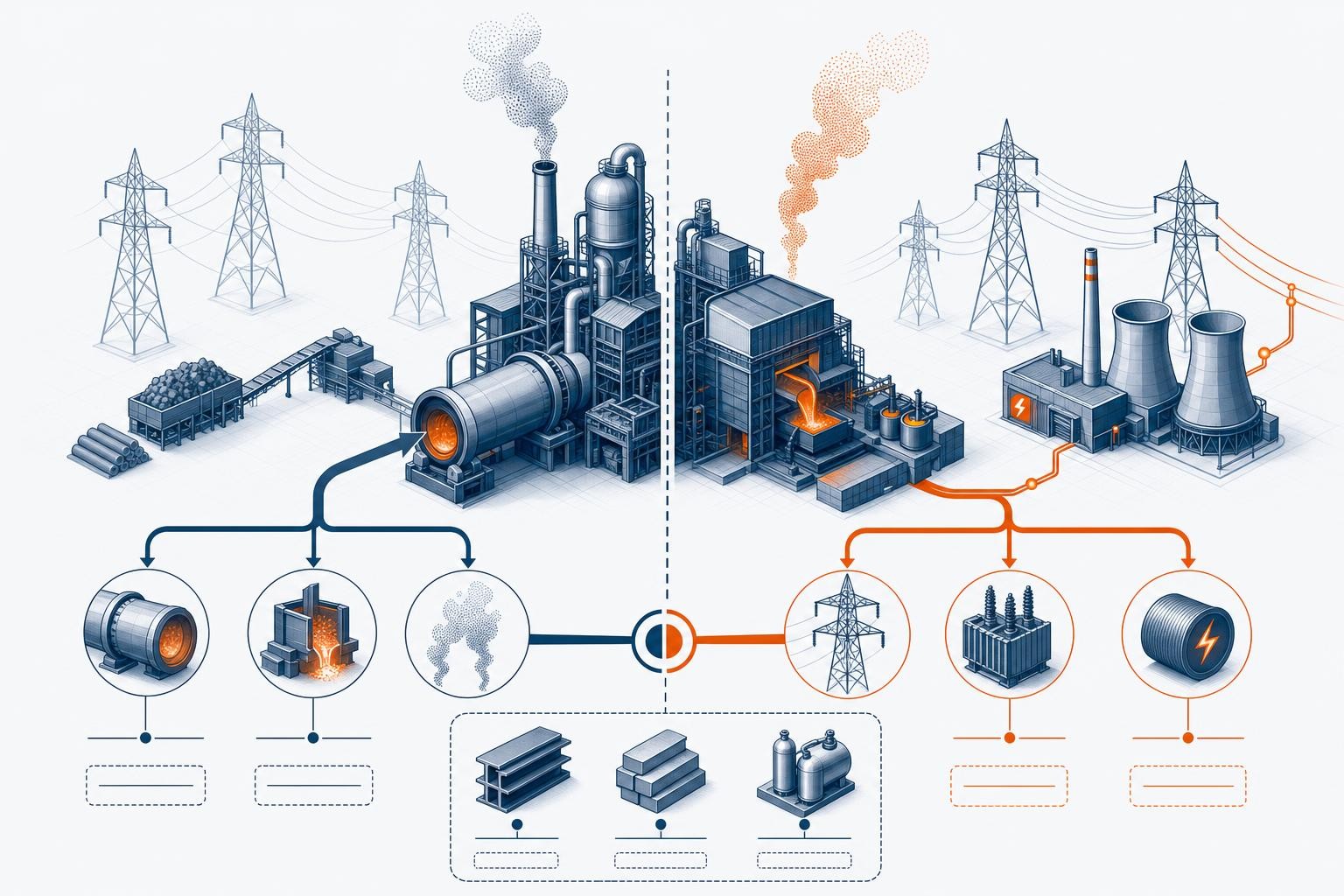
CBAM and Indirect Emissions: Why the Annex II Split Matters for Steel, Aluminium, and Hydrogen Importers
CBAM prices indirect emissions for cement and fertilisers but not for steel, aluminium, or hydrogen - and the reason why matters for your compliance strategy. Here's the full mechanics.
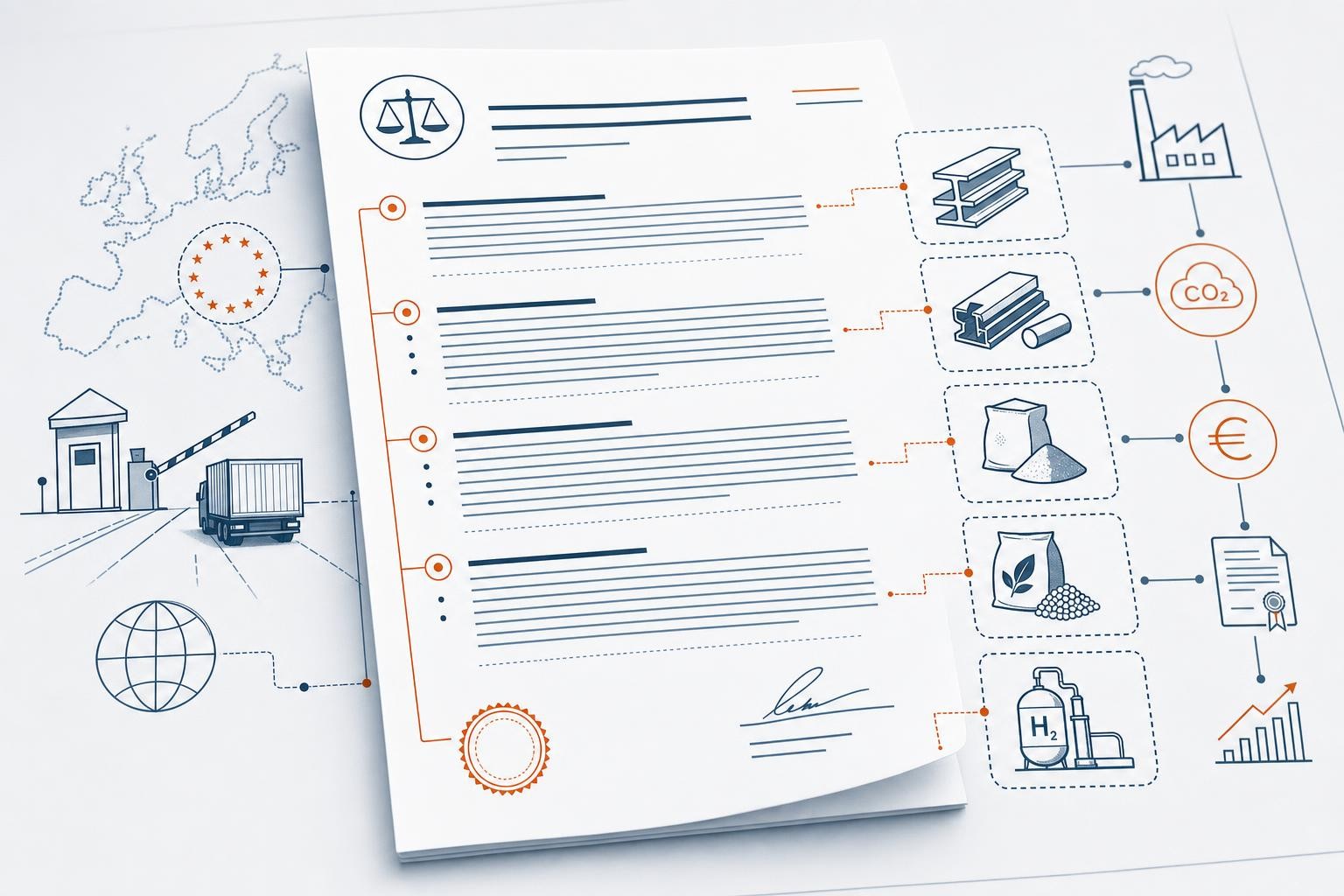
Making Your Supply Contract CBAM-Ready: A Clause-by-Clause Drafting Guide
CBAM is now a contracting problem. This clause-by-clause guide covers emissions data, verification, price pass-through, Incoterms, indemnity, and change-in-law for EU importers of steel, aluminium, cement, fertilisers, and hydrogen.
CBAM and Customs Procedures: How Release for Free Circulation Changes Everything
CBAM obligations attach at release for free circulation, not at physical arrival. That single fact makes your choice of customs procedure a genuine compliance and cash-flow lever. Here's the practical guide.