CBAM Circumvention Explained: Resource Shuffling, Slight Modification, and the 2025 Crackdown
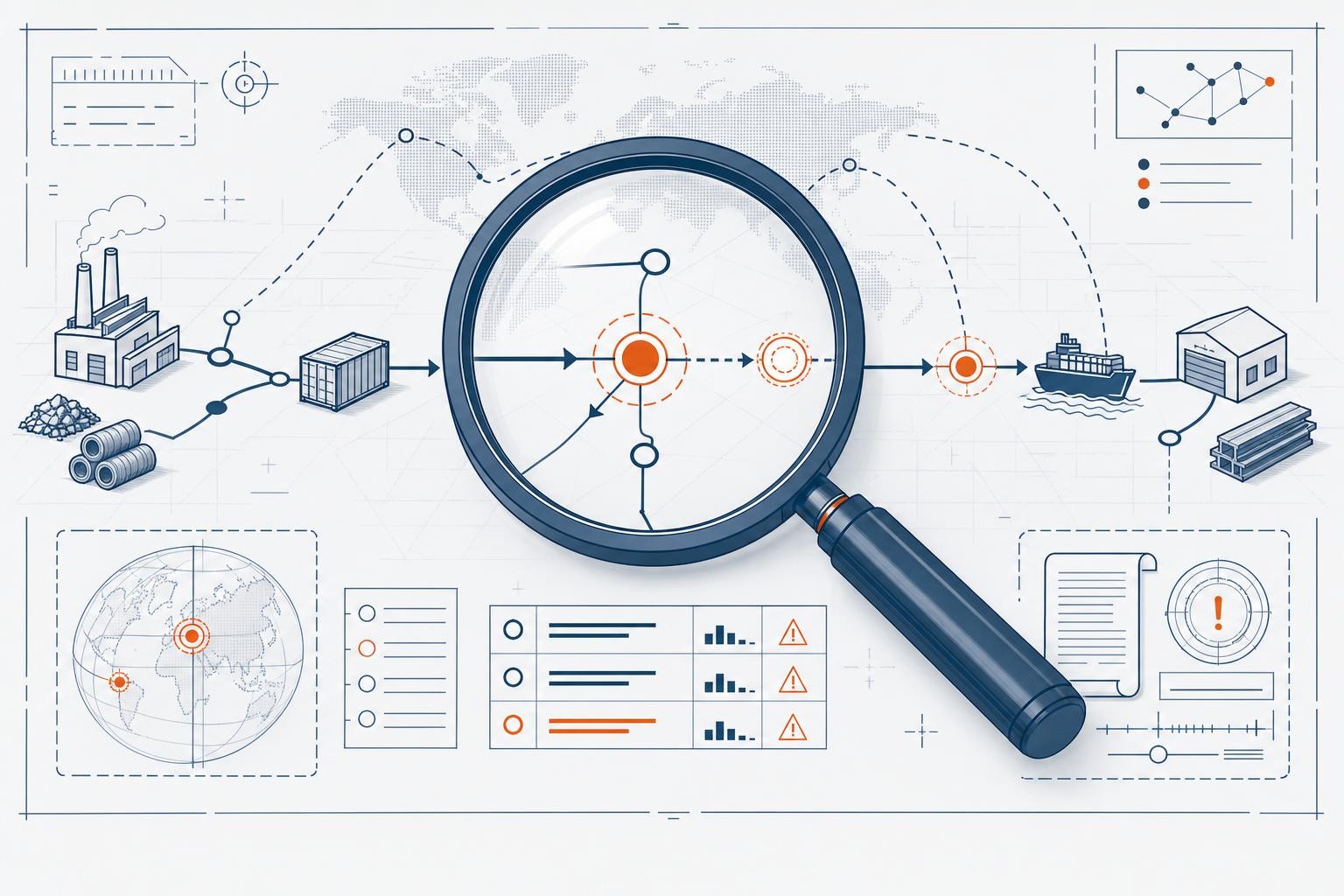
CBAM's financial logic is simple: if you import carbon-intensive goods into the EU, you pay a carbon price equivalent to what EU producers pay under the ETS. But that logic only holds if the emissions figure you declare is real. The Commission has spent two years watching how foreign producers and importers might game the system - and on 17 December 2025 it published a proposal to close the gaps it found.
This post focuses specifically on the anti-circumvention half of that proposal (COM(2025) 419). We've covered the downstream extension to ~180 new goods and CBAM penalties separately. Here the question is: what counts as circumvention, why is the Commission tightening the rules now, and what does a legitimate importer need to do differently?
Why circumvention rules matter right now
CBAM entered its definitive phase on 1 January 2026. For the first time, importers must surrender certificates - real money - not just file reports. That changes the incentive structure dramatically. When the cost of a CBAM certificate is measured in euros per tonne of CO₂, the financial reward for shaving declared emissions or sidestepping scope becomes concrete.
The risk of circumvention effectively arises from any practice for which there is insufficient due cause or economic justification, other than to effectively unduly avoid, wholly or partially, the financial adjustments arising from CBAM, weakening the environmental integrity of the mechanism. That definition comes directly from the Commission's own impact assessment accompanying COM(2025) 419 - and it is deliberately broad.
The Commission built the December 2025 proposal on lessons from the transitional phase (October 2023-December 2025) and on the Steel and Metals Action Plan of March 2025, which explicitly flagged circumvention risk as a structural problem requiring legislative action.
The two main circumvention patterns
1. Resource shuffling
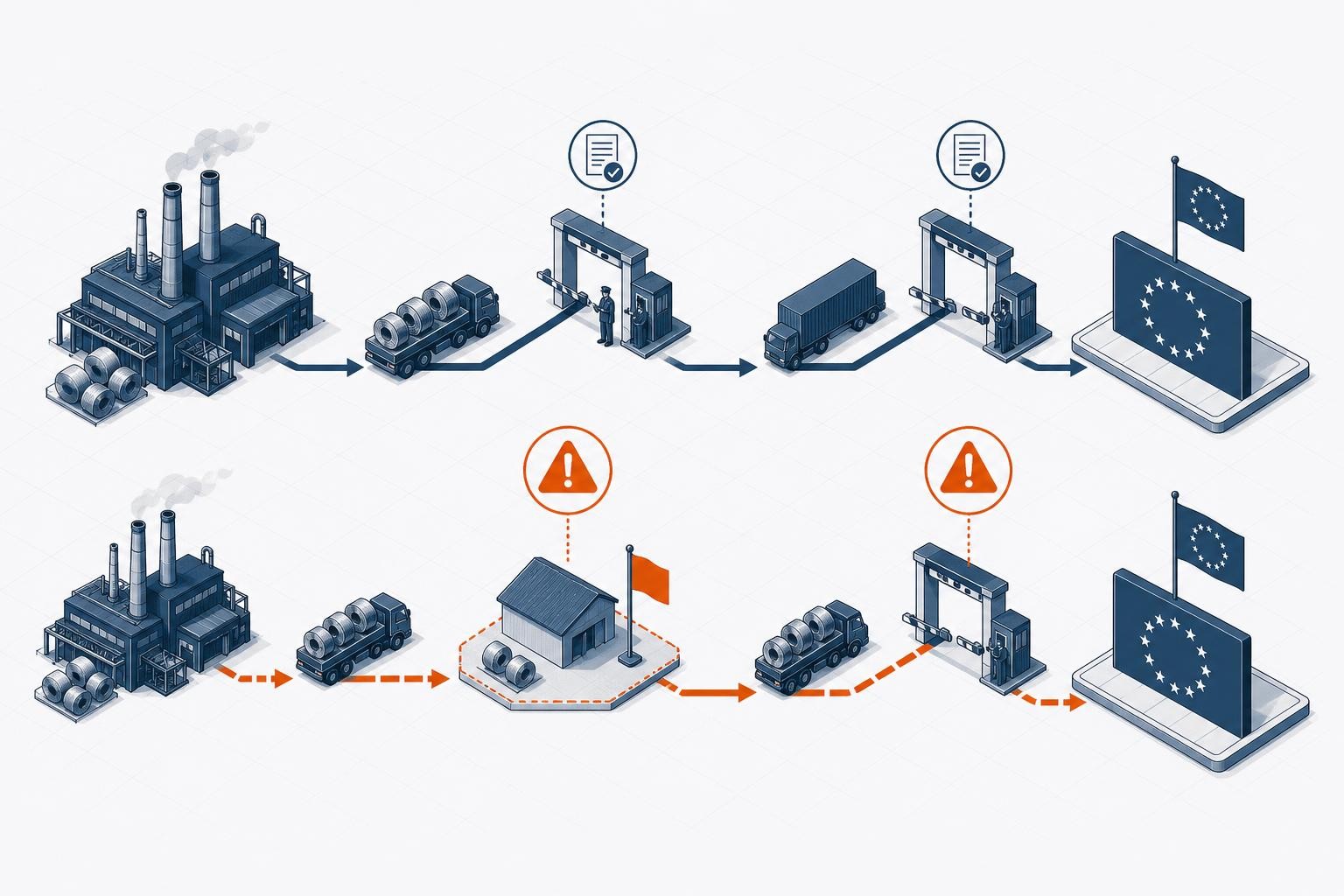
This is the practice that has attracted the most political attention. The mechanics are straightforward: a foreign producer with a mixed production portfolio - say, both blast-furnace/basic-oxygen-furnace (BF-BOF) steel and electric-arc-furnace (EAF) steel - routes its lower-carbon output to EU customers while continuing to sell its higher-carbon output to markets without a carbon price. No actual emissions reduction occurs anywhere in the world; the producer simply sorts its output by destination.
Resource shuffling occurs when foreign producers send lower-carbon steel to Europe while continuing to sell more carbon-intensive steel elsewhere. The European Parliament received a formal written question on this practice in early 2025, noting that it allows exporters to direct their cleaner production to the EU while continuing to use more carbon-intensive methods in external markets - distorting competition without reducing global emissions.
The scrap dimension adds another layer. Because scrap-based production carries far lower embedded emissions than primary production, a producer can strategically blend larger amounts of scrap into goods destined for the EU and less into goods sold elsewhere - again without any net reduction in global emissions. Steel and aluminium exporters can reduce CBAM fees by strategically blending larger amounts of scrap into products sold to the EU and less for products sold to other markets not covered by CBAM fees.
The December 2025 proposal addresses this directly. It introduces safeguards to prevent pre-consumer aluminium and steel scrap generated within the EU - and already subject to carbon pricing - from being used to claim artificially low emissions in imported products. Where the origin of scrap cannot be verified, it will automatically be treated as pre-consumer scrap and included in emissions calculations.
2. Slight modification and CN-code manipulation
The second pattern is older and more familiar from anti-dumping law: make a minor change to a product or its customs classification so that it falls outside the regulated scope.
The slight modification of goods to make them fall under different customs classification (CN) codes is explicitly mentioned in the CBAM Regulation as an example of a circumvention practice. The original regulation already gave the Commission power to add slightly modified products to CBAM's scope. What COM(2025) 419 adds is a new Article 27(2)(c), which brings the artificial adjustment of supply chains to secure lower default values within the formal definition of circumvention. In other words, restructuring your supply chain not for genuine commercial reasons but specifically to land on a more favourable default emissions figure is now explicitly in scope.
A practical example: an importer who switches from sourcing hot-rolled coil (CN 7208) to sourcing a lightly processed downstream variant that sits outside Annex I - purely to avoid CBAM - is engaging in the kind of behaviour the new provision targets. Similarly, reclassifying goods after minor processing to shift them to a non-CBAM CN code is non-compliant. As one customs specialist notes, you cannot circumvent CBAM by processing goods before releasing them into free circulation if the CBAM obligation attached at the point of import.
What COM(2025) 419 actually changes
The proposal strengthens the anti-circumvention framework across four dimensions:
Expanded definition of circumvention. The new Article 27(2)(c) explicitly covers artificial supply-chain adjustments made to secure lower default values - not just CN-code manipulation or shipment splitting.
Stronger documentation powers. Under proposed Article 6(6a), the Commission can require additional supporting documentation for CBAM declarations relating to the identification, combination, and origin of goods. This is a significant escalation: it means customs authorities can demand chain-of-custody evidence, not just a declared figure.
High-risk product categories. Article 6(7) would allow the Commission to designate categories of products at high risk of abusive practices and instruct competent and customs authorities to intensify controls on those categories. Expect steel fasteners, aluminium extrusions, and certain downstream goods to appear on early watch lists.
Reinforced record-keeping. Article 7(5) would oblige authorised CBAM declarants to maintain records necessary to substantiate embedded emissions calculations - not just for verification purposes, but as a standing obligation that enforcement authorities can inspect.
Transparency on indirect representation. In cases of indirect customs representation, the EORI numbers of the actual importers on whose behalf the CBAM declaration is made would need to be disclosed in the authorisation application - closing an anonymity gap that could otherwise obscure who is behind a declaration.
COM(2025) 419 is a legislative proposal. It must pass through the ordinary co-decision procedure — European Parliament and Council — before it becomes law. Details, thresholds, and timelines may change during negotiations. Monitor the European Commission's CBAM legislation page for updates.
The industry debate: two legitimate perspectives
The anti-circumvention provisions have generated genuine disagreement - not just lobbying noise - and it is worth understanding both sides.
The steel and aluminium industries broadly welcome the Commission's acknowledgement of circumvention risk, but argue the proposed measures do not go far enough. EUROFER, the European Steel Association, noted that the Council's position includes stronger references to "melt and pour" rules and clearer recognition of resource shuffling - but warned that major loopholes remain on circumvention, downstream products, and exports. EUROFER's Director General stated that without closing those gaps, "carbon emissions will shift, not fall." European Aluminium has similarly argued that the 50-tonne mass-based threshold creates circumvention risks through artificial shipment splitting, and has called for the threshold to be reduced from 50 to 5 tonnes.
Climate NGOs take a different view. Carbon Market Watch has argued that claims of resource shuffling have "luckily not led to a rehauling or an abuse of default values," and that the ability to declare actual values is what makes CBAM a genuine climate measure rather than a trade protection tool. CMW has also raised concerns that some reforms - particularly the Temporary Decarbonisation Fund - serve industrial lobbies rather than climate objectives, and has urged the Commission to keep emissions reductions, not competitiveness protection, at the top of its priorities.
Both perspectives contain legitimate points. The circumvention provisions in COM(2025) 419 are real and meaningful. Whether they are sufficient - or whether they risk being captured by industrial interests - is a question that will be tested in the co-decision process and, ultimately, in enforcement.
How to stay on the right side of the line
The practical implication for EU importers is not complicated in principle, even if it is demanding in practice. The Commission is not trying to catch importers who happen to source from low-carbon producers. It is targeting importers who cannot demonstrate that their sourcing decisions have a genuine commercial rationale independent of CBAM avoidance.
Here is what the reinforced regime means in concrete terms:
- Keep installation-level data, not just supplier averages. The Commission's scrutiny of declared emission intensities is increasing. A supplier-level average that blends multiple production routes is harder to defend than installation-specific data tied to the actual facility that produced your goods.
- Document the commercial rationale for sourcing decisions. If you source from a low-carbon producer, that is entirely legitimate - but be able to show that the decision was driven by price, quality, reliability, or other commercial factors, not purely by minimising CBAM liability.
- Do not rely on cherry-picked low-carbon batches without chain-of-custody. If your supplier can demonstrate that the specific batch you received came from a verified low-carbon production run, that is fine. If the low-carbon claim rests on a portfolio average while the high-carbon output goes elsewhere, that is resource shuffling.
- Be careful with CN-code changes. If a product reclassification reduces your CBAM exposure, document the genuine commercial or technical reason for the change. Reclassification that exists solely to exit CBAM scope is explicitly targeted by the new Article 27(2)(c).
- Expect traceability requests. Under the proposed Article 6(6a), customs authorities will be able to ask for documentation on the identification, combination, and origin of goods. Build that documentation into your import workflow now, not after a request arrives.
- Indirect representation needs full transparency. If you use an indirect customs representative, ensure your EORI is correctly disclosed. The proposed rules close the anonymity gap that indirect representation could otherwise create.
The bottom line
CBAM's anti-circumvention regime is not a theoretical concern. The Commission has identified resource shuffling, CN-code manipulation, and artificial supply-chain restructuring as live risks - and COM(2025) 419 gives it materially stronger tools to act on them. The proposal is still moving through co-decision, so the final text may differ from what was published in December 2025. But the direction of travel is clear: documentation requirements are going up, enforcement powers are expanding, and the definition of circumvention is getting broader.
For legitimate importers, the compliance path is the same as it has always been: source genuinely, document thoroughly, and declare accurately. The new rules make that path narrower for those who were hoping to find shortcuts - and that is precisely the point.
This article is general information, not legal or tax advice. CBAM rules are subject to change; confirm specifics against official legal texts and guidance before acting.
Related reading
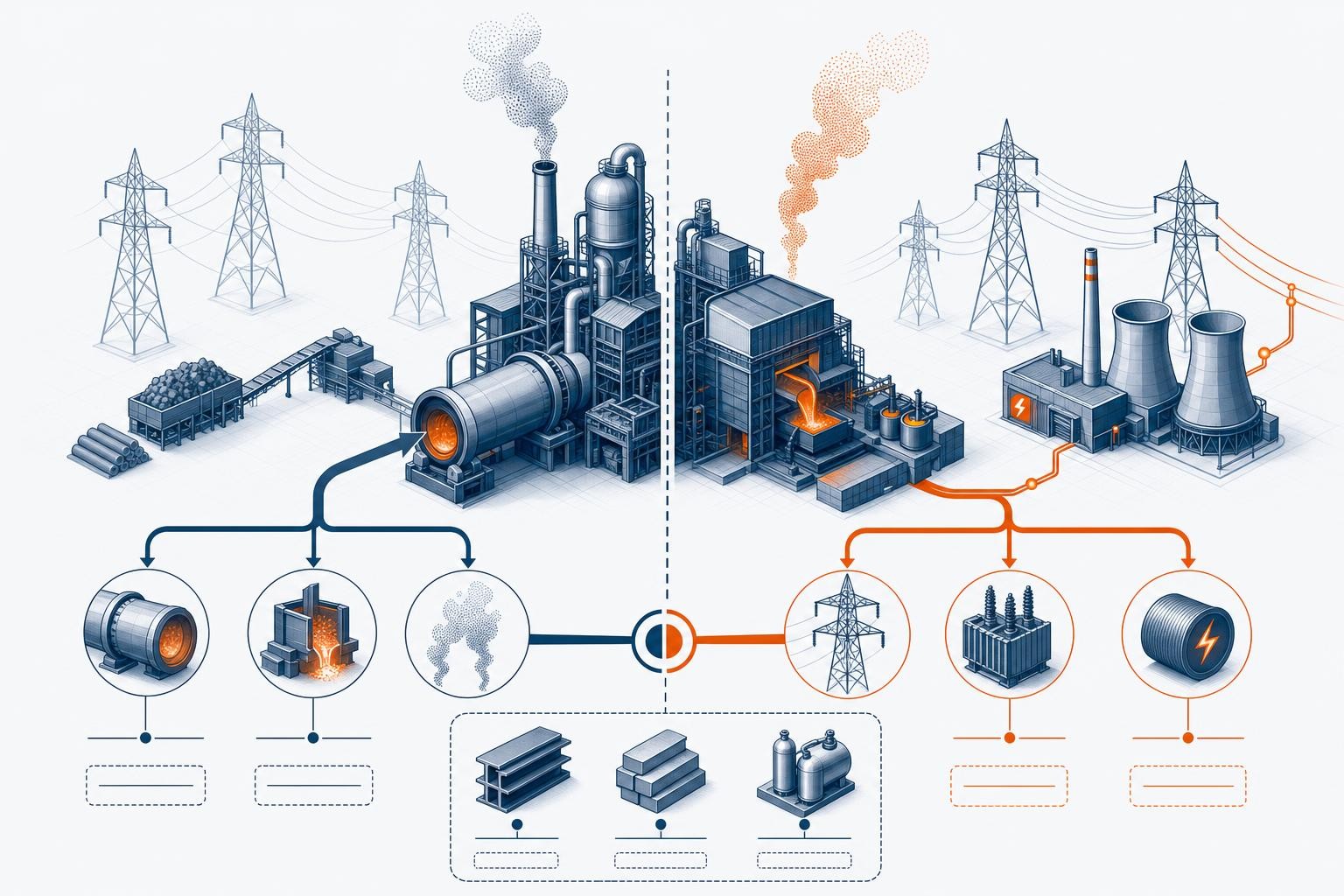
CBAM and Indirect Emissions: Why the Annex II Split Matters for Steel, Aluminium, and Hydrogen Importers
CBAM prices indirect emissions for cement and fertilisers but not for steel, aluminium, or hydrogen - and the reason why matters for your compliance strategy. Here's the full mechanics.
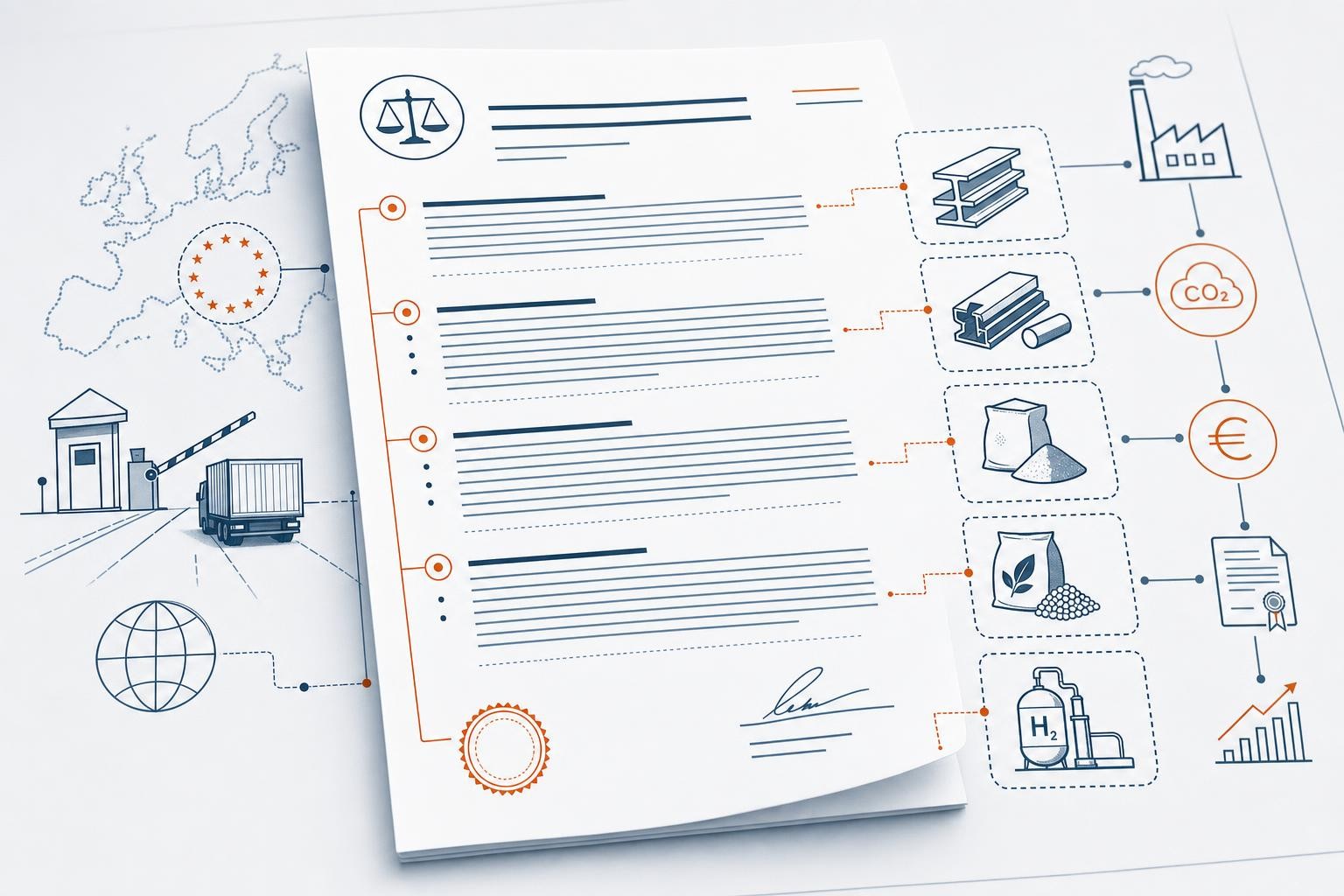
Making Your Supply Contract CBAM-Ready: A Clause-by-Clause Drafting Guide
CBAM is now a contracting problem. This clause-by-clause guide covers emissions data, verification, price pass-through, Incoterms, indemnity, and change-in-law for EU importers of steel, aluminium, cement, fertilisers, and hydrogen.
CBAM and Customs Procedures: How Release for Free Circulation Changes Everything
CBAM obligations attach at release for free circulation, not at physical arrival. That single fact makes your choice of customs procedure a genuine compliance and cash-flow lever. Here's the practical guide.